Wednesday, May 13, 2026
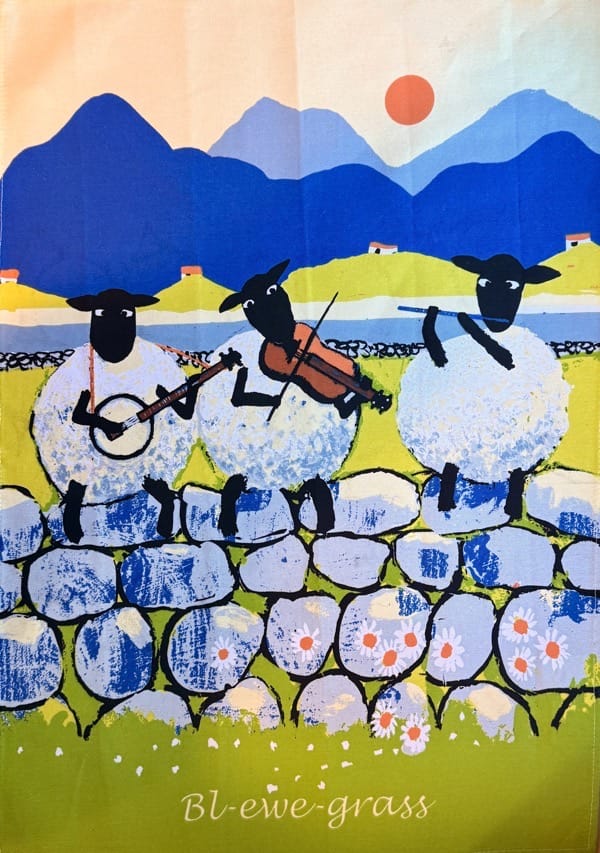
Today is my 70th birthday. When I woke up, Jane surprised me with a lovely square Irish birthday card and a wonderfully quirky gift: a tea towel decorated with sheep playing the fiddle, banjo, and tin whistle, titled Bl-ewe-grass. It was both appropriate and perfectly Irish.
We went down for breakfast in the Wyatt breakfast room, where the day continued in the same spirit. Jane chose poached eggs, brown toast, a small croissant, and fruit from the buffet, while I opted for pancakes with a side of smoked salmon. During breakfast, Nancy and John presented me with another square birthday card—equally thoughtful and unmistakably Irish in theme.
Today, Nancy and John planned their own day of exploring, so Jane and I did the same, now with the added advantage of having the car to ourselves for the day ahead.
—— Birthday Gift and Cards —–


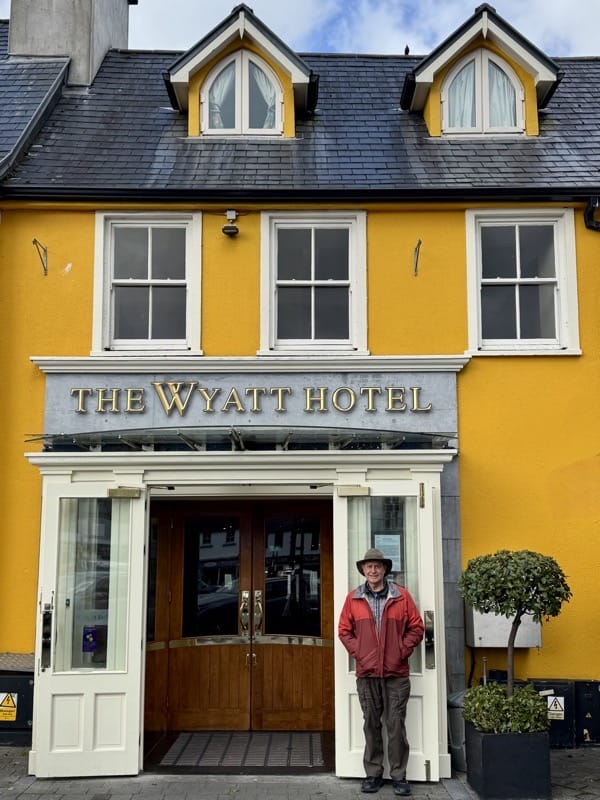
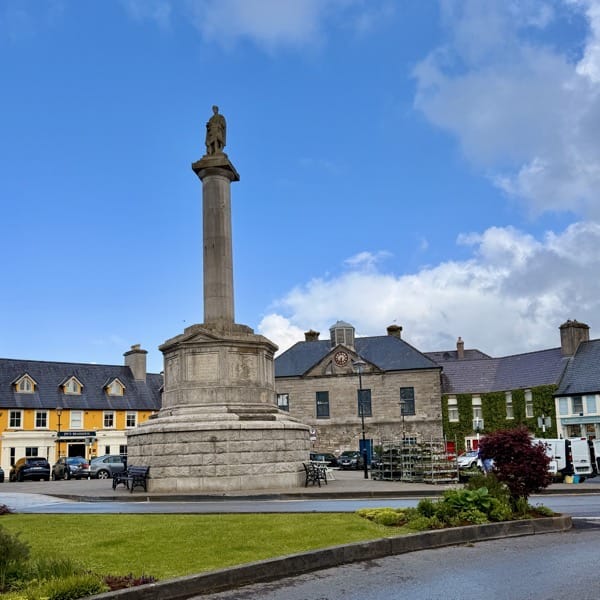
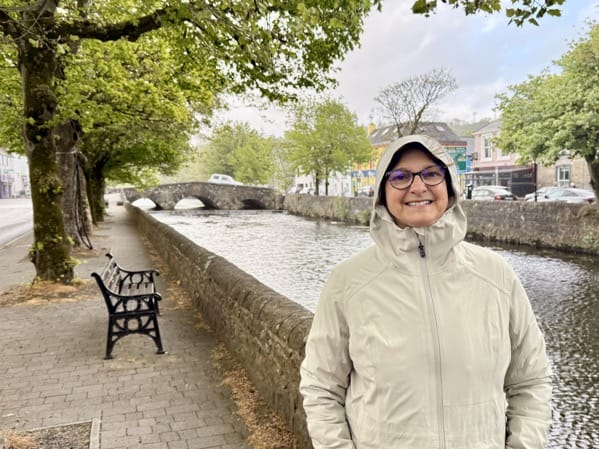
We started the day with a stroll through the streets of central Westport. The Wyatt Hotel sits on the Octagon, the town’s distinctive plaza, where a statue of St. Patrick stands at the center surrounded by colorful storefronts, cafés, and small shops. From there, we wandered down toward the Mall, a picturesque promenade where the river had been channeled into a canal lined with mature trees and walking paths. A light drizzle hung in the air, and business was slow, but we still ducked into a few souvenir shops to browse and soak in the quiet charm of the town.
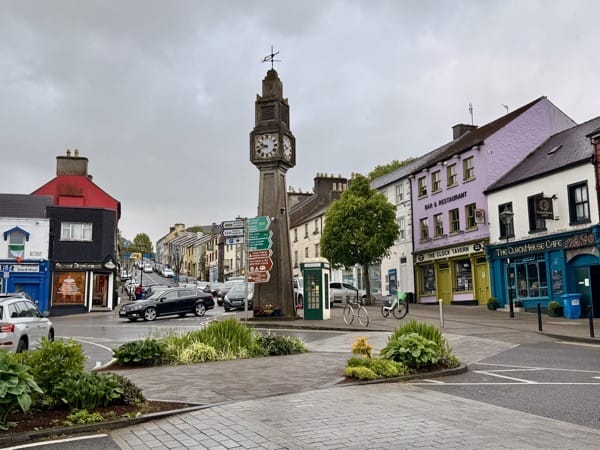
As we climbed Bridge Street from the waterfront toward the Clock Tower, we paused often to admire the quaint character of Westport beneath the overcast skies. The Clock Tower, perched prominently above the town, has long served as one of Westport’s most recognizable landmarks and a reminder of its Georgian heritage. Along the way, we made note of several inviting pubs and restaurants for future reference—especially Molloy’s, which immediately stood out as a place worth returning to later—while stopping frequently to take photographs of the rain-softened streets and colorful façades.
—— Walking around Westpoint —–
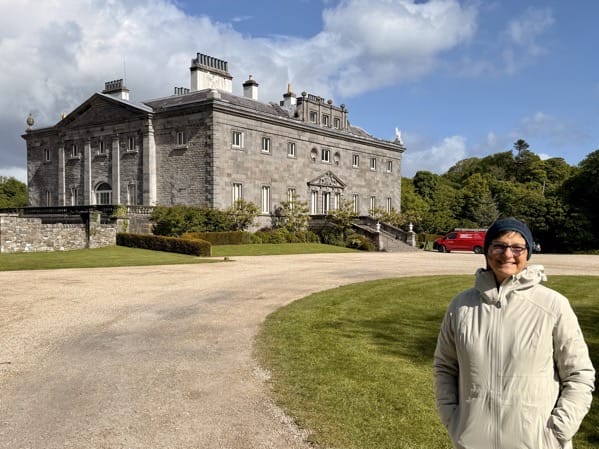
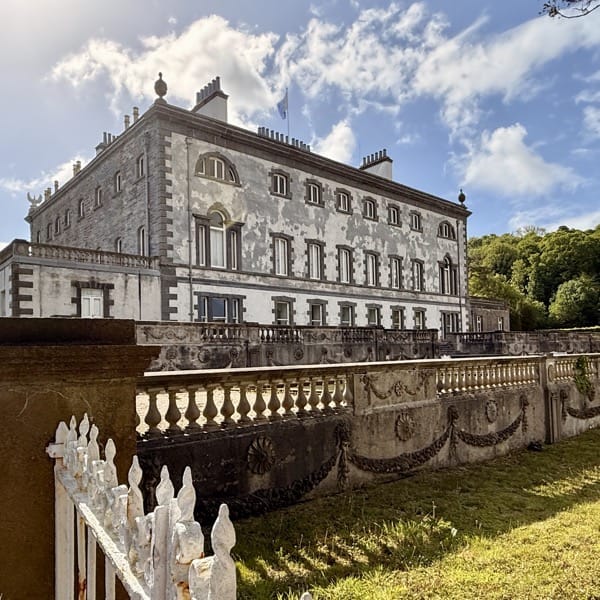
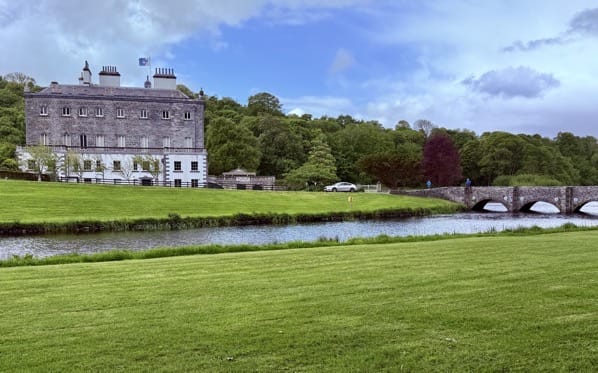
Next, we headed back toward the hotel, behind which a pedestrian gate led directly onto the grounds of Westport House, one of Ireland’s finest Georgian country estates. Long the ancestral seat of the Browne family and the Marquesses of Sligo, the house was built in the early 1730s on the site of an earlier castle associated with the legendary Grace O’Malley. Designed in the Palladian style by the architect Richard Cassels, the three-story limestone mansion evolved over the centuries through additions and renovations by several notable architects.
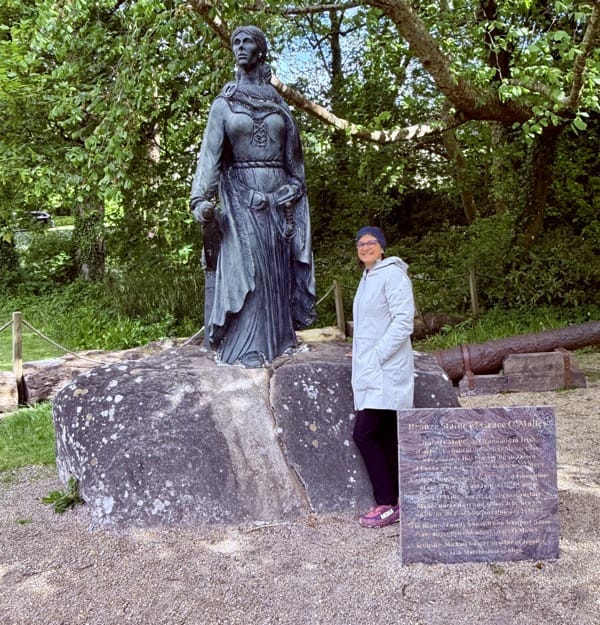
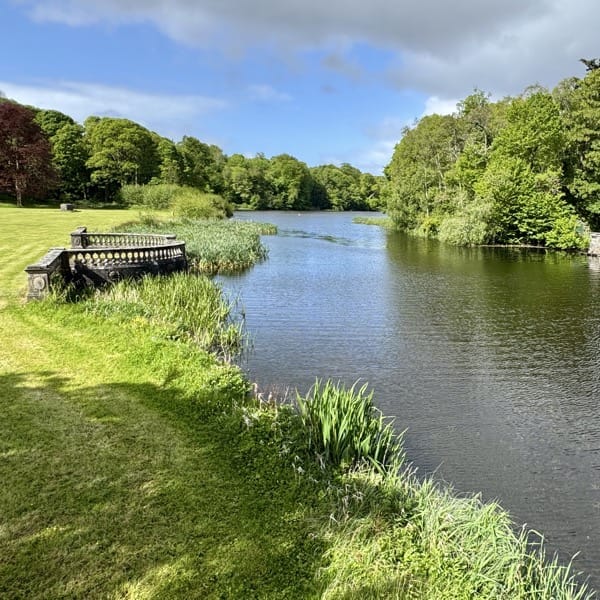
Rather than tour the interior, we spent most of our time wandering the expansive grounds and wooded walking trails. The estate felt peaceful and timeless, with sweeping lawns, mature trees, and occasional glimpses of the house rising above the landscape. One of the highlights was the striking bronze statue of Grace O’Malley, the famed 16th-century “Pirate Queen” of Connacht. The 7-foot-4-inch sculpture, unveiled in 2003, depicts her with one hand on a ship’s tiller and the other near her sword, facing toward the waters she once ruled. O’Malley, who lived from about 1530 to 1603, remains one of Ireland’s most celebrated historical figures.
The Browne family maintained ownership of Westport House for nearly three centuries before the estate was sold in 2017 to the local Hughes family, ending one of the longest continuous family associations with a historic house in Ireland.
—— Westport House —–
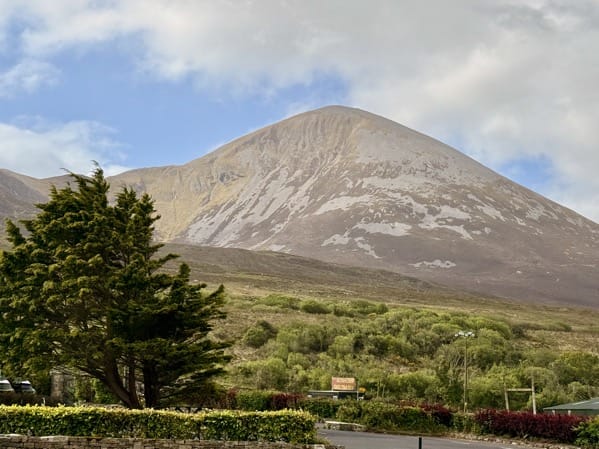
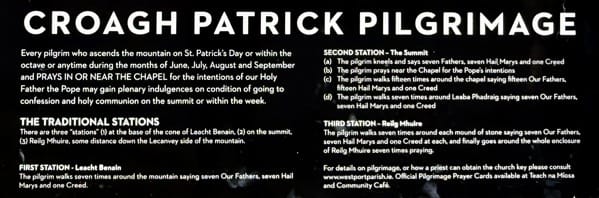
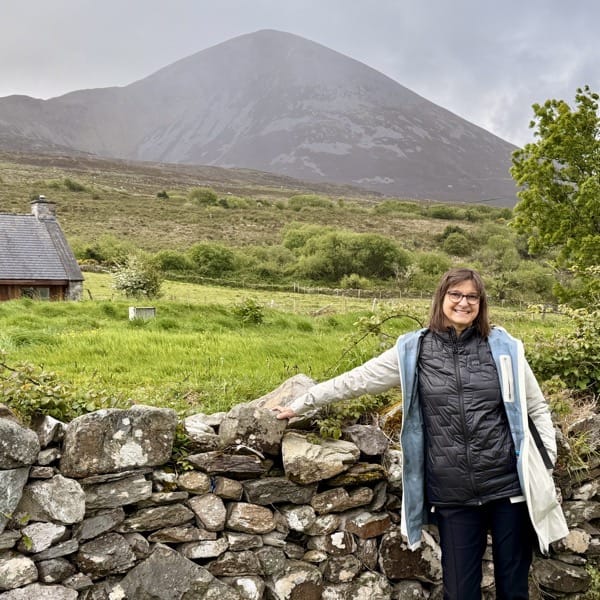
From Westport House, we walked back to the SuperValu parking lot, retrieved the car, and made the short six-mile drive west to Murrisk, the starting point for the hike up Croagh Patrick, Ireland’s famed “Holy Mountain.” Rising dramatically above Clew Bay to a height of 2,507 feet, the mountain, known locally as “The Reek”, has been a site of pilgrimage for centuries. According to tradition, St. Patrick spent forty days fasting and praying on its summit in 441 AD, and to this day thousands of pilgrims climb it annually, especially on “Reek Sunday,” the last Sunday in July. Its distinctive conical shape dominates the Mayo landscape and can be seen from miles away.
We had no intention of attempting the climb ourselves. The round-trip hike can take anywhere from three to five hours depending on conditions, and the weather this afternoon was less than inviting, with intermittent rain and powerful wind gusts sweeping in off the Atlantic.
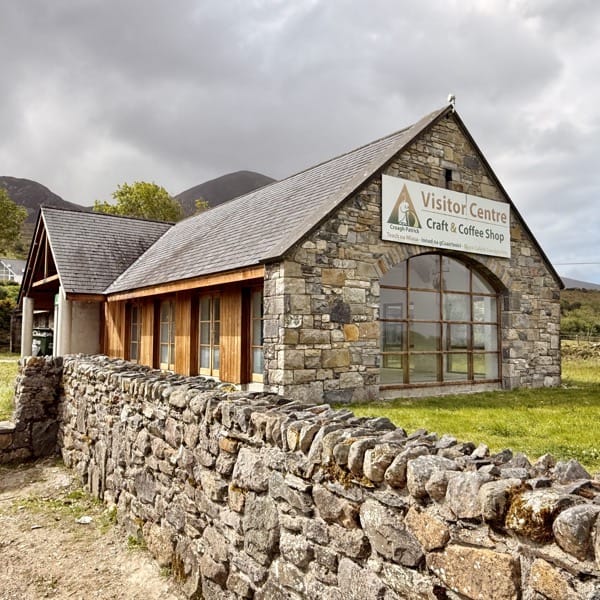
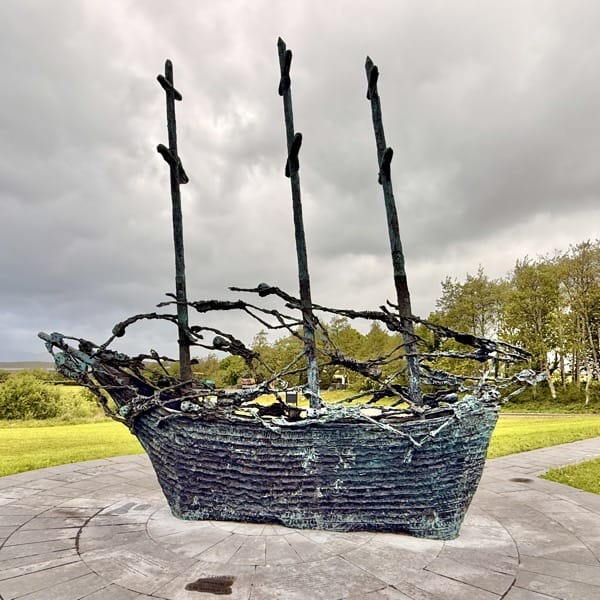
The visitor center was unexpectedly dark and closed without explanation, so instead we crossed the road to view the National Famine Memorial, the most moving sculpture we encountered in Ireland. The bronze sculpture depicts a skeletal “coffin ship” under full sail, its rigging formed by the emaciated bodies of famine victims, commemorating those who fled Ireland during the Great Famine of the 1840s. Set against the stark backdrop of Croagh Patrick and Clew Bay, it was haunting and powerful.
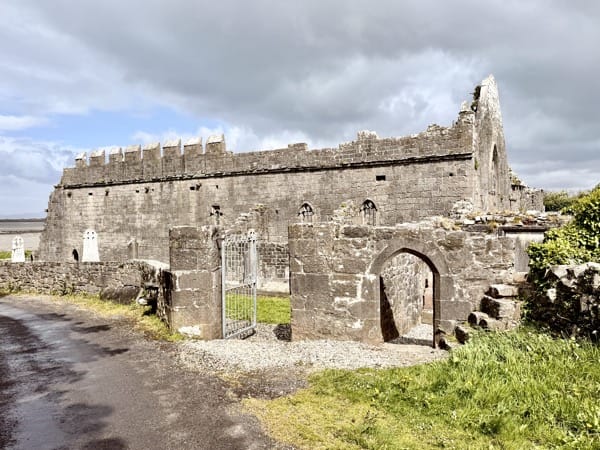
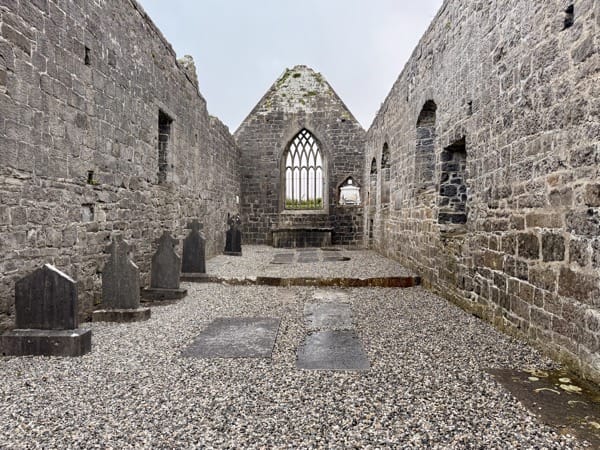
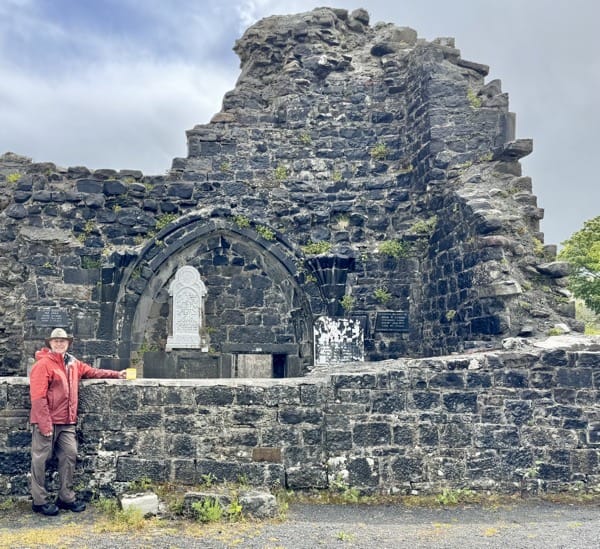
From there, we continued on foot toward the coast and the ruins of Murrisk Abbey, sometimes referred to locally as St. Patrick’s Church. Founded in the fifteenth century by Augustinian friars, the abbey once served pilgrims making the journey up Croagh Patrick. Though roofless now, the weathered stone ruins retain an austere beauty, standing amid a sprawling cemetery filled with Celtic crosses and centuries-old gravestones. The combination of the ruined abbey, the vast graveyard, the nearby sea, and the looming mountain created an atmosphere that felt deeply tied to Ireland’s religious and historical past.
—— Croagh Patrick —–
—— National Famine Monument and Murrisk Abbey —–
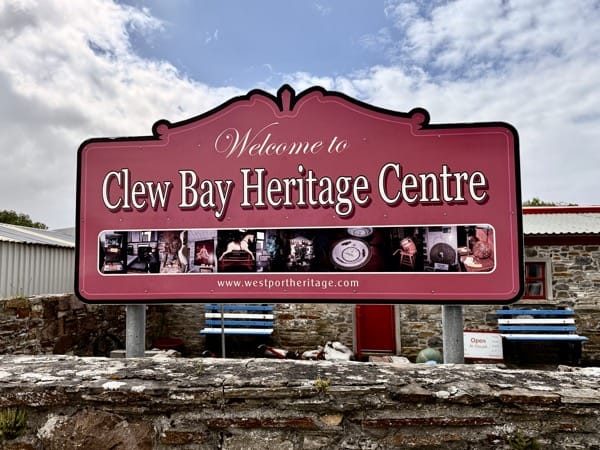
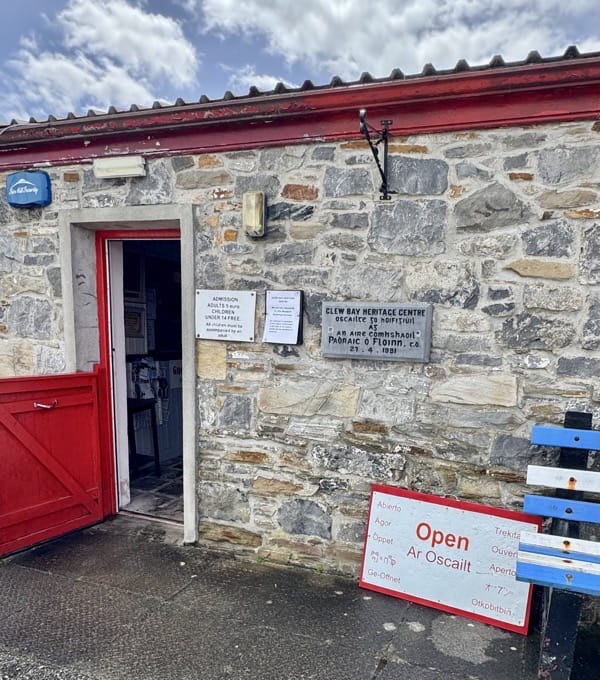
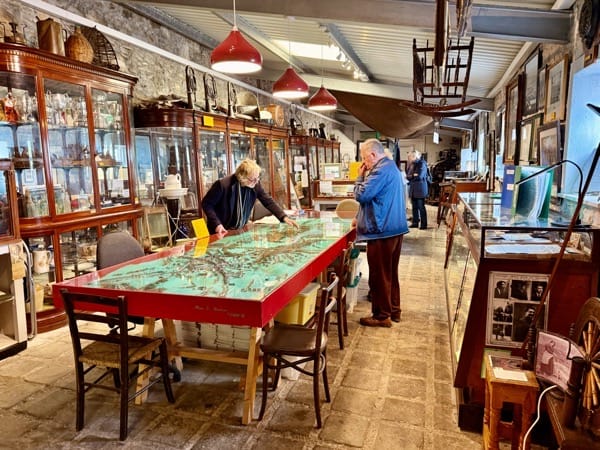
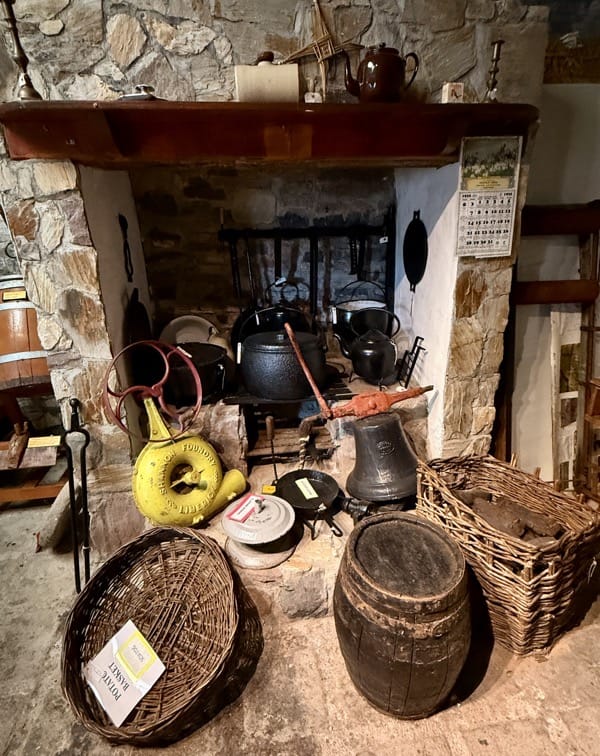
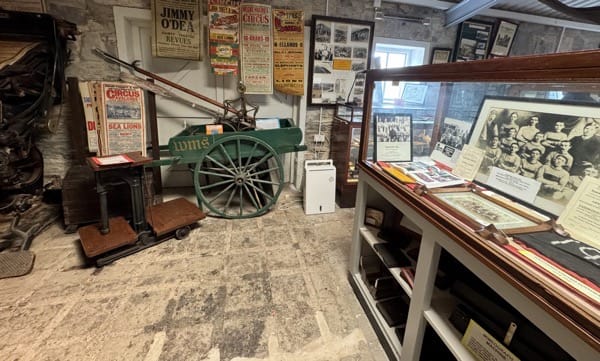
We hopped back in the car and decided to visit the Clew Bay Heritage Centre. Though modest in size, the museum was packed floor-to-ceiling with artifacts, photographs, tools, household items, and bits of local memorabilia that together painted a vivid picture of life in County Mayo over the centuries. Its slightly cluttered charm only added to the experience, as every corner seemed to hold another unexpected piece of “heritage” waiting to be discovered.
What made the visit especially memorable, however, was the brief history of the area delivered by an older gentlemen working there. He walked us through the history of the area, describing the rise of Westport, the influence of the wealthy landed families such as the Brownes of Westport House, and the hardships endured by ordinary people during famine years and emigration. He also pointed out some of the museum’s more unusual artifacts that brought the objects to life far more effectively than any display placard could have done. By the time we left, we felt more enlightened from the personal introduction to the character and history of Clew Bay and its people.
—— Clew Bay Heritage Centre —–
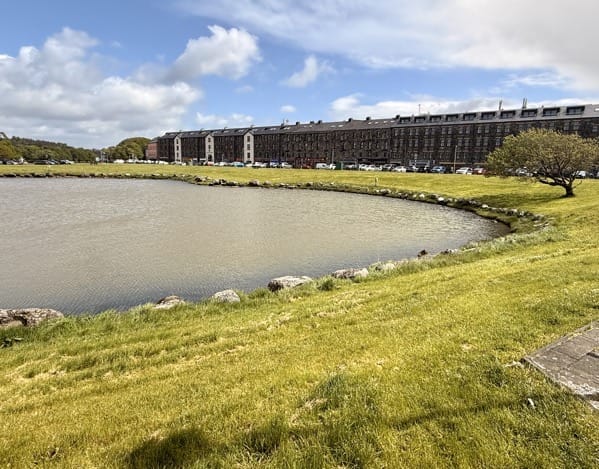
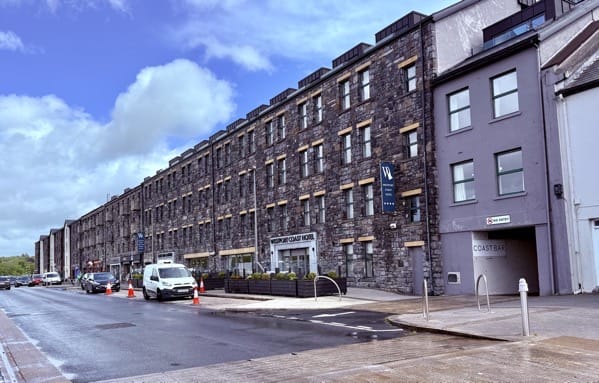
After our enjoyable stop at the heritage center, we decided it was time for a bite to eat. We parked near the waterfront and discovered that the parking permit machine accepted coins only. Fortunately, Jane spotted a ten-cent piece lying on the ground beside the machine, which perfectly rounded out the handful of small change we had been scraping together to pay for the permit and display it on the dashboard.
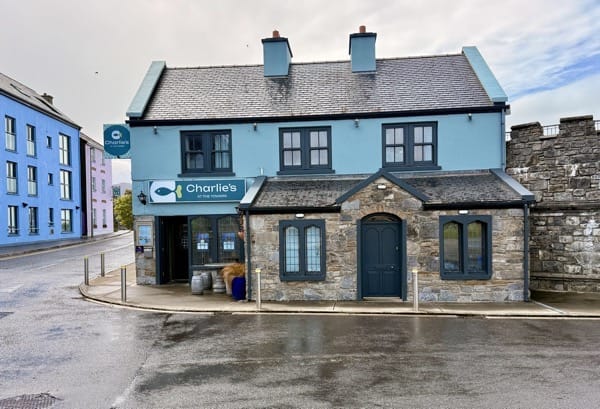
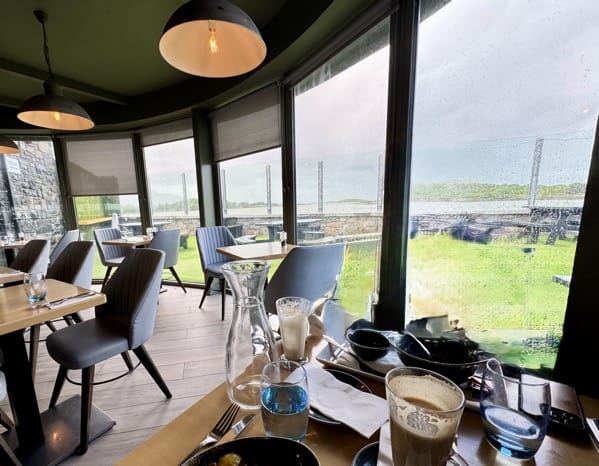
From there we wandered into Charlie’s at the Towers, grateful for the warmth after spending much of the day battling wind and intermittent rain coming in off Clew Bay. Inside, the atmosphere was cozy and welcoming, and the hot lattes were immediately comforting. John ordered a rich seafood fish pie, hearty and steaming hot, while Jane chose a vegetable Thai curry that provided a welcome bit of spice against the damp weather outside.
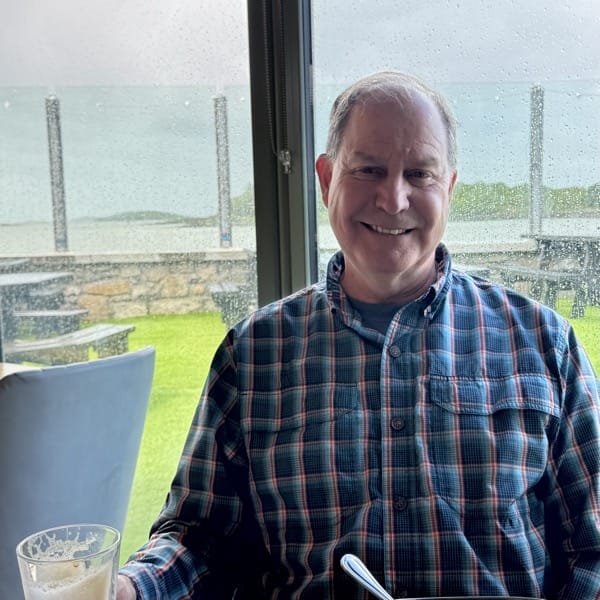
For the first time all afternoon, we were able to relax, dry out a little, and get off our feet. Sitting by the window with warm food and drinks while the gray skies lingered outside felt especially satisfying after a day spent exploring the coast, historic sites, and rain-swept streets of Westport.
—— The Quay and Charlie’s at the Towers —–
We eventually made the drive back from Clew Bay to Westport and returned the car to the SuperValu parking lot for the night. Before leaving, Jane took the opportunity to pick up a box of Barry’s Tea to bring home.
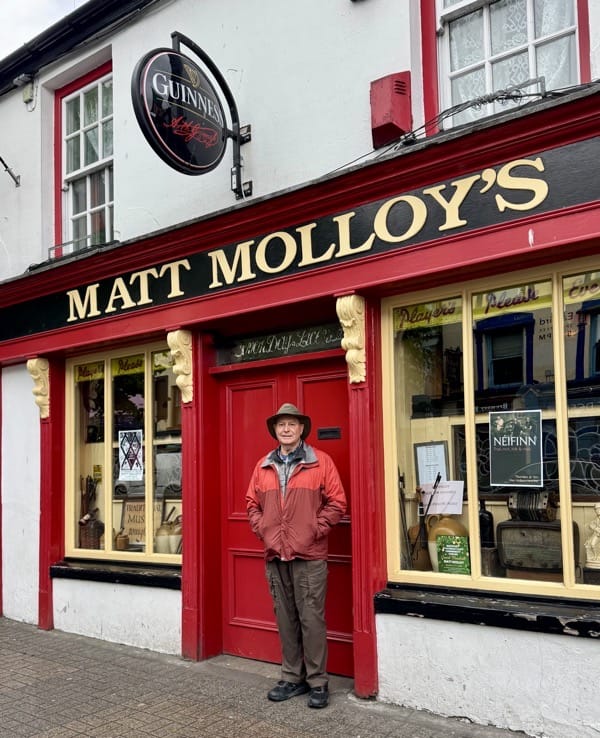
After a short rest at the hotel, we headed back out into town in search of an evening pint, making our way to the legendary Matt Molloy’s, one of Westport’s best-known traditional pubs. The place already had a lively atmosphere, with locals and visitors filling the snug interior, but we had arrived a little too early for the live traditional music session, which was not scheduled to begin until 9:30 p.m. Still, there was something satisfying about simply sitting with a properly poured Guinness in an authentic Irish pub while conversation and laughter buzzed around us.
After finishing our drinks, we wandered into a couple of other nearby pubs hoping to stumble across an early trad session, but the music scene had not quite come alive yet. Rather than wait out the evening, we decided on a quieter finish to the day. We picked up a small can of gin and tonic for Jane and a bottle of Hop House 13 lager for John before returning to the room. Back in the warmth of the hotel, with peanuts spread out beside our drinks, the night settled into an easy, relaxed close—a welcome bit of downtime after a full day exploring Westport, Clew Bay, and the rugged Mayo coast.
—— An Evening Pint —–