Tuesday, May 12, 2026
Our stay at Ash Grove House was brief but pleasant. Though the rooms were on the small side, the B&B was comfortable and welcoming. After a good breakfast of pancakes, fresh fruit, coffee, and orange juice we were ready for the day ahead. Today’s destination was Westport, but we planned to take the scenic route in order to visit several stops Jane had carefully selected.
True to what has seemingly become our MO, Jane immediately took a wrong turn leaving our street, forcing us to navigate a few very tight Galway side streets before finally getting properly underway. Once free of the city, we headed north on the N84 toward Cong, settling back into a scenic Irish countryside drive.
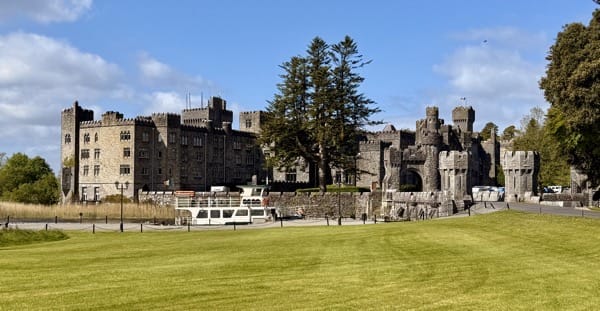
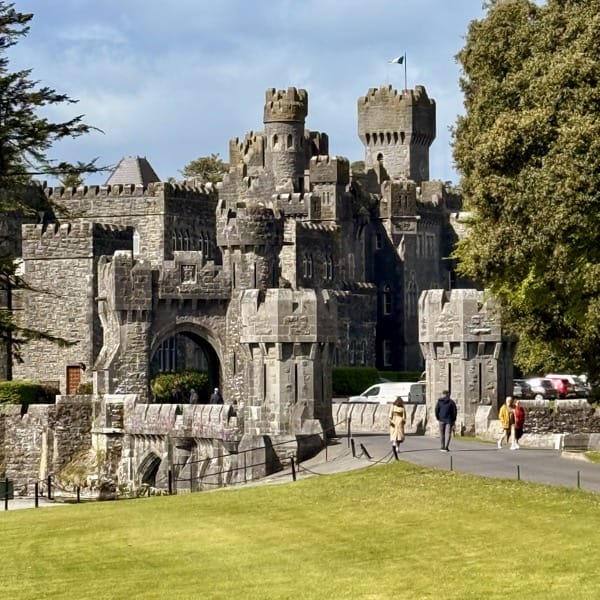
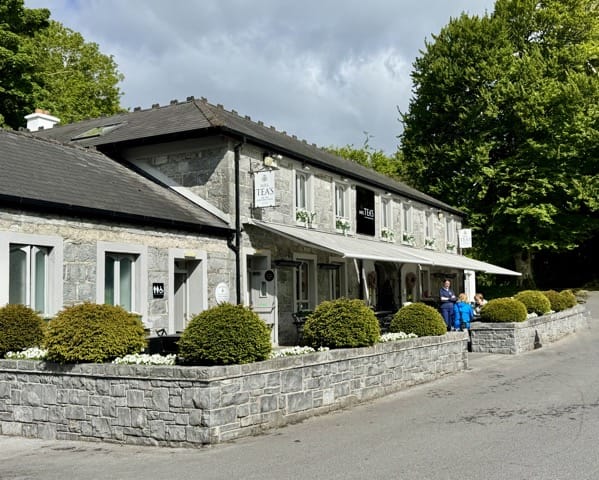
Near Cong, we made our way to the grounds of Ashford Castle, now a luxury hotel and private estate entered through an impressive gated entrance. A guard named John, dressed smartly in a green jacket and top hat, emerged from the guardhouse and approached our car. He politely allowed us through the gate, though not before firmly explaining that the estate was private and that visitors without reservations were limited to the Mrs Tea’s Boutique and the nearby parking lot.
After passing through the gate, we slowly wound our way along the estate roads past perfectly manicured lawns, stately trees, and beautifully maintained gardens that gave the entire property an atmosphere of old-world elegance. We eventually arrived at Mrs Tea’s Boutique & Bakery, an upscale little shop offering chocolates, coffees, teas, soaps, gifts, outdoor apparel, and various souvenirs. The entire experience felt decidedly high-end—well beyond our usual travel style—and we half-felt as though we were sneaking around somewhere we didn’t quite belong. Still, we managed to capture a few photographs of the imposing castle before climbing back into the car and continuing on our way.
—— Ashford Castle and Mrs Tea’s Boutique —–
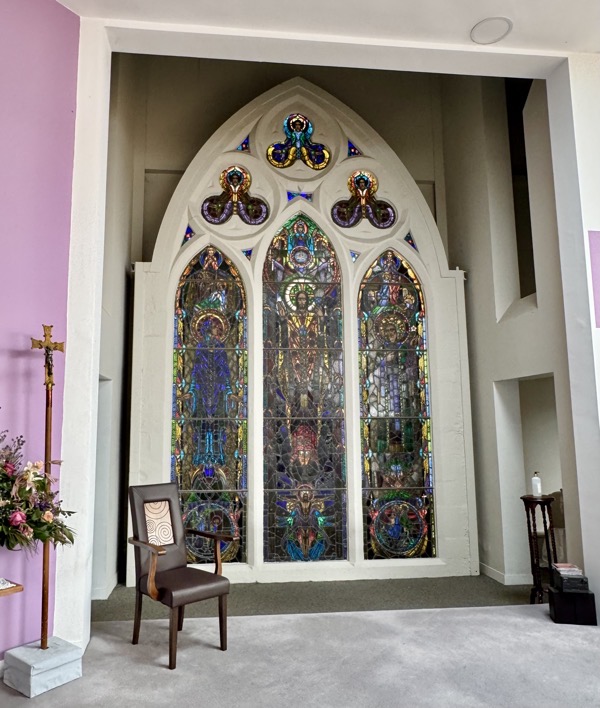
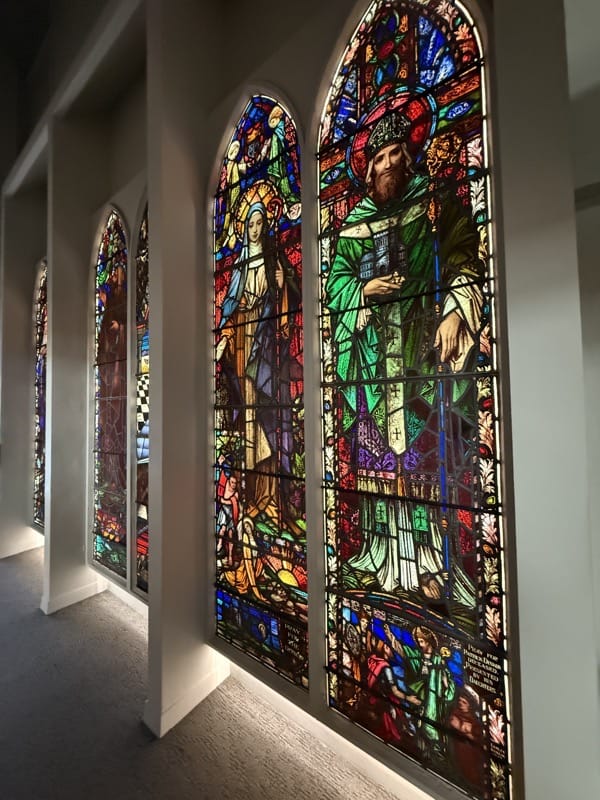
On our way out of the castle grounds, we found ourselves in the small village of Cong. St Mary of the Rosary Catholic Church offered free parking, so we took advantage of it and stepped inside to admire the church’s beautiful stained-glass windows created in 1933 by renowned Irish artist Harry Clarke. Clarke’s signature style of intricate detail, expressive figures, and jewel-like colors have made his work some of the most celebrated stained glass in Ireland.
—— St. Mary’s Church, Cong —–
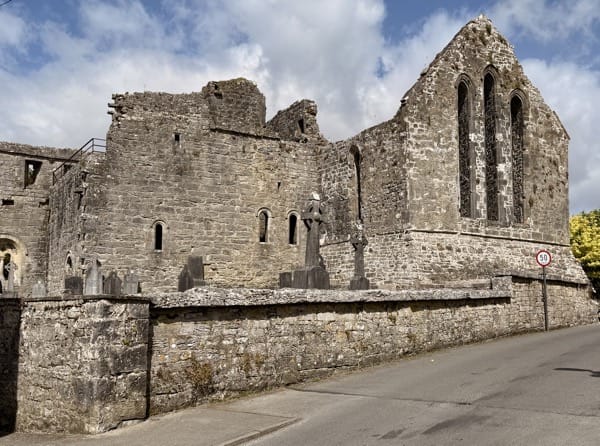
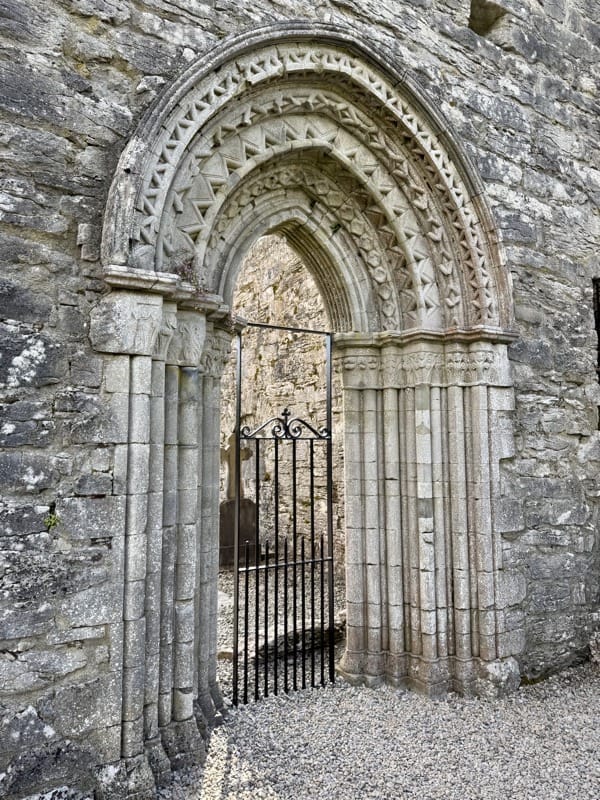
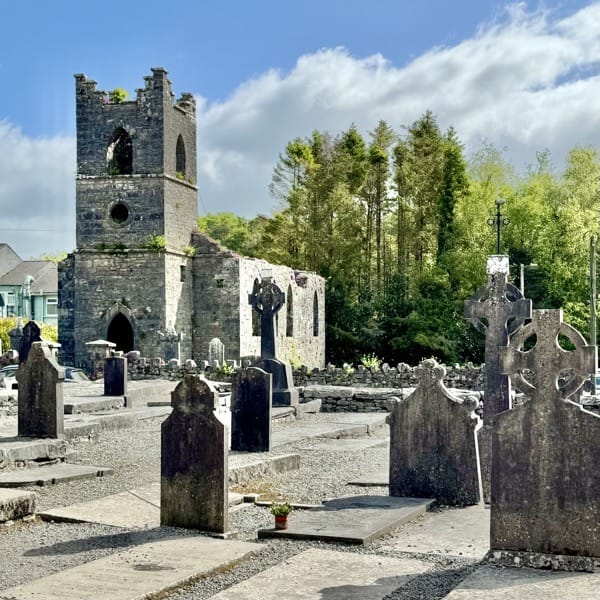
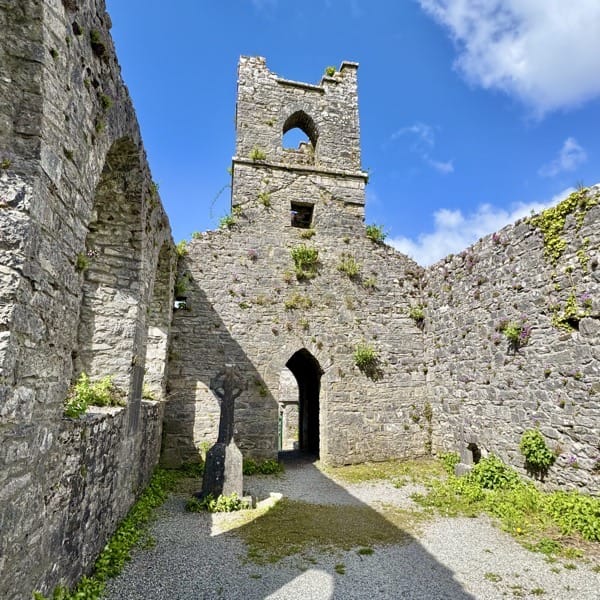
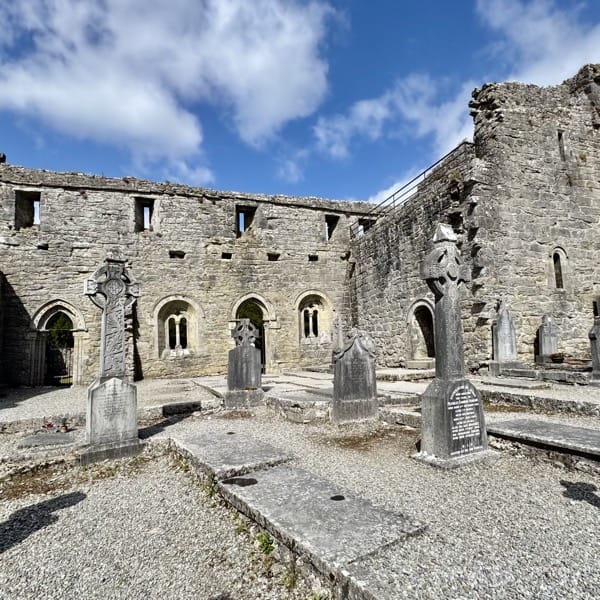
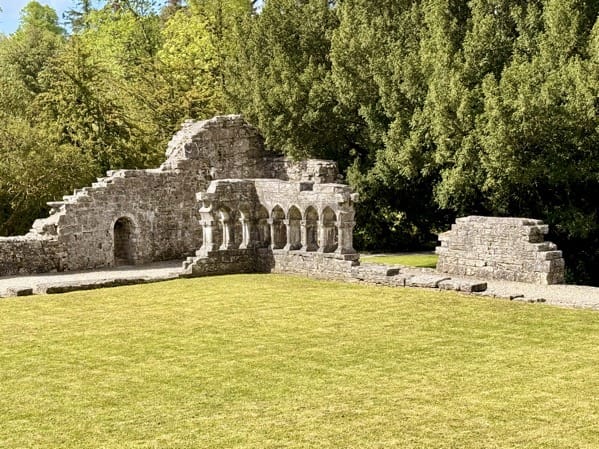
We then walked across the narrow street to the ruins of Cong Abbey, where visitors are free to wander through the remains of the chapel, cloister, and surrounding cemetery, and we spent quite a while exploring these haunting grounds.
The abbey traces its origins to an earlier monastery founded in the 7th century, though that settlement was destroyed by fire in the 12th century. Around 1135, the High King of Ireland, Tairrdelbach Ua Conchobair (often anglicized as Turlough O’Connor), rebuilt the abbey, and his son, Ruaidrí Ua Conchobair (Rory O’Connor), later added many of the impressive stone buildings that survive today.
Not long afterward, the community adopted the Augustinian rule, becoming an important religious center in western Ireland. Despite suffering attacks, the abbey has endured for centuries, and its beautifully carved arches, quiet cloisters, and weathered stonework still convey a powerful sense of medieval Ireland.
—— Cong Abbey —–
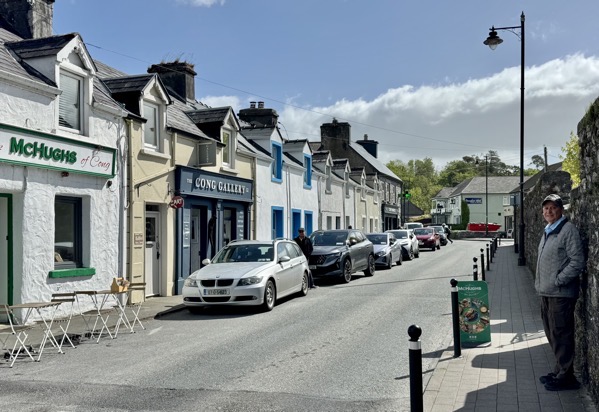
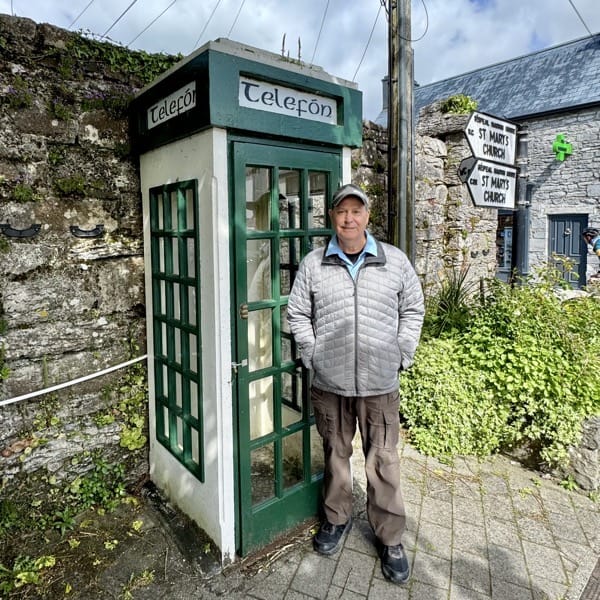
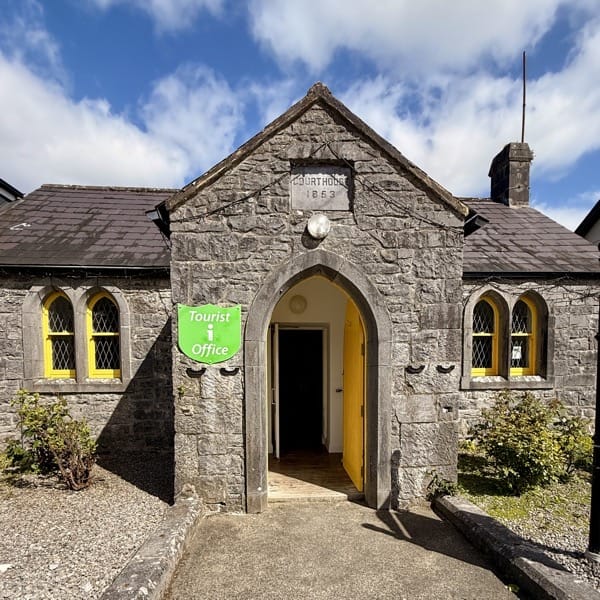
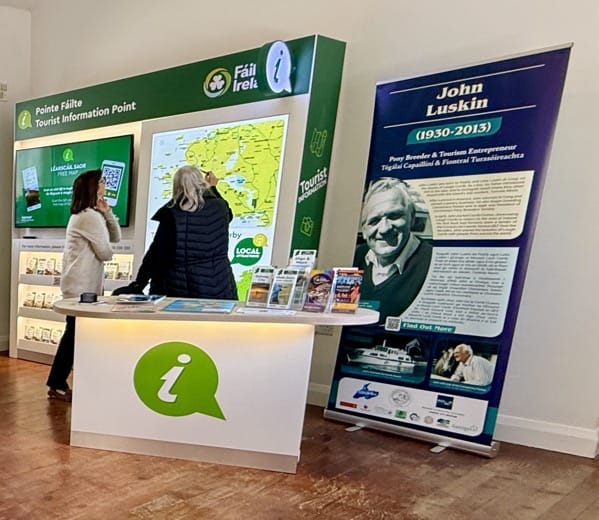
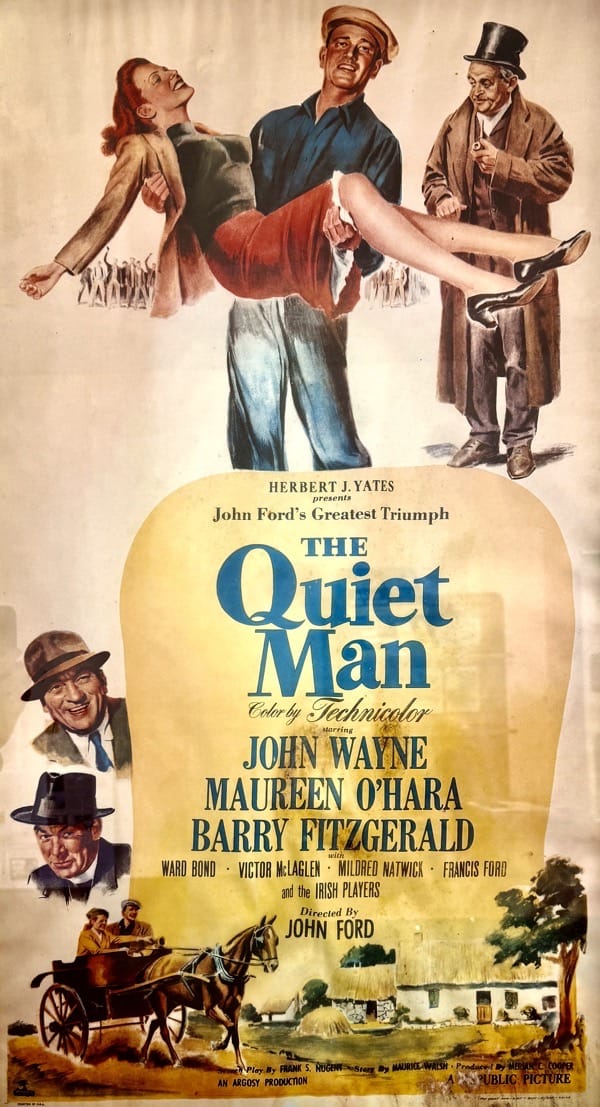
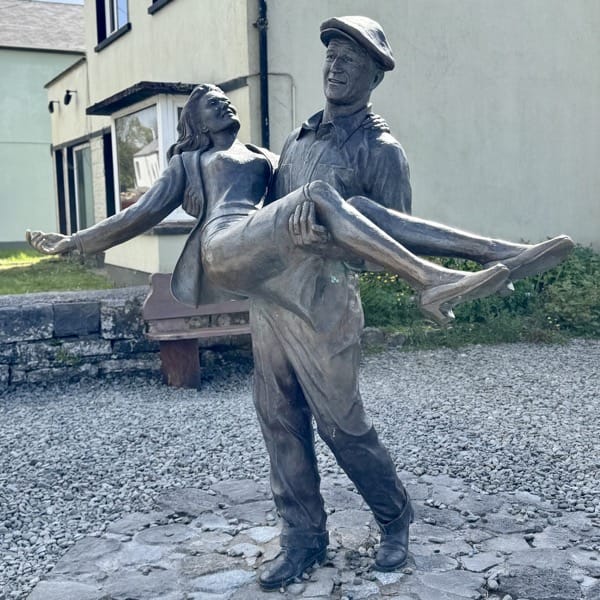
After exploring the abbey ruins, Jane and I wandered along Cong’s main street and stopped briefly at the local tourist office to gather a little more information about the area. The village became internationally famous as the filming location for the 1952 classic The Quiet Man starring John Wayne and Maureen O’Hara. Many scenes from the movie were filmed throughout the village, and much of the cast stayed at nearby Ashford Castle during production. Today, a statue of Wayne and O’Hara stands proudly in the town center, celebrating Cong’s enduring connection to the beloved film.
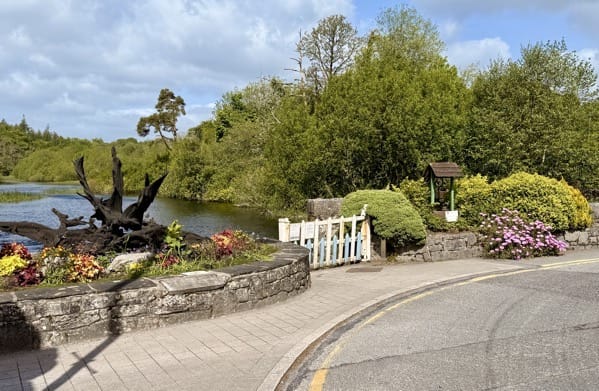
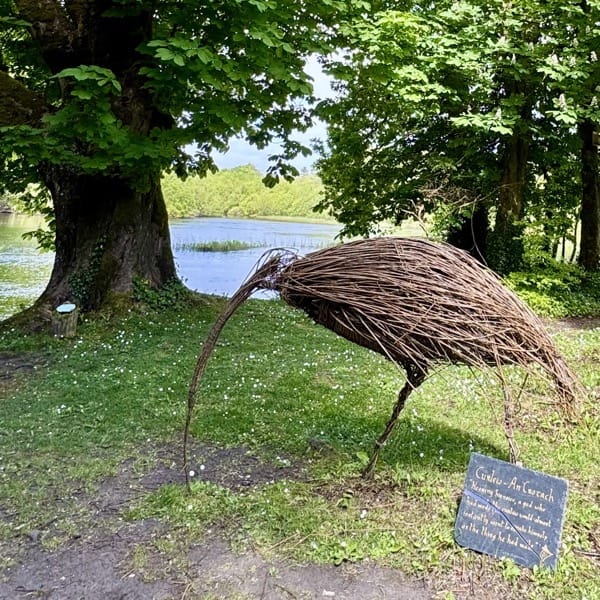
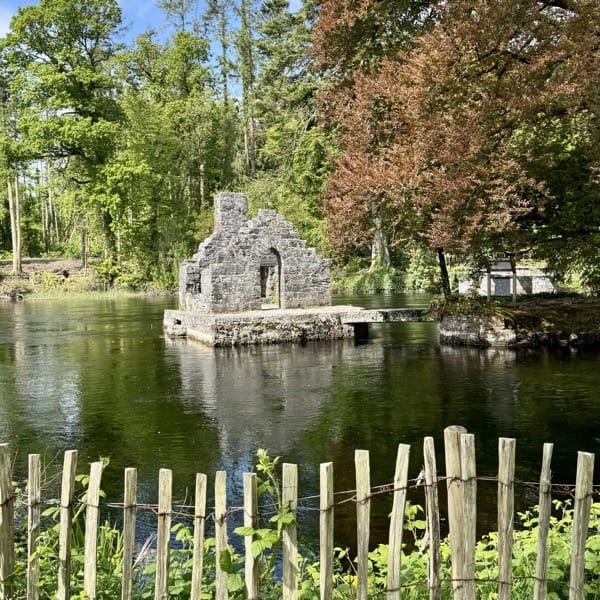
From the main street, we followed a peaceful walking path through The Quiet Man Walk, a lovely green area shaded by trees and bordered by streams that looped behind and around the abbey ruins before returning us to the St. Mary’s parking area. Along the way, we spotted the famous Monks’ Fishing House, a tiny stone structure built directly over the fast-flowing river. Legend has it that the monks could lower nets through a trapdoor in the floor to catch fish, with a small bell attached to the rope ringing whenever a fish was trapped below—an effortless style of fishing that definitely appealed to me. After rejoining Nancy and John, we climbed back into the car and continued on our journey.
—— Cong —–
We faced a fairly long but scenic drive from Cong to Kylemore Abbey, a journey of roughly 50 miles that took us about an hour and a half through the winding roads and rugged landscapes of Connemara. Nestled beside a lake and surrounded by mountains, the 1,000-acre Kylemore estate has been home to the Benedictine nuns for more than a century, though it originally began as the private retreat of Mitchell Henry and his wife Margaret Henry.
Construction of the grand neo-Gothic castle began in 1867 and took four years to complete, employing hundreds of local craftsmen and laborers. Built by the wealthy London-born doctor and politician Mitchell Henry, the mansion contains more than seventy rooms and was designed as an elaborate Victorian retreat for his family. After Margaret Henry died unexpectedly while traveling in Egypt, Mitchell later built the beautiful Gothic church nearby in her memory, and both are buried on the estate grounds.
The Benedictine nuns who now reside at Kylemore originally fled Ypres, Belgium, during World War I after their abbey was destroyed in the fighting. They purchased Kylemore in 1920 and soon established a respected boarding school for girls, which operated from 1923 until its closure in 2010. Today, the nuns continue to live on the estate while expanding its spiritual, educational, and retreat programs.
After purchasing tickets and entering the grounds, Jane and I decided to tour the abbey mansion first while Nancy and John headed off toward the Victorian Walled Garden. The house was quite crowded with visitors, making it difficult at times to read the exhibits or linger for photographs. Although we would have enjoyed taking more time to absorb the richly decorated interiors and beautiful views out across the lake and mountains, we moved through fairly quickly, eager to get back outside and continue exploring the estate grounds.
—— Kylemore Abbey —–
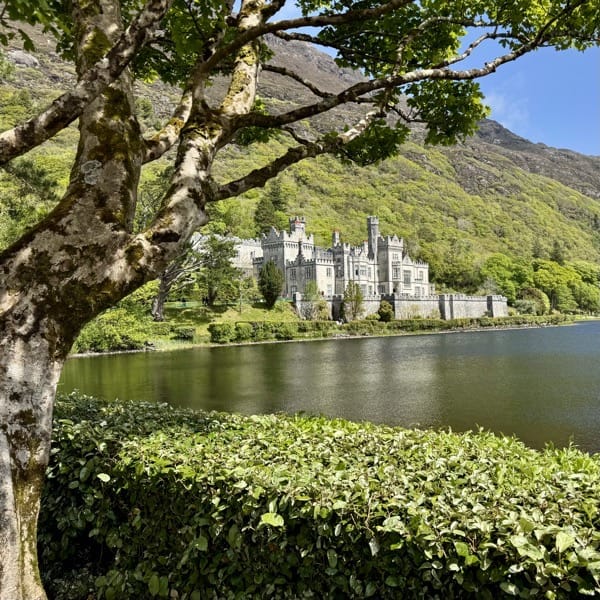
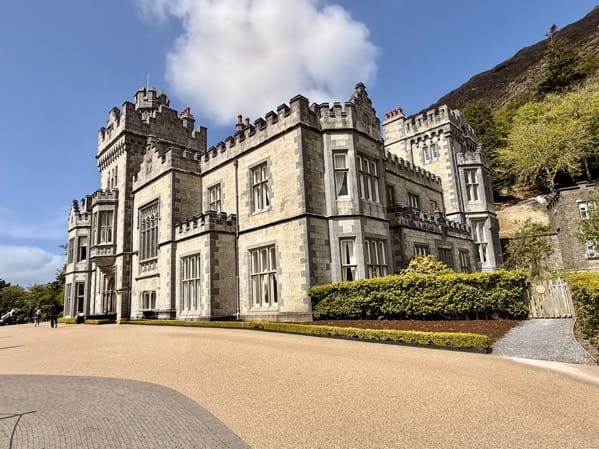
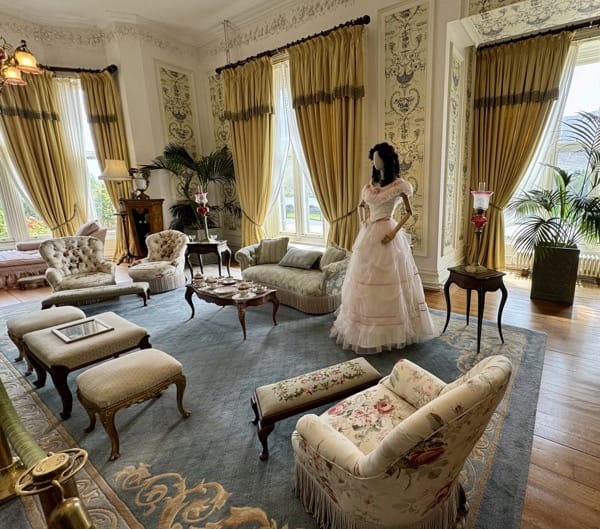
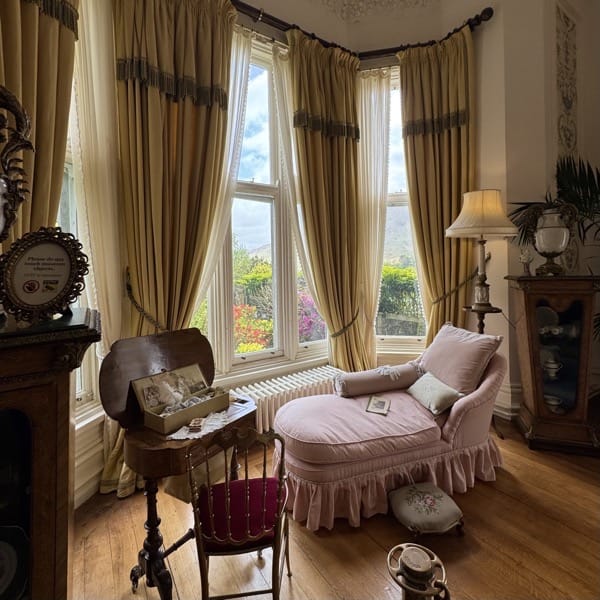
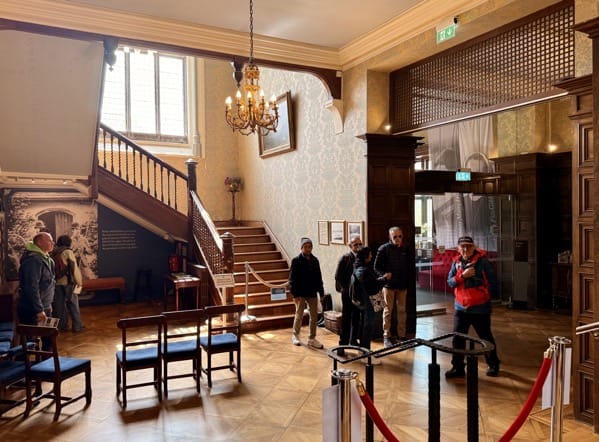
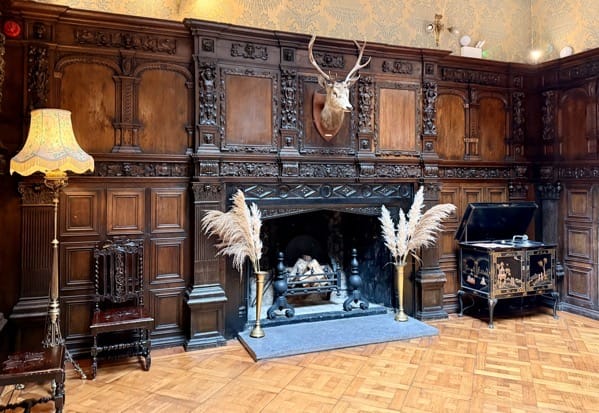
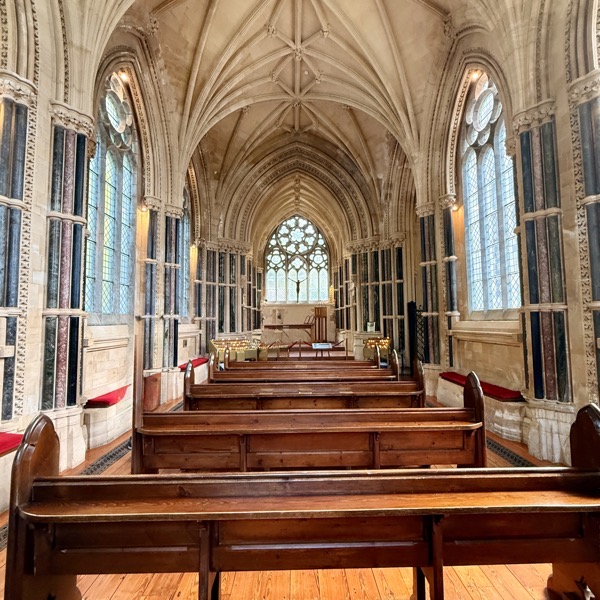
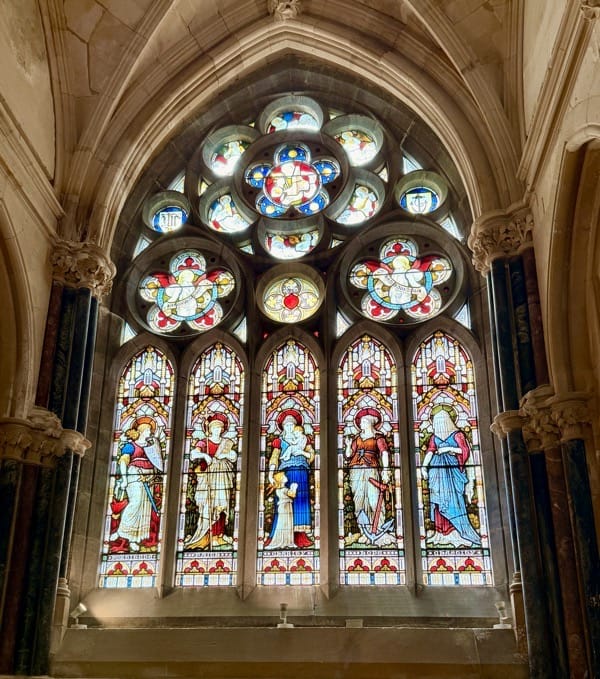
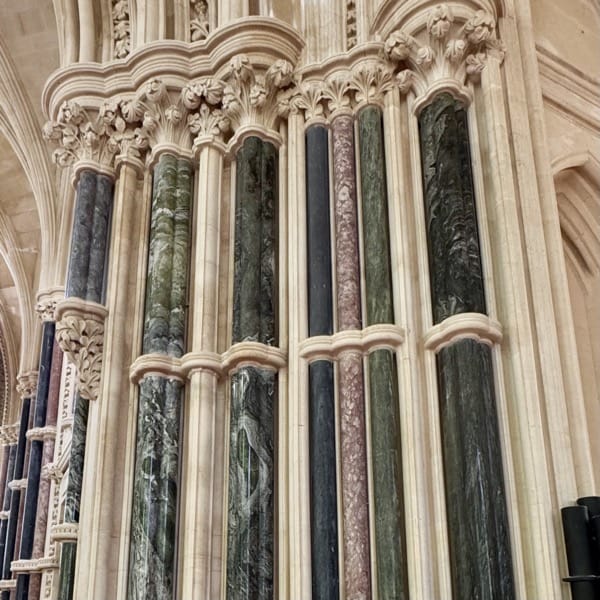
We took a short walk from the house to the beautiful Kylemore Abbey Gothic Church, part of which was undergoing renovation during our visit. We stepped inside briefly to admire the interior The small chapel is renowned for its intricate stonework and colorful use of marble, including green Connemara marble, black Kilkenny marble, red Galway marble, and pale Italian marble, all combined to create an intimate but ornate Victorian memorial church.
—— Kylemore Abby Gothic Church —–
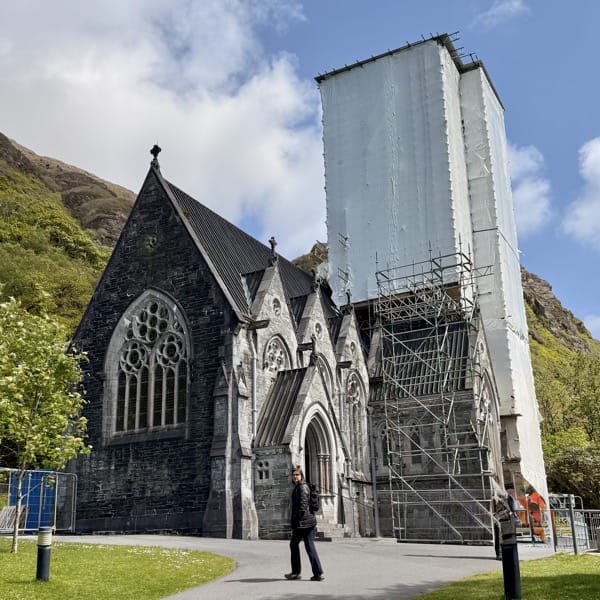
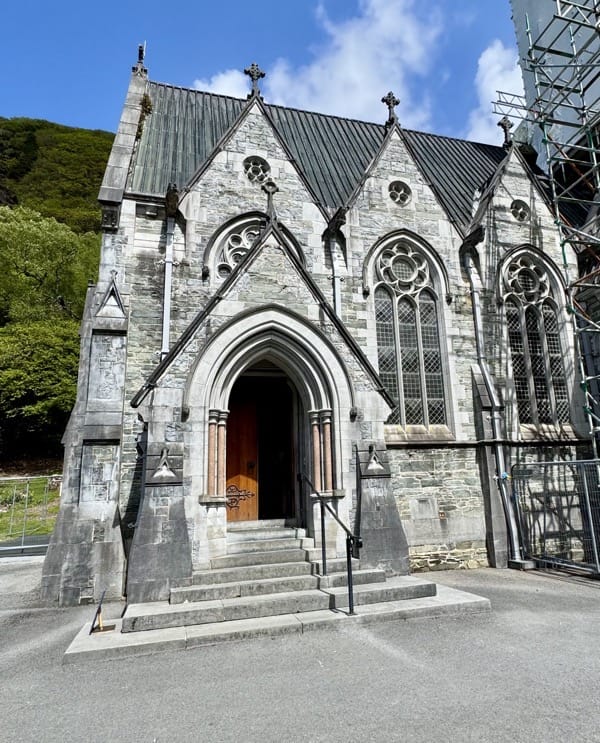
After leaving the church, we realized we had only about an hour remaining before our allotted visiting time expired, so we picked up the pace toward the Victorian Walled Garden. Fortunately, we arrived just in time to catch one of the shuttle buses, which greatly shortened the trip and saved us a long walk.
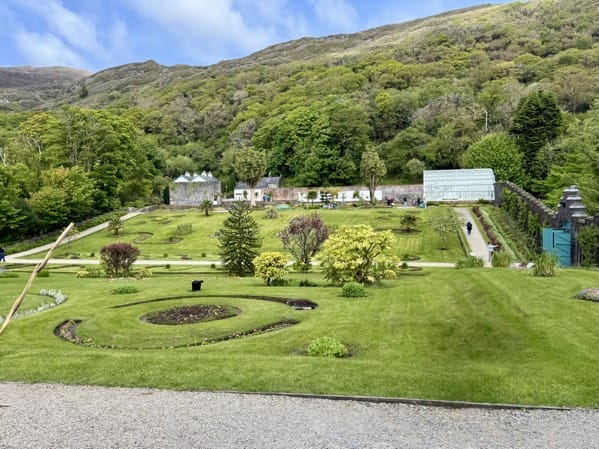
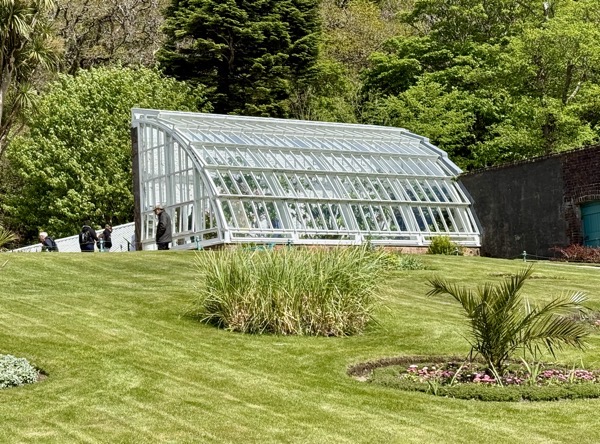
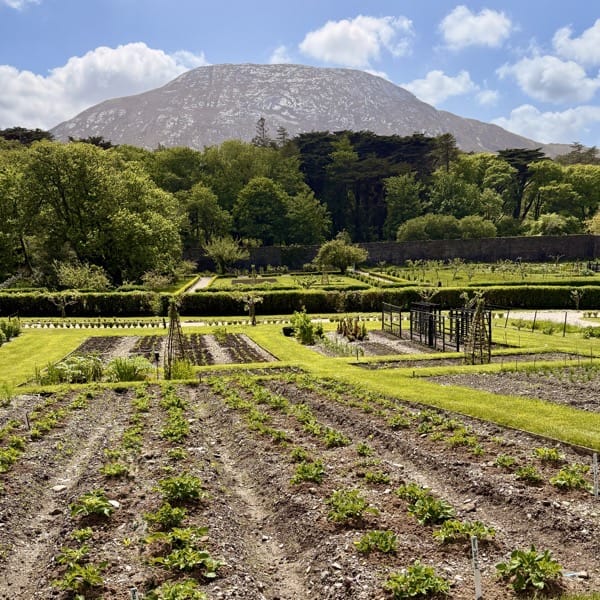
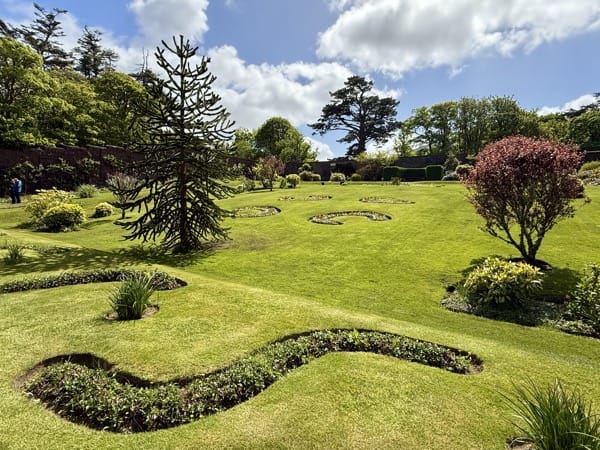
After stepping off the shuttle, we took a brisk circuit around the interior pathways of the Kylemore Abbey Victorian Walled Garden. Although we didn’t have enough time to linger and fully appreciate every section in detail, we were still able to enjoy sweeping views of the beautifully restored flower beds, greenhouses, and carefully tended formal gardens, all framed by the dramatic Connemara mountains rising beyond the walls.
We soon boarded the shuttle bus back toward the visitor center and reunited with Nancy and John near the exit gate—which, naturally, routed us directly through the inevitable gift shop before we finally made our way back to the car.
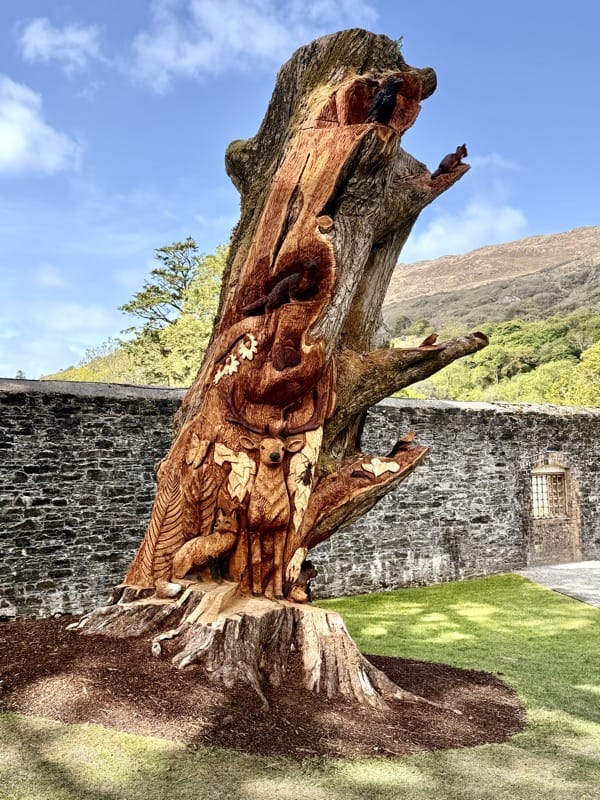
—— Kylemore Abby Victorian Walled Gardens —–
We wearily set off from Kylemore Abbey toward our final destination of the day, Westport. The drive, about 30–35 miles, took roughly an hour through the rolling Connemara countryside before we reached town.
In Westport, we easily located our lodging in the town center, The Wyatt Hotel. Parking was a bit of a challenge, so we initially pulled up along the street to check in and drop off our bags. After settling in briefly, Jane and I moved the car to a nearby busy SuperValu parking lot, where we were able to park free of charge using a windshield permit provided by the hotel.
We then made our way back through the hotel’s maze-like corridors and gathered with Nancy and John for dinner in the hotel restaurant. Three of us chose the salmon and cod Wellington wrapped in phyllo with a light pesto cream sauce, accompanied by a humongous medley of vegetables—broccoli, carrots, sweet potatoes, and zucchini. A few well-earned pints of Guinness helped wash it all down. Fatigue soon caught up with us, and after dinner we gladly retreated to our rooms for the night.