Sunday, May 3, 2026
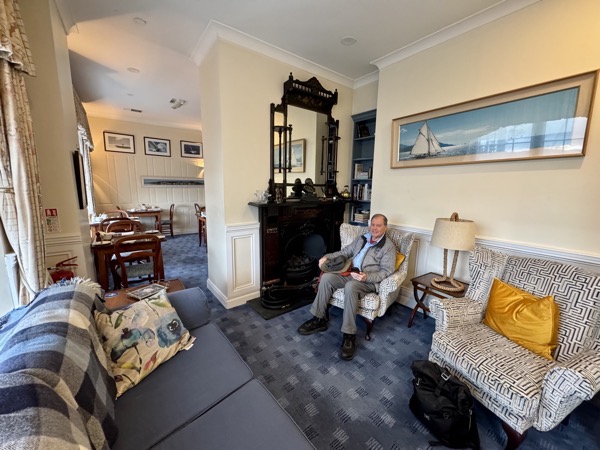
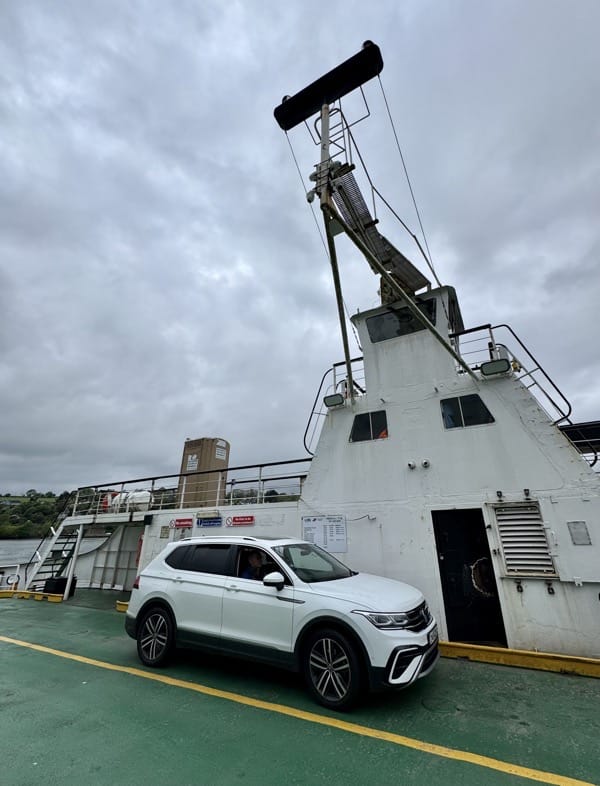
The prospect of rain today was fulfilled. After our 8 a.m. breakfast, we left the The Bosun by car with John driving. Just up the road, about a mile away, the Glenbrook Ferry carried us across the River Lee, linking Passage West to the R624, which led us onward into the town of Cobh.
— The Bosun —–
—— Glenbrook Ferry —–
We parked at the Cobh Heritage Centre and took a self-guided tour through its evocative displays of naval, immigration, and shipping history. The exhibits powerfully recount Cobh’s role as one of Ireland’s principal departure points during the 19th and early 20th centuries, when famine, poverty, and the promise of opportunity abroad drove millions to emigrate. Through passenger lists, recreated ship interiors, photographs, and personal stories, the centre traces journeys to North America, Australia, and beyond, many of them made in crowded steerage conditions with little certainty of what lay ahead.
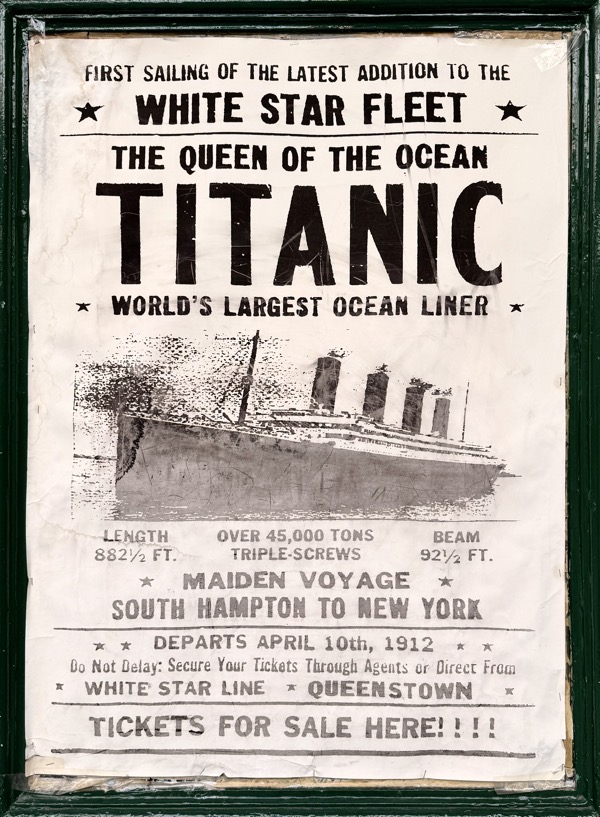
The centre also features a poignant focus on the RMS Titanic, whose final stop at Queenstown (now Cobh) in April 1912 is captured through artefacts, imagery, and accounts that bring a human scale to a tragedy closely tied to the town.
There is also an equally compelling section on the RMS Lusitania, which also called at Queenstown (now Cobh) shortly before being torpedoed in 1915 during the First World War. Its story is presented through passenger testimonies and historical records that highlight the sudden, devastating loss of life and the shock felt along the Cork coast.
Each of our centre tickets had the name of a real person featured somewhere in the museum. Jane’s was Margaret Rice, who perished aboard the Titanic with her five young sons; only her body was recovered. My ticket featured Francis Browne, an Irish Jesuit priest and gifted photographer who boarded the Titanic and took rare photographs of life on board. He was ordered to leave the ship when it stopped at Queenstown (now Cobh) in Ireland, just before it sailed into the Atlantic, which likely saved his life.
We spent two captivating hours in the Heritage Centre, and afterward, in the gift shop, Jane and I purchased a T-shirt, some chocolate candy bars, and four Donnelly fridge magnets for my siblings and me. It’s quite possible that my mother’s Donnelly ancestors departed from Cobh, though we have yet to uncover definitive genealogical proof.
—— The Cobh Heritage Centre —–
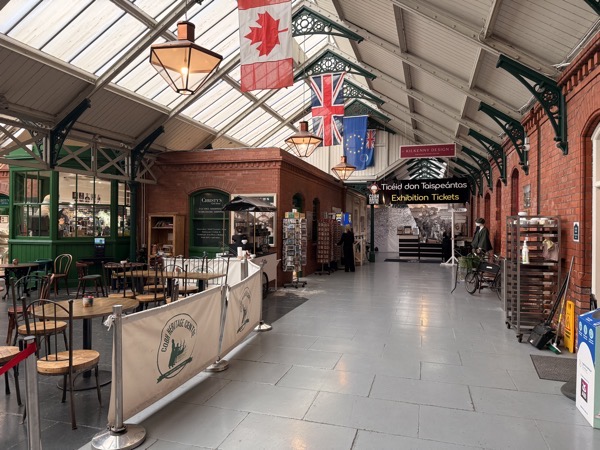
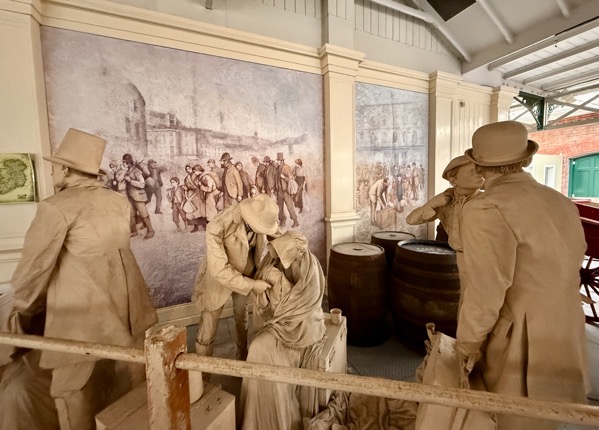
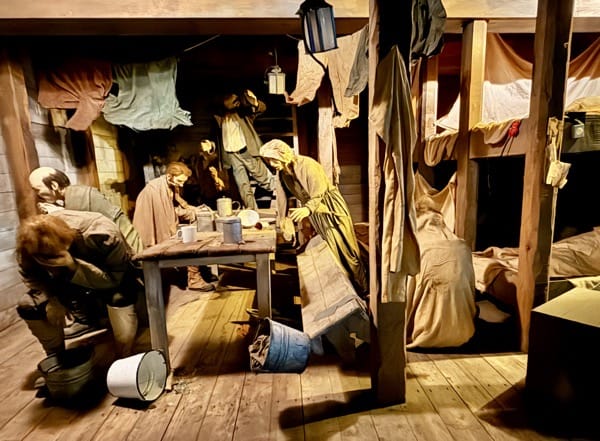
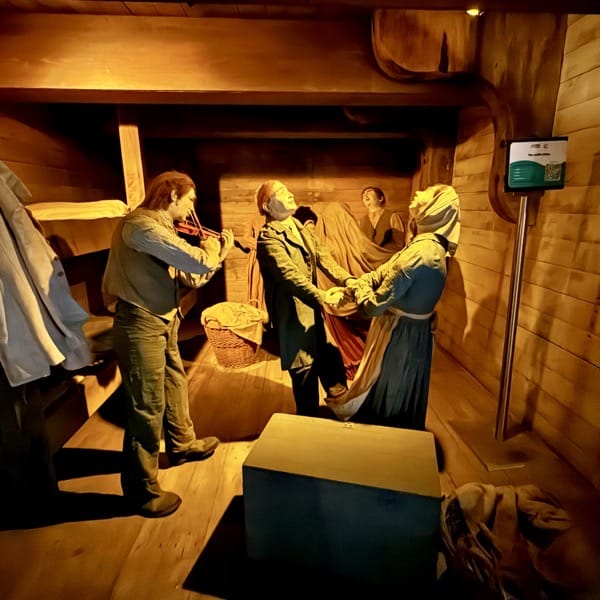
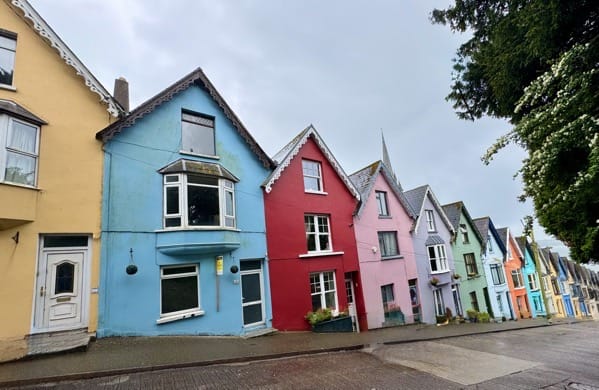
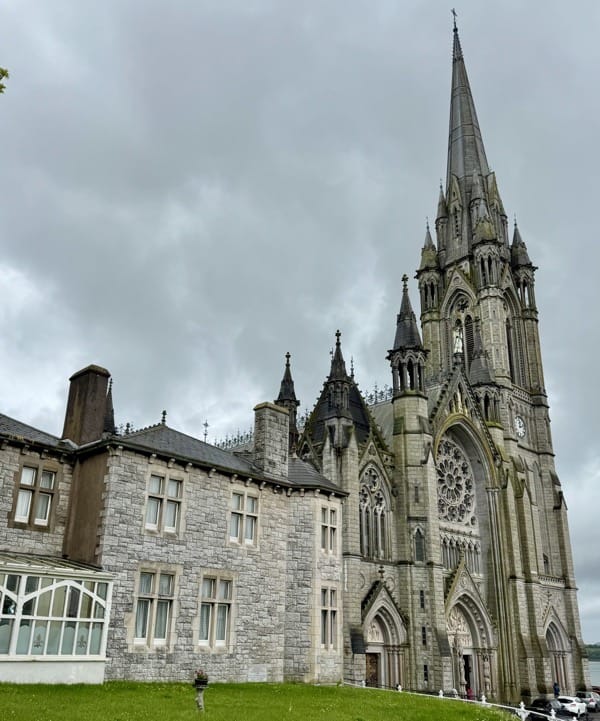
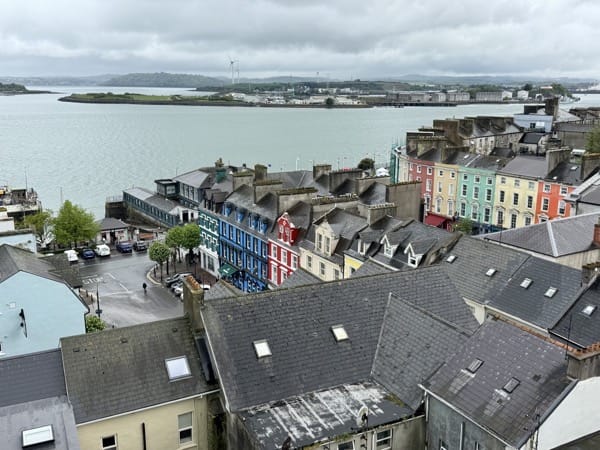
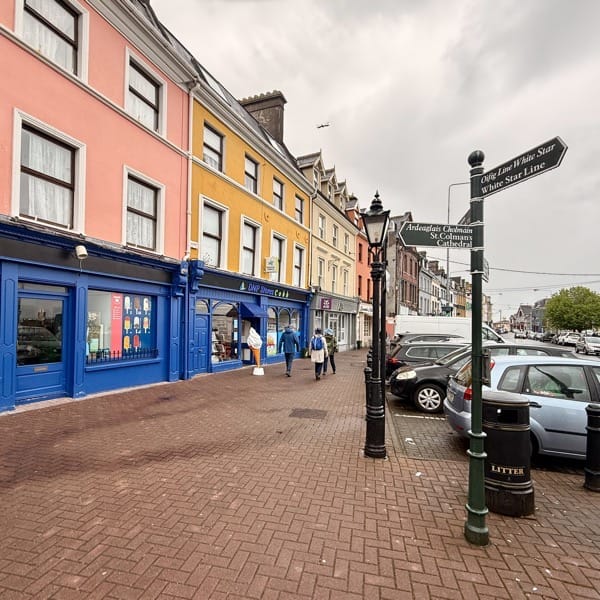
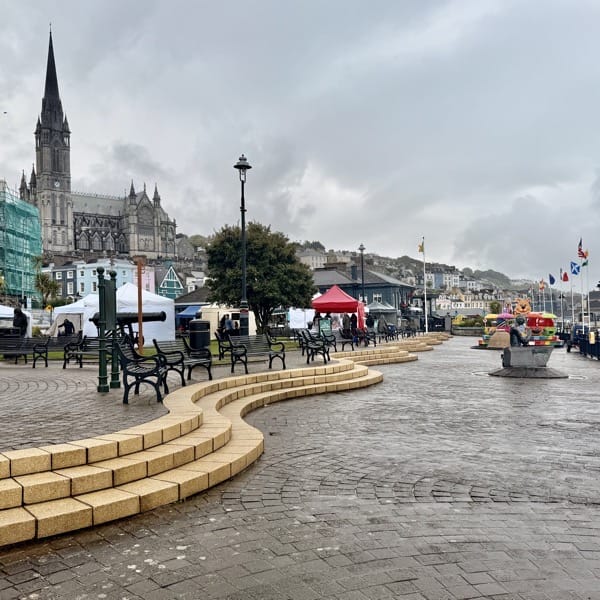
After exiting the Heritage Centre, we hiked up the hill to see the “Deck of Cards,” brightly painted terraced houses overlooking the harbour, and to admire St Colman’s Cathedral rising above the town. Nancy needed to replace the protective covers on her phone camera lenses, so we tracked down a small phone repair shop that fortunately had exactly what she needed. Afterwards, we wandered back to the car, drove to the ferry, and crossed the harbour.
—— Ramblin’ ‘round Cobh —–
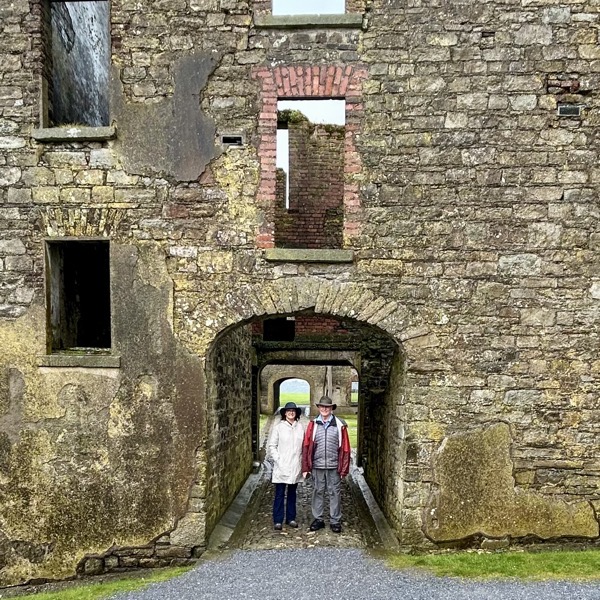
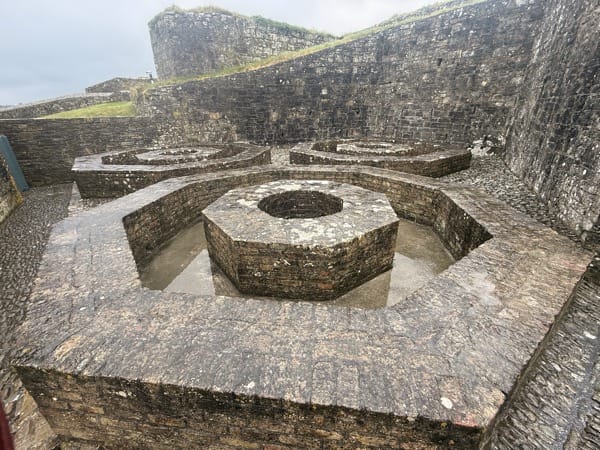
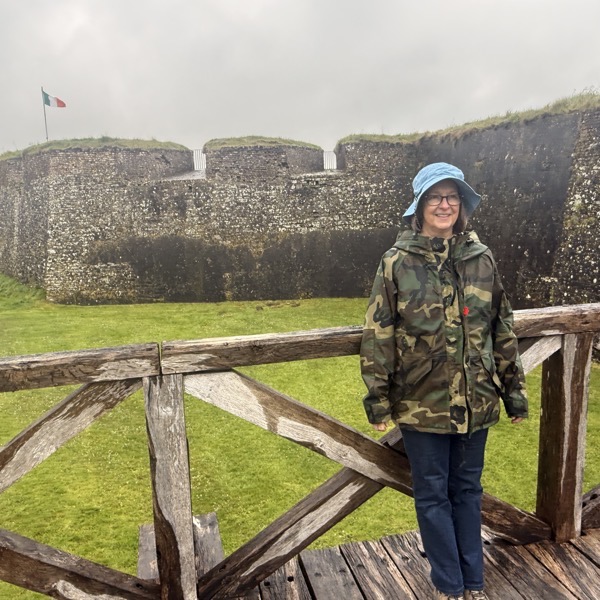
We decided to drive to Charles Fort, about a 45-minutes drive away and south of Kinsale. Unfortunately, we got caught in the traffic from the Heineken Kinsale 7s Rugby Festival taking place over the holiday weekend. The event, now in its 35th year, is considered Ireland’s largest rugby sevens tournament and attracts more than 80 teams from Ireland and abroad. Once we finally fought our way through the maddening congestion, the rain continued to pour as we reached our destination. John decided to remain in the car while the other three of us toured the fort.
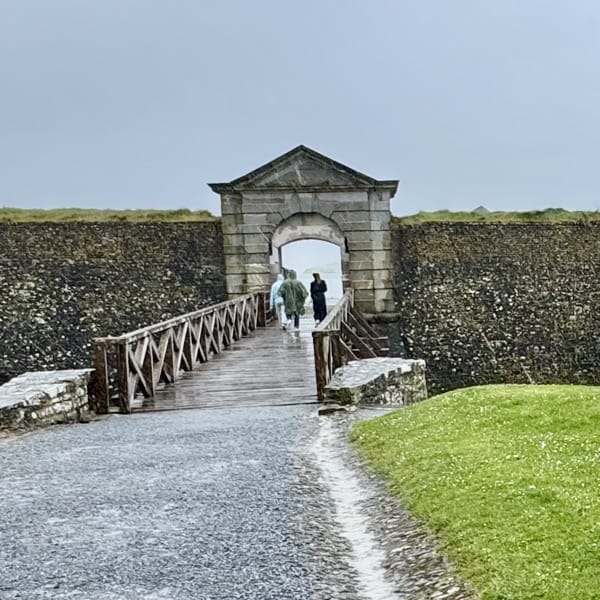
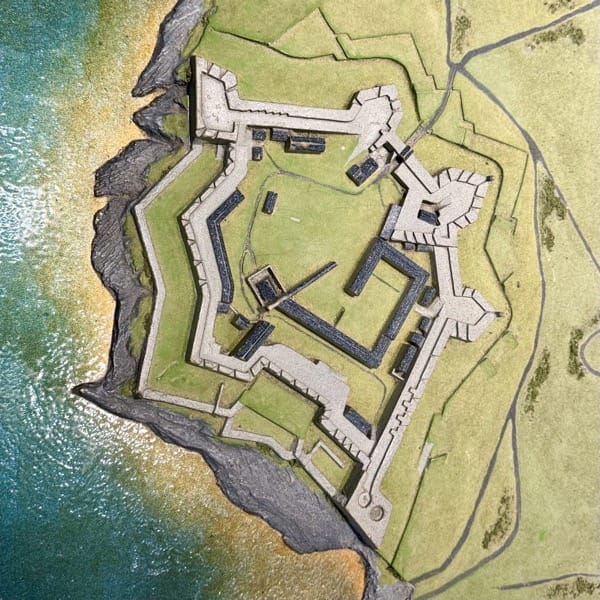
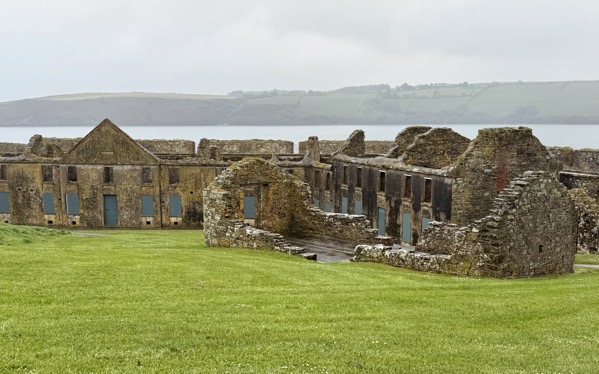
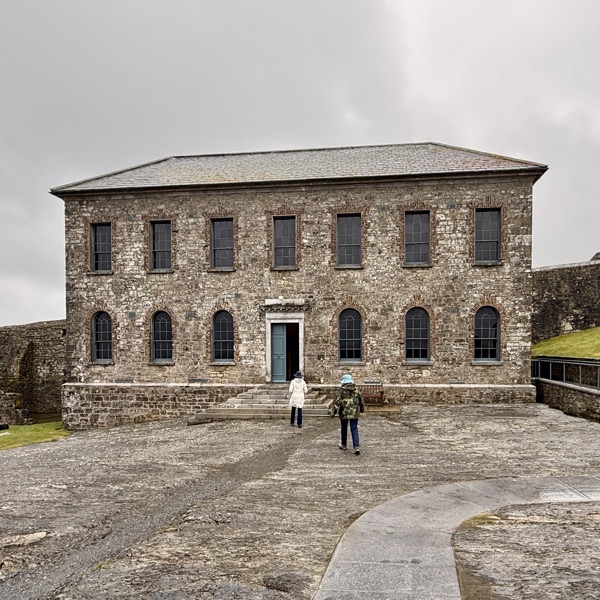
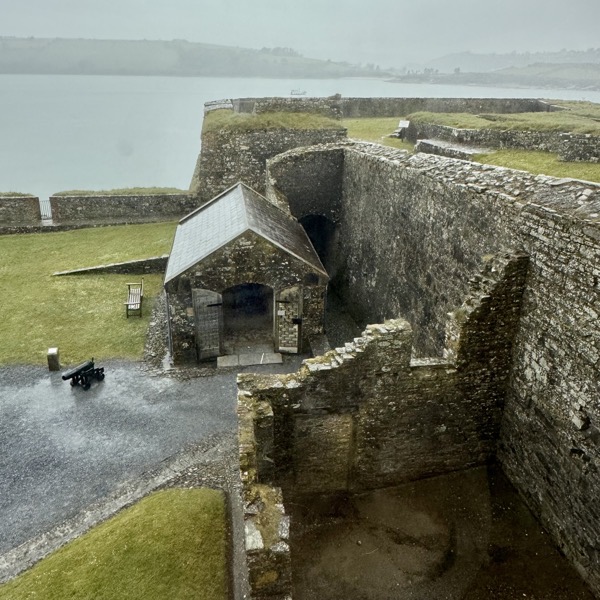
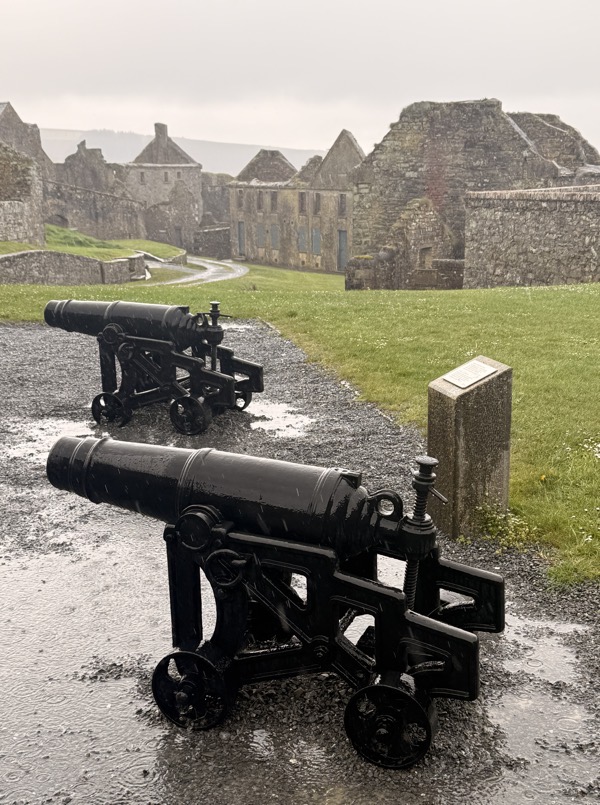
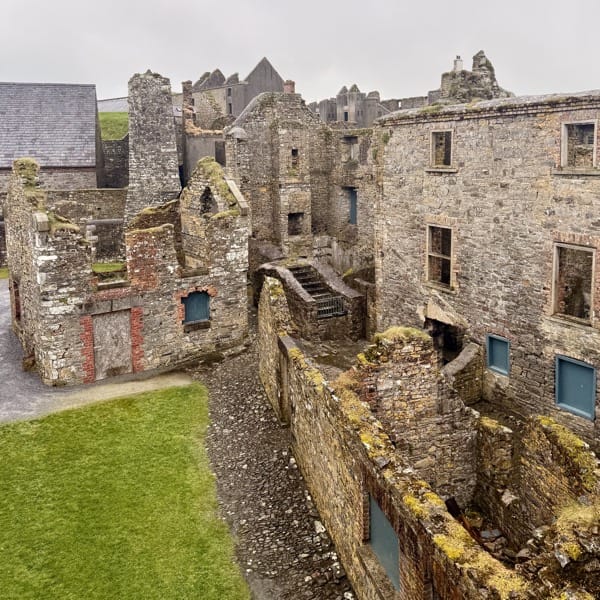
Charles Fort is one of the largest and best-preserved star-shaped military forts in Ireland, built in the late 17th century to guard the entrance to Kinsale Harbour. Massive stone ramparts, bastions, and barracks spread across the hillside, offering sweeping views over the water and surrounding countryside. The fort also played an important role in Irish history during the Williamite War and later served as a British army barracks for centuries. We visited the small but informative visitor centre, examined the historical displays, and wandered through the enormous grounds despite the relentless rain. It would have been far more enjoyable on a sunny day, when the harbour views and dramatic setting could truly be appreciated.
—— Charles Fort —–
Next, we were all ready for something to eat, so once again we had to weave our way through the throngs of rugby fans crowding the narrow streets. The festival atmosphere had clearly become a bit unruly, with scantily clad young women and men publicly urinating against the old stone walls lining the road.
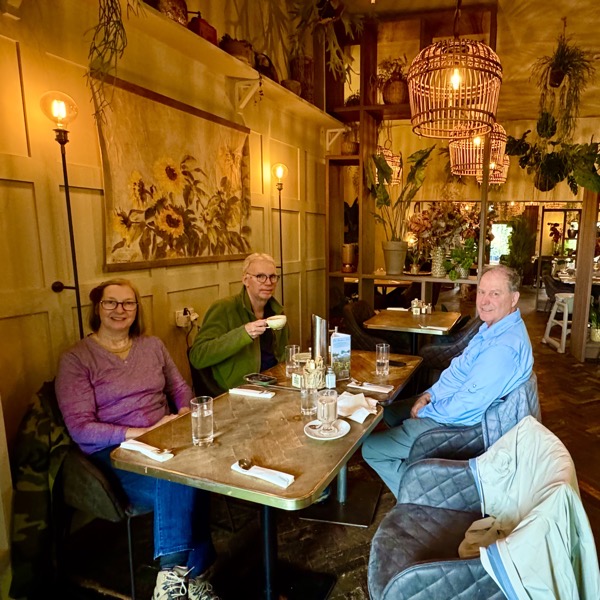
Eventually, we found the lovely The Glasshouse Restaurant at The Pavilion Garden Centre on Myrtle Hill Road on our way back toward Monkstown. Jane enjoyed vegetable soup with brown Irish soda bread, while Nancy and I each had a monkfish and prawn curry with rice. John chose the sausage roll, and later, those still hungry opted for dessert.
Afterward, we wandered through the garden centre, admiring the plants and flowers before driving directly back to The Bosun. We rested for a while, hung our soaked raincoats up to dry, and then headed down to the bar for a nightcap. It was a pleasant way to end the soggy day.
—— The Pavillon —–