Tuesday, April 28, 2026
We arose around 7 a.m., fully refreshed after a good night’s sleep. After enjoying a hearty breakfast in the Schoolhouse Hotel dining room, we set out on foot for the The Shelbourne Hotel near St Stephen’s Green, where we would catch our tour bus for a day trip to Newgrange. The bus made one additional stop to pick up more passengers (fourteen in total) before heading north out of the city.
As we left Dublin behind, the scenery softened into rolling green fields divided by hedgerows and dotted with grazing sheep, a peaceful patchwork of countryside stretching to the horizon. As the bus rolled around our guide, Mary Gibbons, described the region surrounding us and the sights in store for the day.
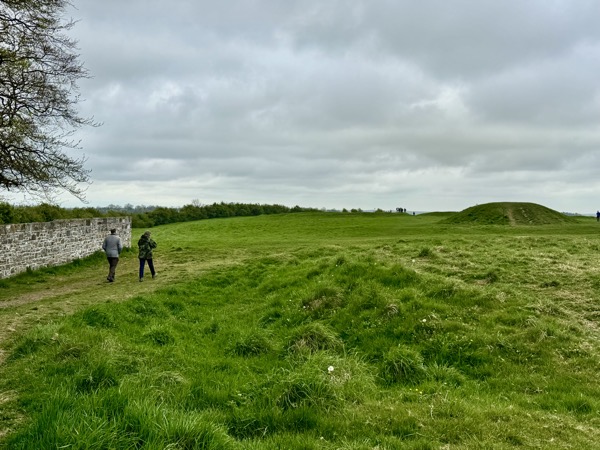
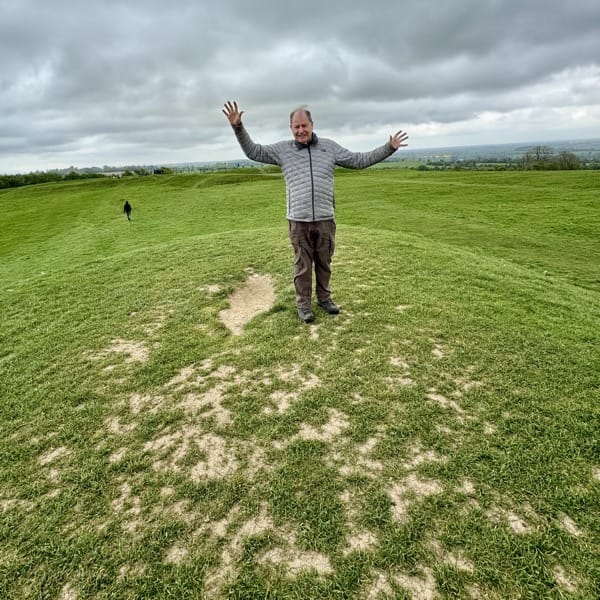
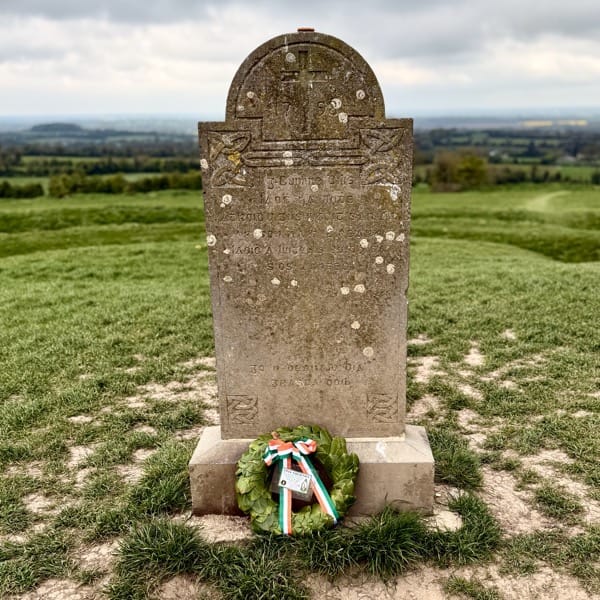
Our first stop was the Hill of Tara, an ancient ceremonial and burial site steeped in Irish history and mythology. Once considered the seat of the High Kings of Ireland, Tara was a place of political power as well as spiritual significance. Today, its grassy mounds and earthworks appear deceptively simple, but they mark a landscape that has been central to Ireland’s story for thousands of years.
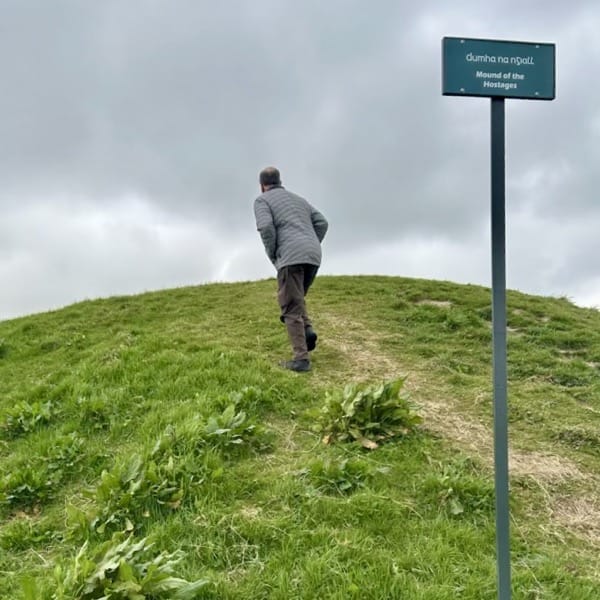
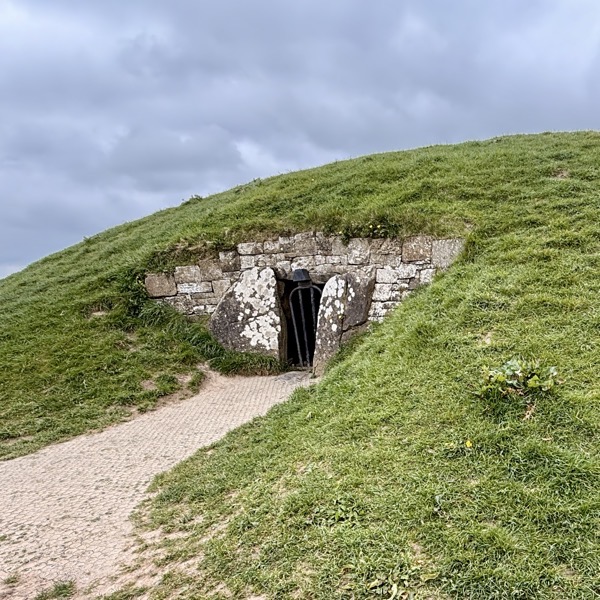
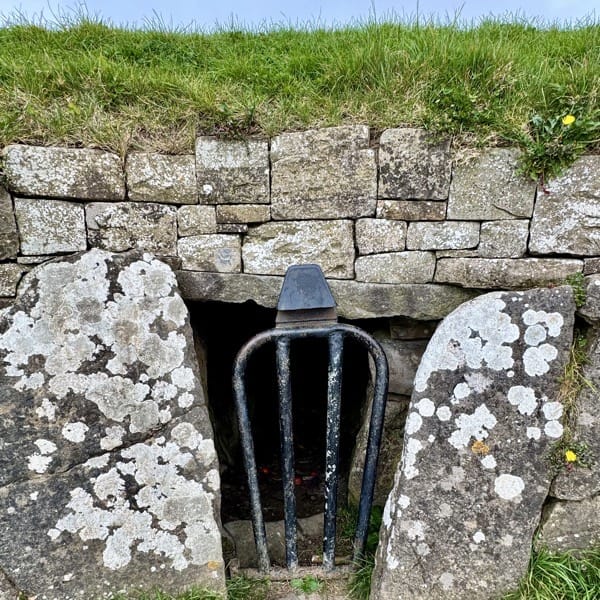
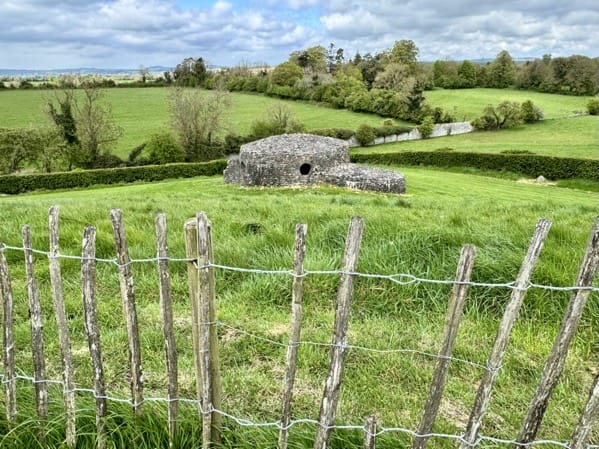
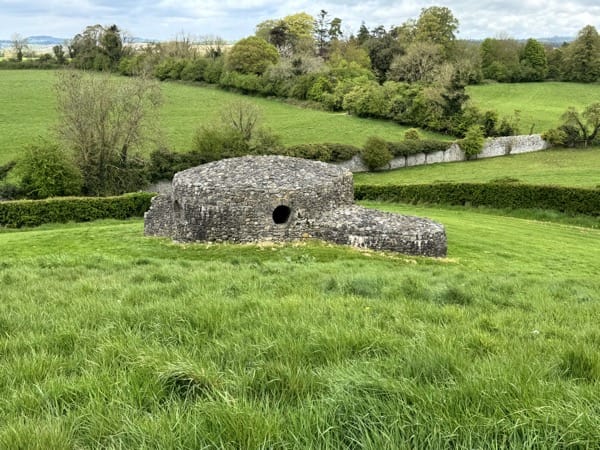
We viewed the Mound of the Hostages, an ancient Neolithic passage tomb dating to roughly 3000 BC. Modest in size—about 15 meters in diameter and 3 meters high—it is nonetheless one of the oldest and most significant structures on the site. Its narrow passage is aligned with the rising sun around the cross-quarter days (not the solstices), allowing light to penetrate the chamber at specific times of year. Archaeologists believe the tomb was used for both cremation and inhumation burials, with remains of hundreds of individuals discovered there over time.
We then made our way up the hill itself, where we were free to wander across the gently undulating landscape, taking in sweeping views of the surrounding countryside and the subtle earthworks that mark this ancient ceremonial center.
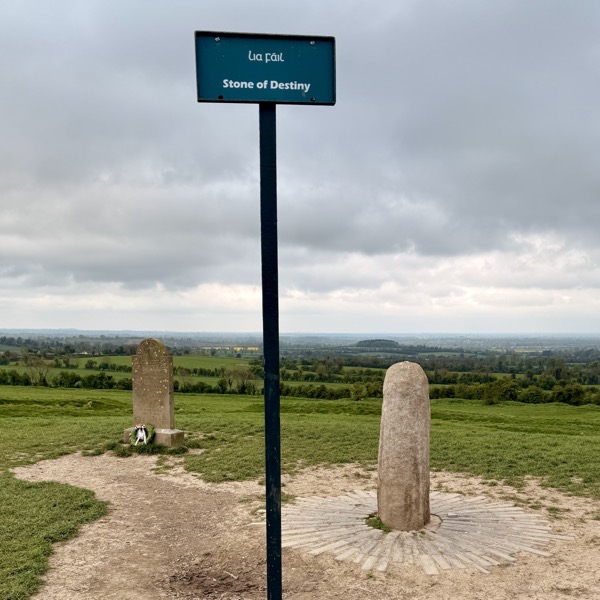
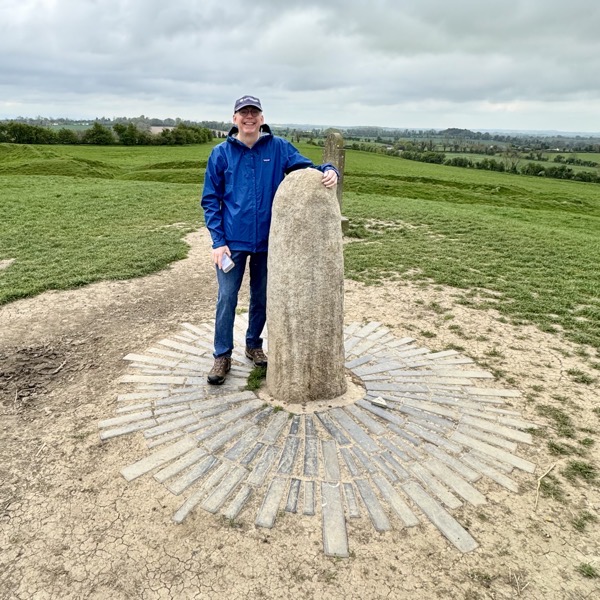
At the summit, the Lia Fáil—often called the Stone of Destiny—rose prominently from the earth. This tall, weathered standing stone, roughly cylindrical and tapering slightly toward the top, stands as a stark and solitary marker against the open sky. Tradition holds that it once roared when touched by the rightful High King of Ireland. Today, its commanding position atop the hill makes it feel like the symbolic heart of Tara, anchoring the surrounding landscape in both history and legend.
—— The Hill of Tara —–
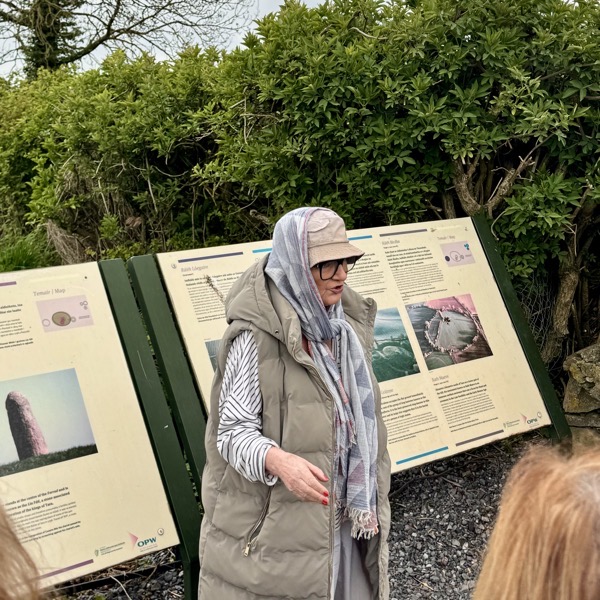
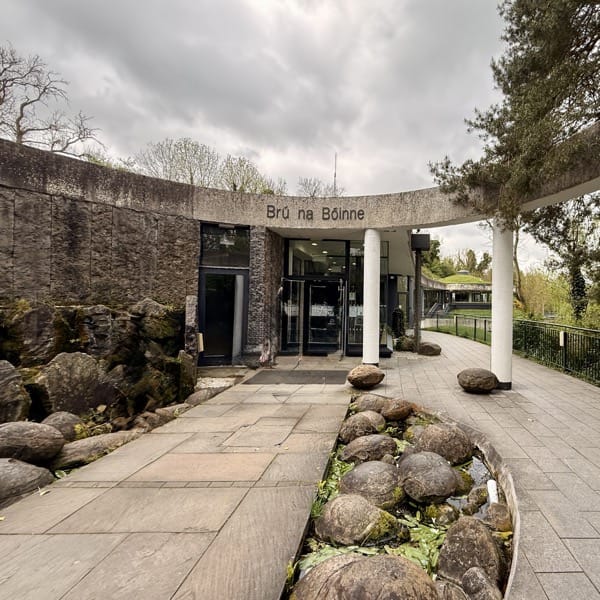
From the Hill of Tara, it was a short bus ride to the visitor center at Brú na Bóinne, where we explored a series of engaging and unusual exhibits that brought the ancient landscape to life. We also paused for a quick bite at the café before continuing on with the next part of the journey.
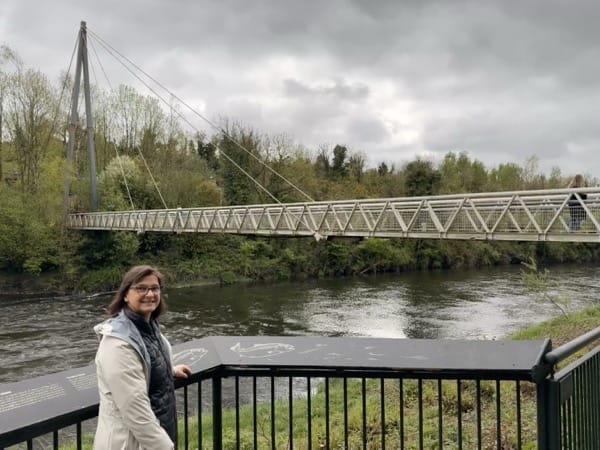
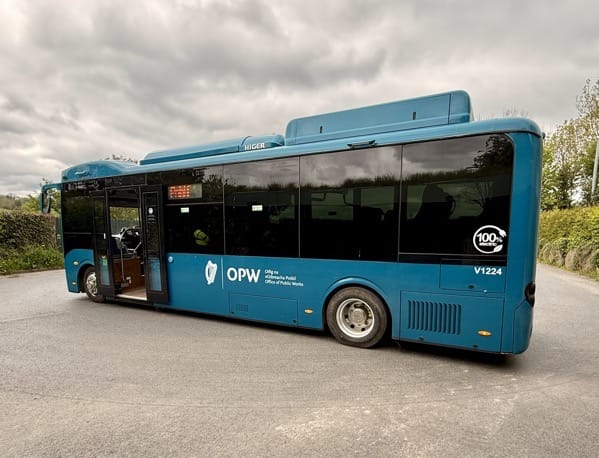
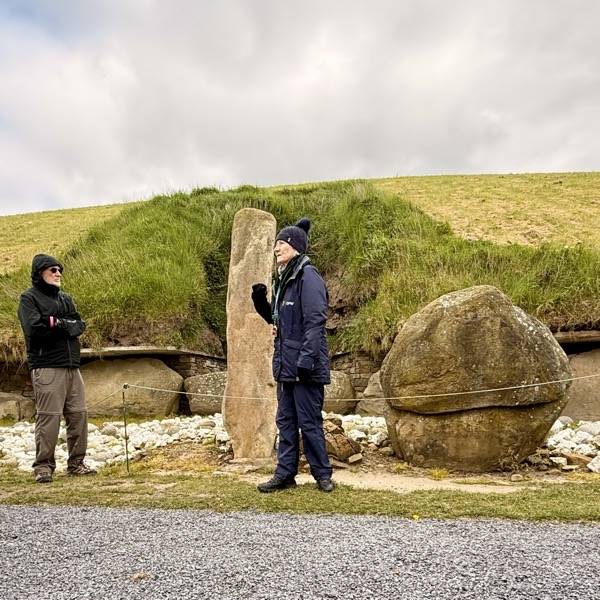
When our tour time arrived, we made a short walk across the footbridge and through the landscaped grounds to board an all-electric shuttle bus that carried us deeper into the Brú na Bóinne complex. Our destination was Knowth (rhymes with South), an impressive Neolithic passage tomb overlooking the River Boyne.
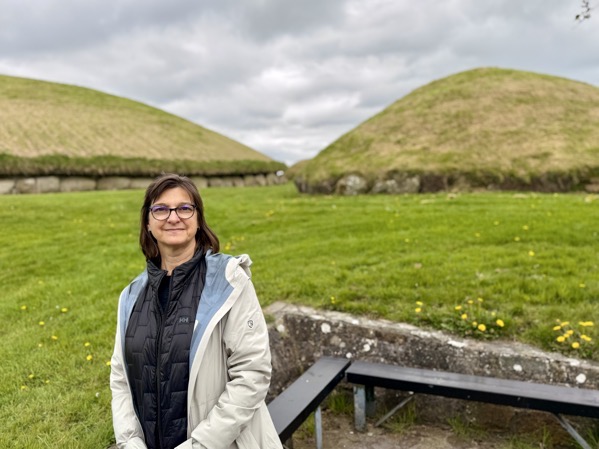
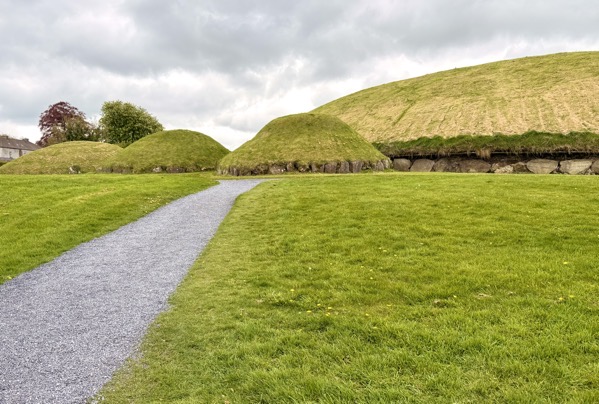
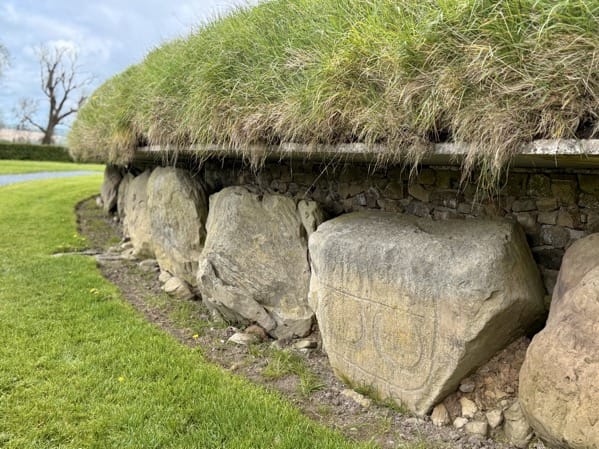
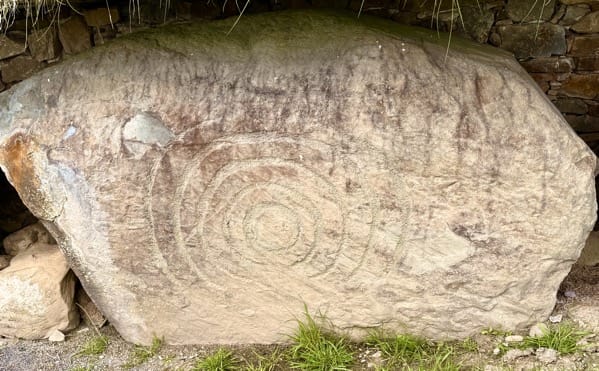
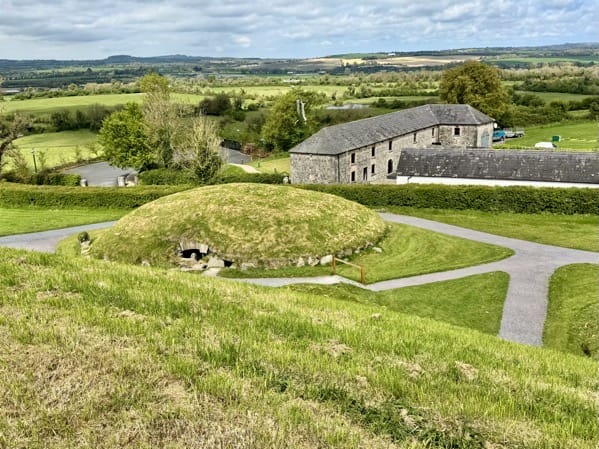
Knowth is a vast mound, built around 3200 BC, and is encircled by 17 smaller satellite tombs, forming one of the most significant prehistoric landscapes in Ireland. The main mound is ringed by 127 kerbstones (with a few now missing), many of which are intricately carved with megalithic art—spirals, lozenges, serpentine lines, and crescent shapes that may represent lunar phases or symbolic patterns whose meanings are still debated. A striking band of white quartz stones is arranged along part of the perimeter, particularly near the eastern entrance, giving a sense of how visually dramatic the site may once have appeared.
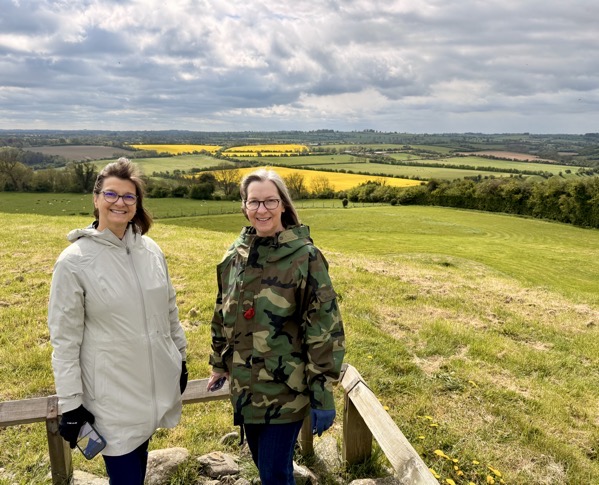
Although we were not permitted to enter the inner passages or chambers, we were able to climb to the top of the mound, where sweeping panoramic views of the Boyne Valley stretched out in every direction, reinforcing the site’s commanding presence in this ancient ceremonial landscape.
—— Brú na Bóinne Visitor Center and Knowth —–
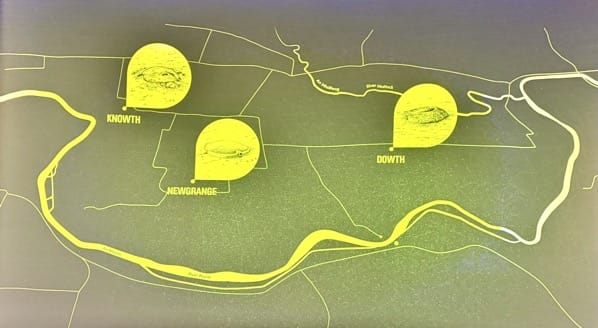
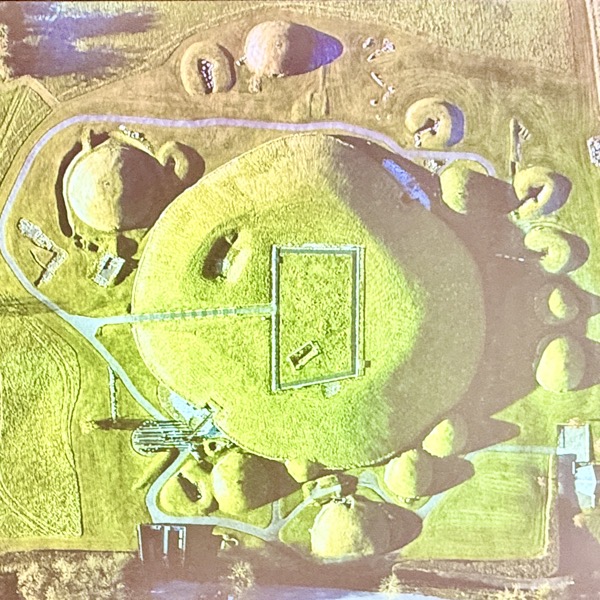
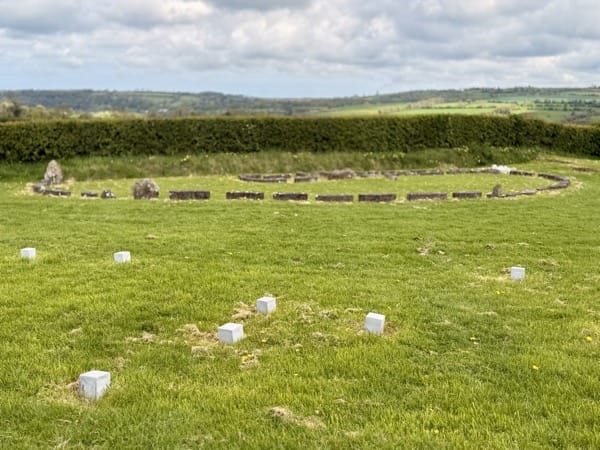
After returning to the visitor center, we boarded the tour bus for a short drive to Newgrange, the grandest of the Neolithic passage tombs, built around 3200 BC—older than both Stonehenge and the Egyptian pyramids. It is the centerpiece of the Brú na Bóinne complex, a UNESCO World Heritage Site renowned for its archaeological and cultural significance.
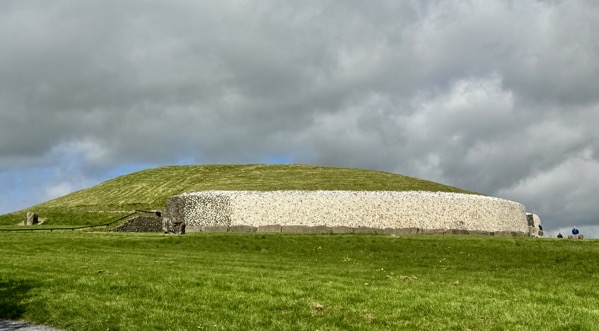
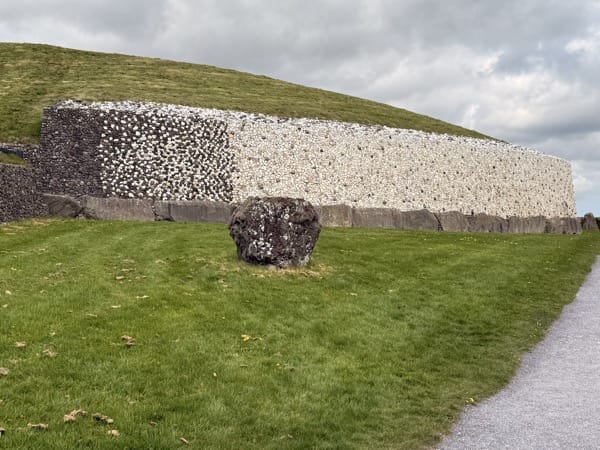
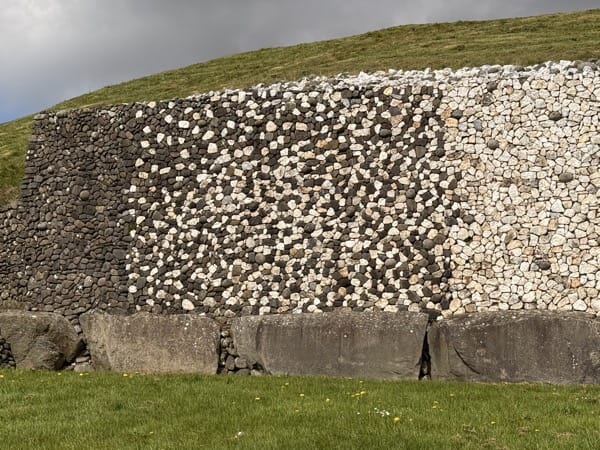
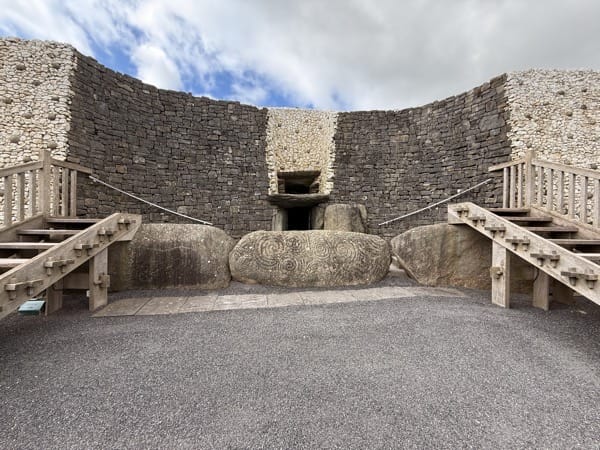
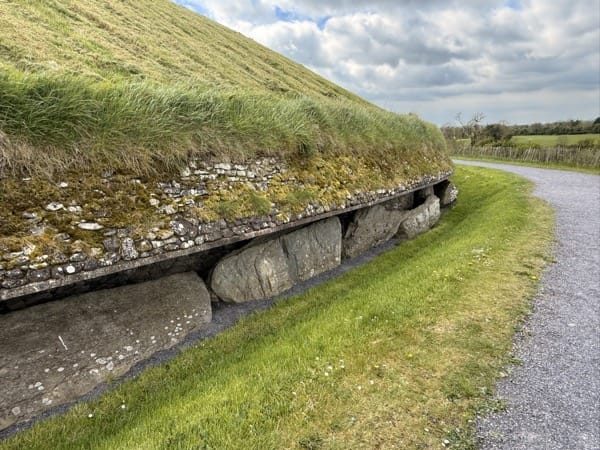
From the outside, Newgrange is striking and unmistakable: a large circular mound rising from the landscape, its façade partially reconstructed with a bright band of white quartz and dark granite stones that give it a bold, almost modern appearance. Encircling the base are large kerbstones, many decorated with intricate carvings—most famously the continuous triple spiral motif at the entrance stone, a powerful symbol whose meaning is still debated.
We were then guided inside, passing through the narrow stone passageway into the central chamber. Along the sides were stone recesses where cremated human remains and grave goods were placed thousands of years ago. One of the highlights was experiencing a recreation of the winter solstice sunrise: the chamber was darkened, and then a beam of light—entering through the specially designed “roof box” above the entrance—slowly illuminated the inner chamber, demonstrating how, on the shortest day of the year, sunlight penetrates deep into the tomb. The effect was both dramatic and deeply symbolic, suggesting a connection to cycles of renewal and rebirth. After about 10–15 minutes, we were escorted back out into the daylight, carrying with us a vivid impression of this remarkable ancient monument.
——Newgrange—–
The bus ride from Newgrange back to Dublin may—or may not—have included a bit of napping. After disembarking near The Shelbourne Hotel, we wearily made our way on foot back to the Schoolhouse Hotel.
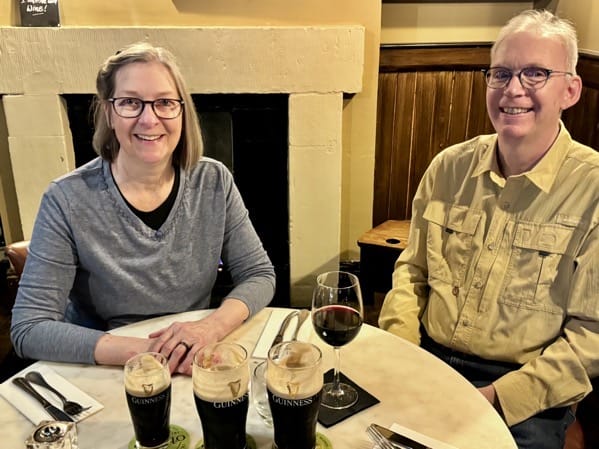
That evening, we enjoyed a fine dinner at the hotel’s well-regarded gastropub, a welcome chance to relax after a full day of exploring. Afterwards, we gathered in Nancy and John’s room for a simple dessert of cookies (courtesy of Tesco), while we talked through our itinerary and made plans for the next day.
—— Dinner at the Schoolhouse Gastropub —–