Tuesday, May 5, 2026
It was nice waking up in our Kenmare apartment, fixing our own coffee and tea, and enjoying an easy breakfast of croissants, cheese, smoked salmon, smoothies, and a biscuit donut — or was it a donut biscuit? Either way, it was a fancy donut topped with cream, crumbled Biscoff-style cookies, and something deliciously caramel-like. It was quite tasty and probably a good thing we split it four ways.
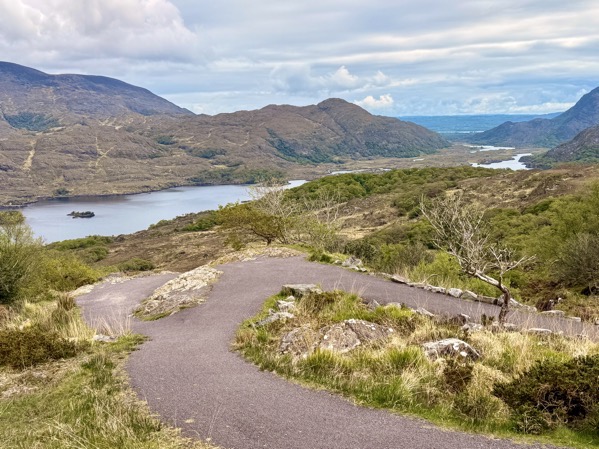
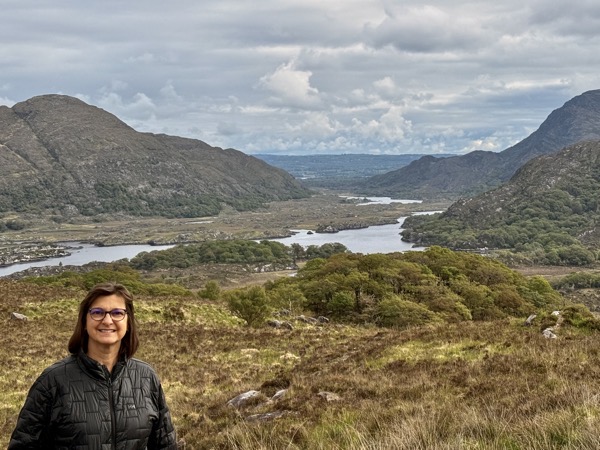
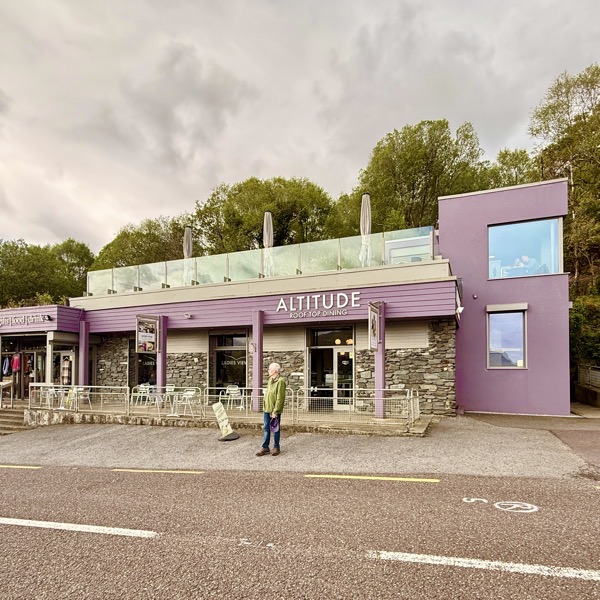
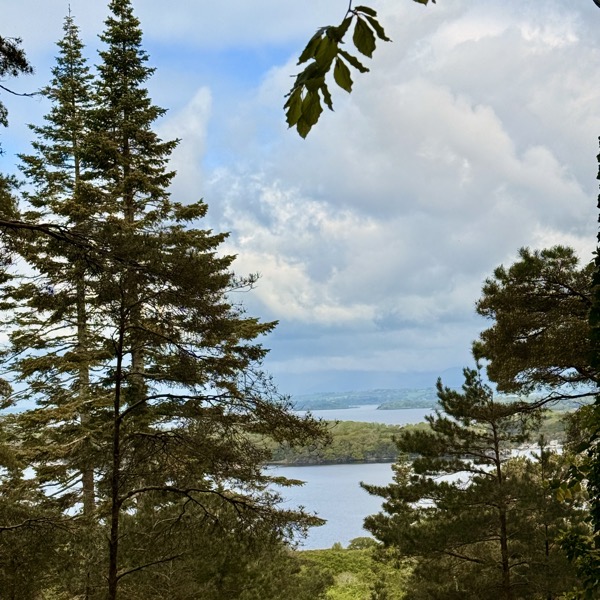
We all got ready and hit the road shortly after 9:00 a.m., headed for Killarney National Park. Driving up the N71, we were treated to some of the most beautiful scenery we’ve seen so far in Ireland — mountains, valleys, and lakes unfolding around every bend. We pulled over at several overlooks, including Ladies’ View. Just beyond it was the Ladies’ View Gift Shop and Café and, perhaps most importantly, a restroom.
—— Killarney National Park (KNP)——
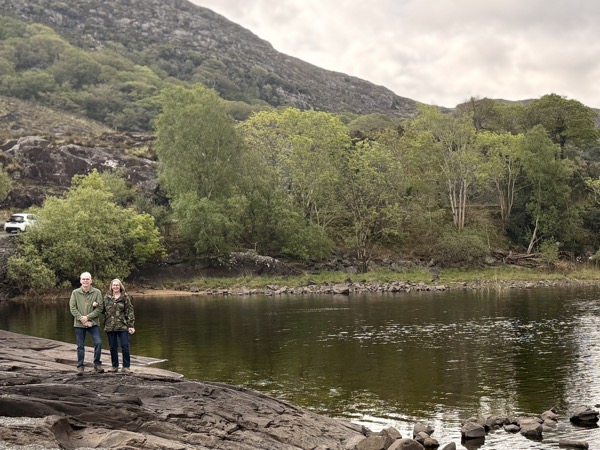
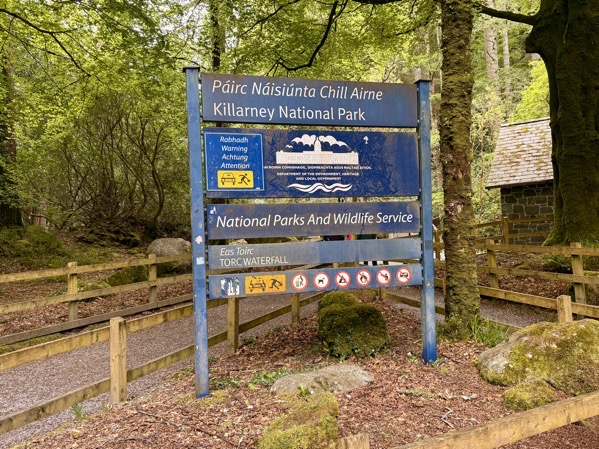
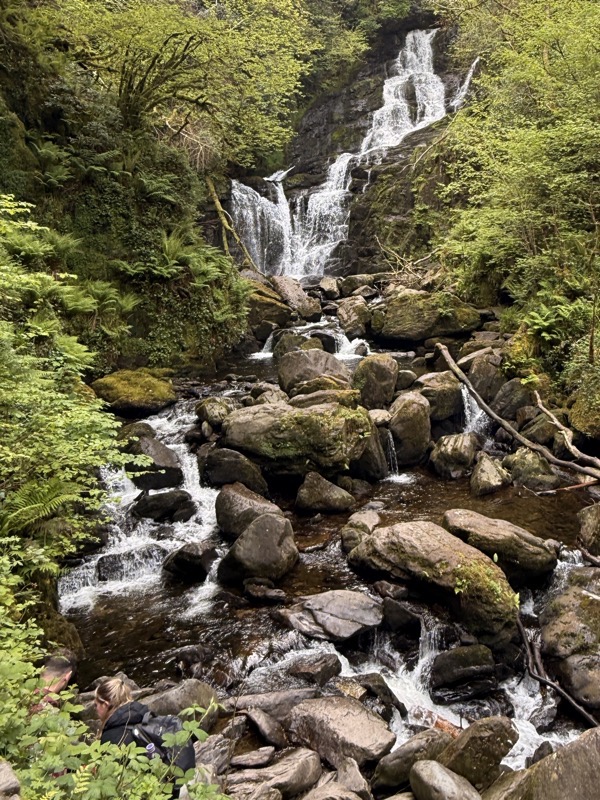
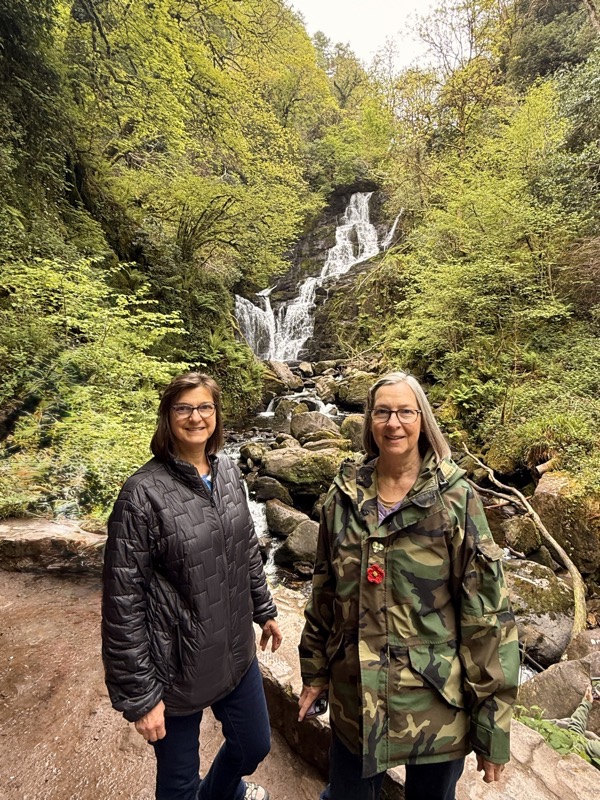
A few miles farther, we arrived at Torc Waterfall (“torc” is the Irish word for boar), a picturesque cascade reached by a pleasant 10-minute uphill hike from the parking area. The trail was wide and shaded by moss-covered oaks, logs, and rocks, giving the whole walk an enchanted feel. In this drop, the River Owengarriff tumbles about 65 feet down through the woods at the base of Torc Mountain. This was a very nice relaxing stop.
—— Torc Waterfall, KNP —–
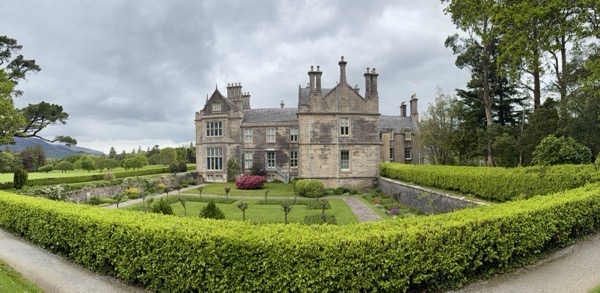
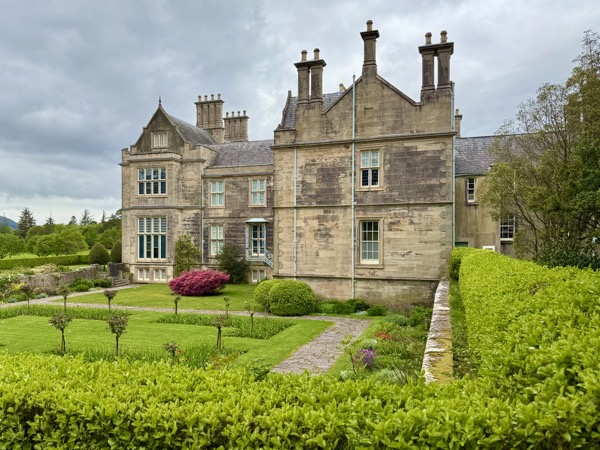
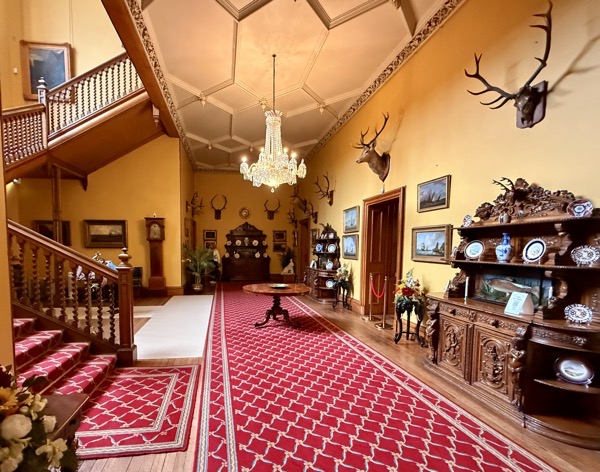
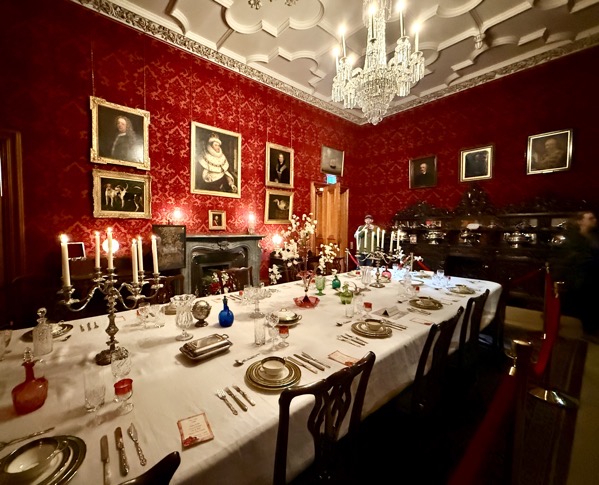
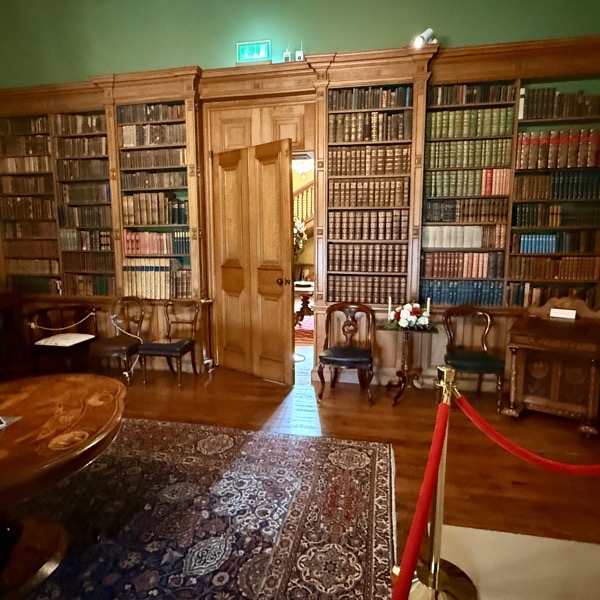
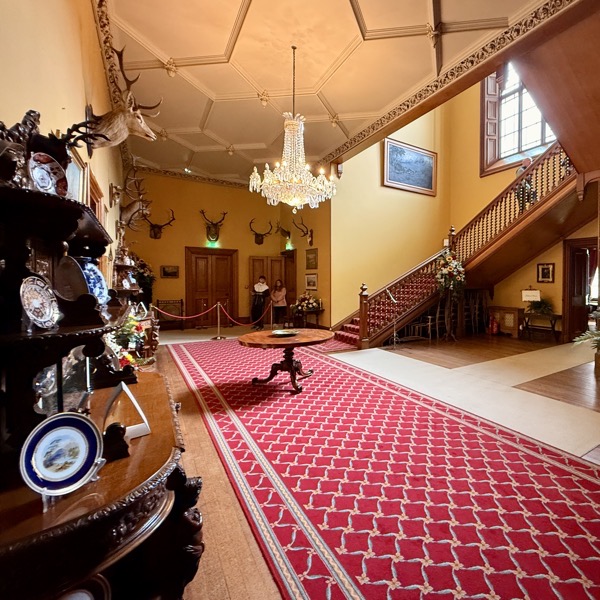
We next set out for Muckross House and Gardens, where we got a glimpse into how Ireland’s wealthy landowners lived in the 1800s. The mansion was beautifully furnished and decorated, with rooms reflecting changing styles and tastes across many decades of the Victorian era. Built between 1839 and 1843 for Henry Arthur Herbert and his wife, Mary Balfour Herbert, the grand house was designed in an elegant Tudor Revival style by Scottish architect William Burn. With its ivy-covered stone walls, tall chimneys, gables, and diamond-paned windows, it looked exactly like the kind of stately manor you would expect to find overlooking the lakes of Killarney. The house later gained fame when Queen Victoria visited in 1861, prompting lavish renovations that reportedly strained the family finances.
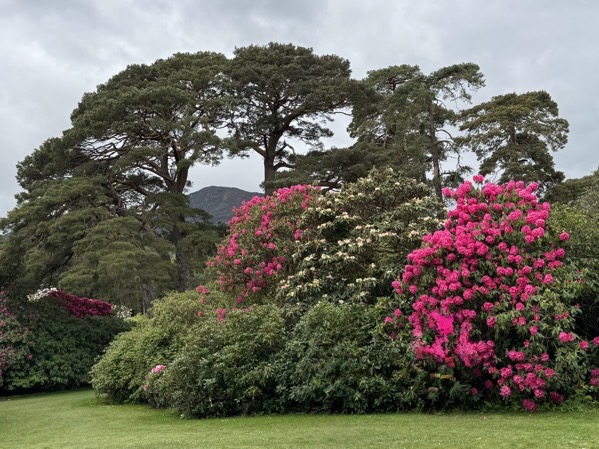
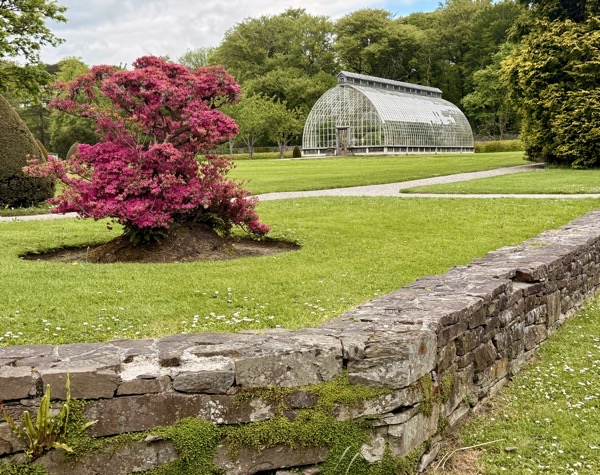
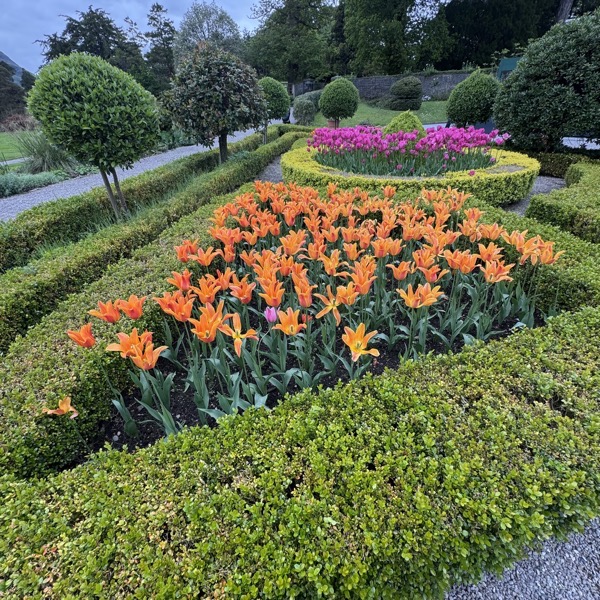
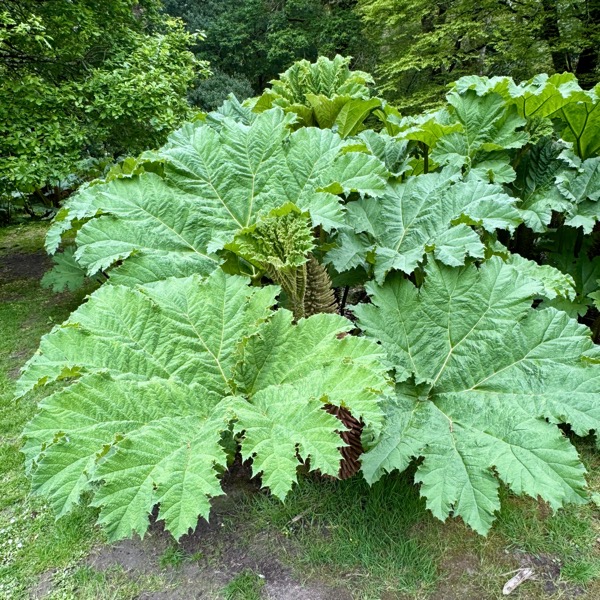
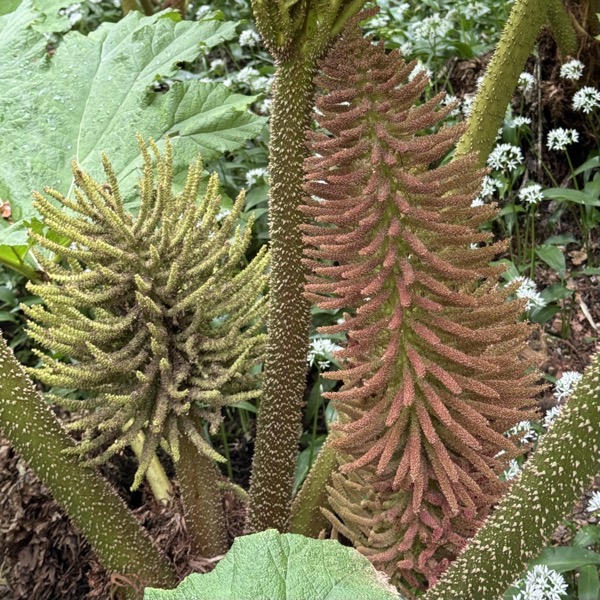
The house itself was impressive, and the gardens were especially pretty in the spring, with azaleas at their peak alongside many towering old oaks and conifers. After getting our fill of the gardens and the gift shop, we drove farther north into the small city of Killarney.
—— Muckross House and Gardens ——
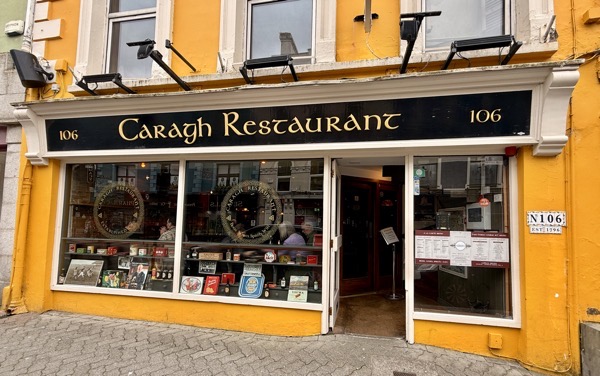
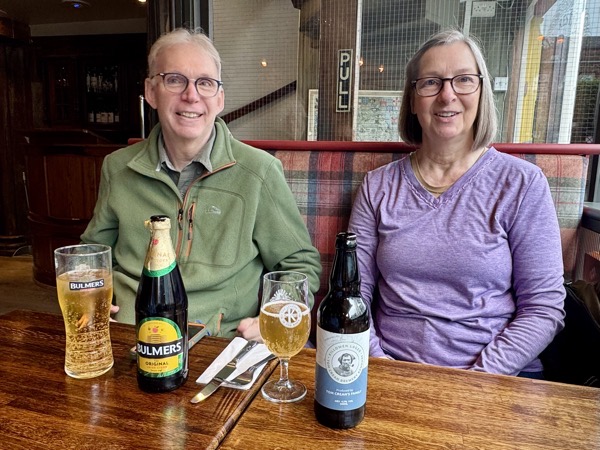
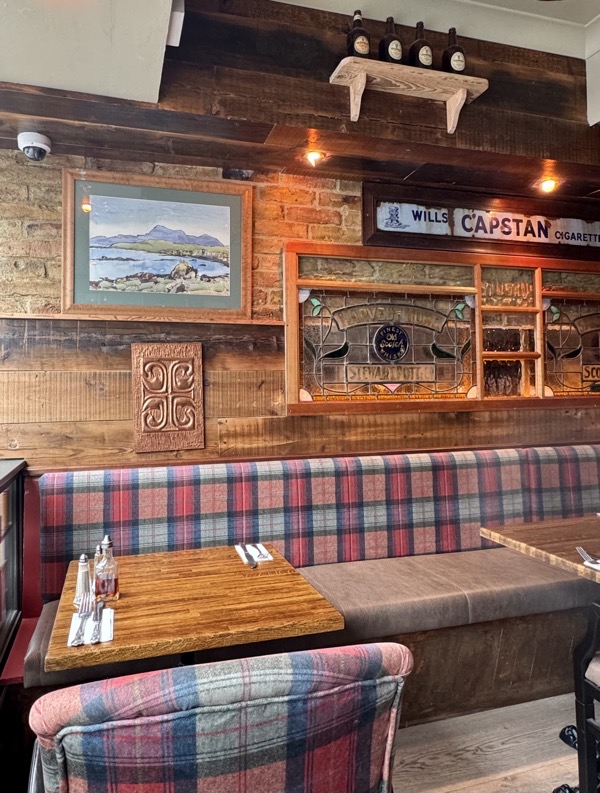
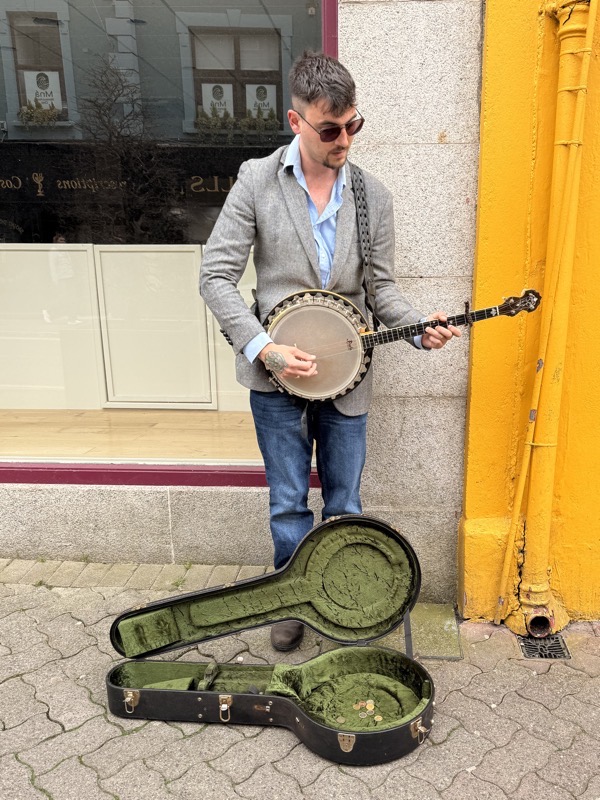
In Killarney, we found a pay-and-display parking lot and with a two-hour limit, we set off on foot through the pleasant streets in search of lunch. Before long, we settled on Caragh Restaurant. While we were waiting for our food, I stepped outside to take a picture of the restaurant’s exterior when, lo and behold, there was a busking banjo player nearby. I tipped him, and after he finished playing an Irish hornpipe, we struck up a conversation about banjos. His was an old four-string Vega tenor, beautifully suited for traditional Irish music. After listening to the start of his next tune, I headed back inside to join the others, and we enjoyed our paninis and drinks together.
Afterward, we spent another half hour or so wandering the streets of Killarney. As we passed the banjo player again, I suddenly stopped in disbelief — he was playing Bach’s Cello Suite No. 1 Prelude in G Major. It’s not a piece you often hear on a banjo, though a handful of elite players have recorded it. I couldn’t resist crossing the street to hear him finish and congratulate him on pulling off such a rare feat. Coincidentally, I had been practicing that very piece right before leaving for Ireland, so we ended up discussing the differences between playing it on a four-string banjo tuned in fifths — which preserves the fingering Bach intended for the cello, though it shifts the music into D major — versus a five-string banjo tuned in G, with the bass string lowered to accommodate a few of the piece’s lower C notes, requiring entirely different fingering.
Eventually, I crossed back over to catch up with the other three, and we wandered around a bit longer before returning to our apartment in Kenmare, arriving around 4:00 p.m.
—— Killarney —–
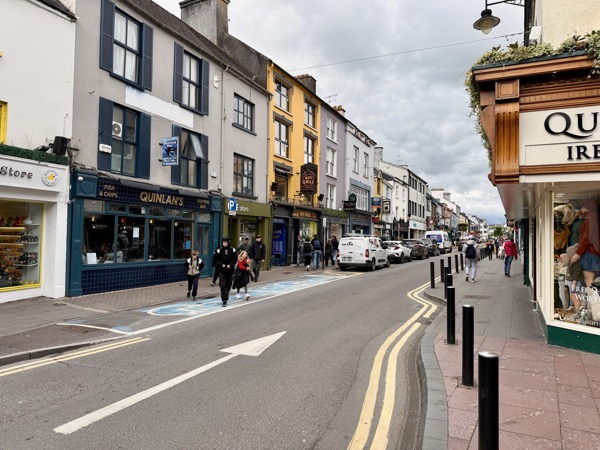
Jane was completely exhausted, so she lay down for about an hour and a half to rest. Around 6:30 p.m., the two of us decided to head back out in search of a pub with live local music. John drove us into town, then continued on to shop at Lidl and Murphy’s SuperValu while we explored Kenmare.
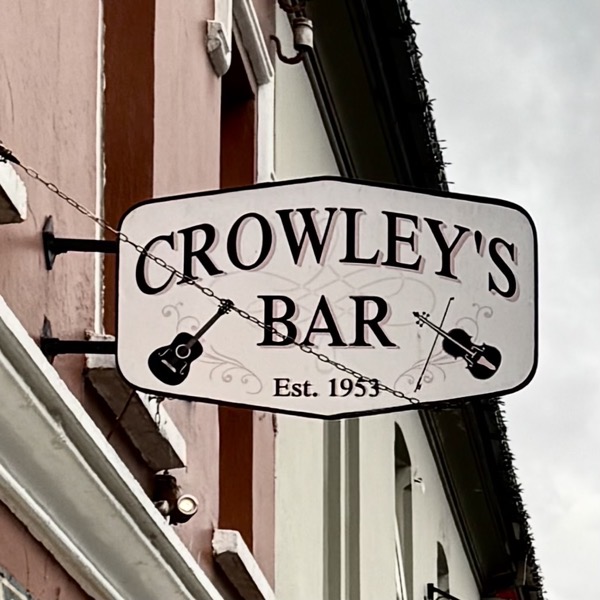
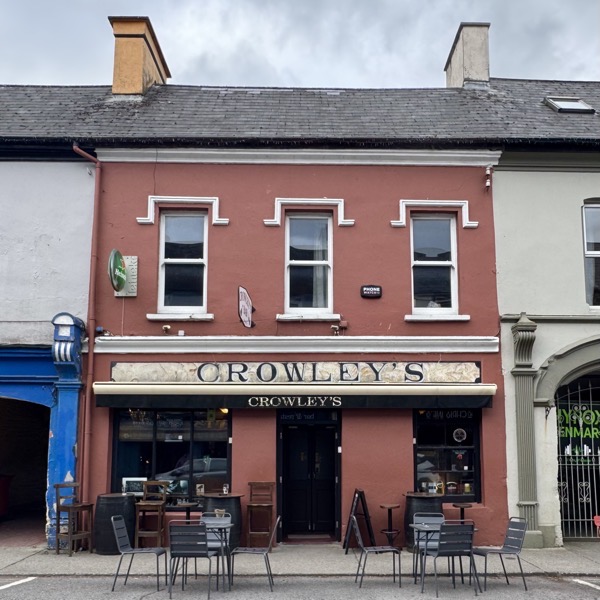
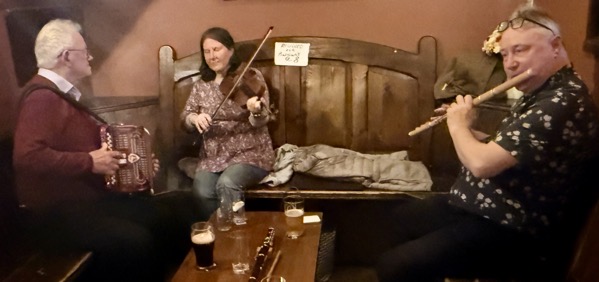
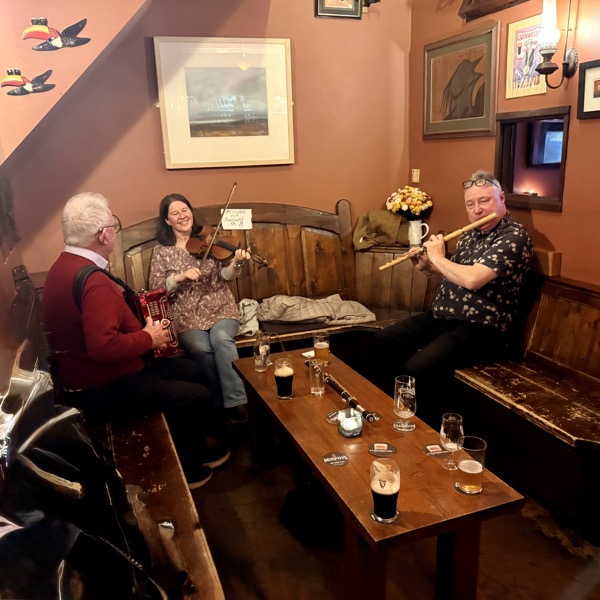
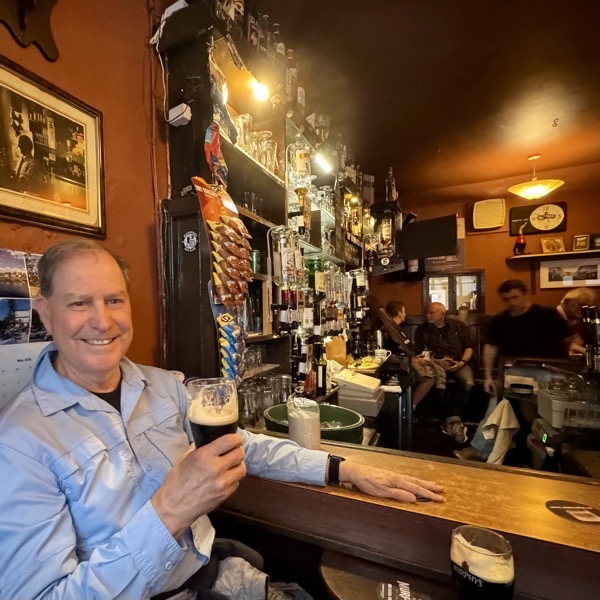
We discovered that Crowley’s was hosting a traditional music trio starting at 8:00 p.m., so we ordered beers and settled in. We lucked out when two people near the end of the bar got up just as we arrived. Before long, an older man began playing the accordion, joined by a woman on fiddle and another man alternating between flute and tin whistle. The lively traditional tunes created exactly the kind of cozy Irish pub atmosphere we had hoped to experience.
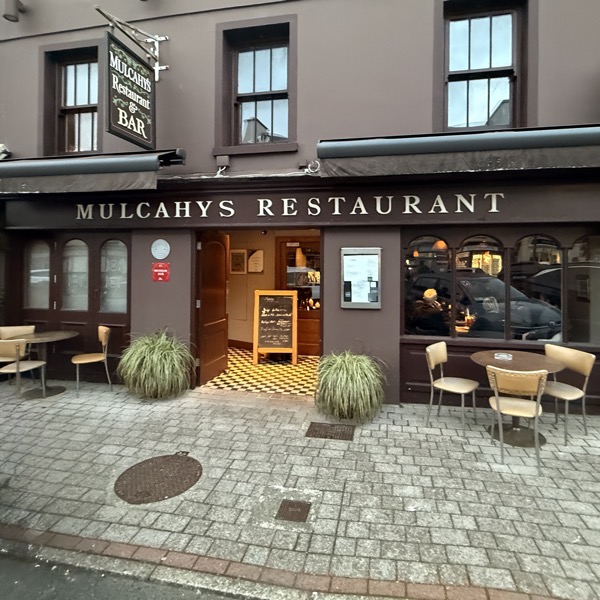
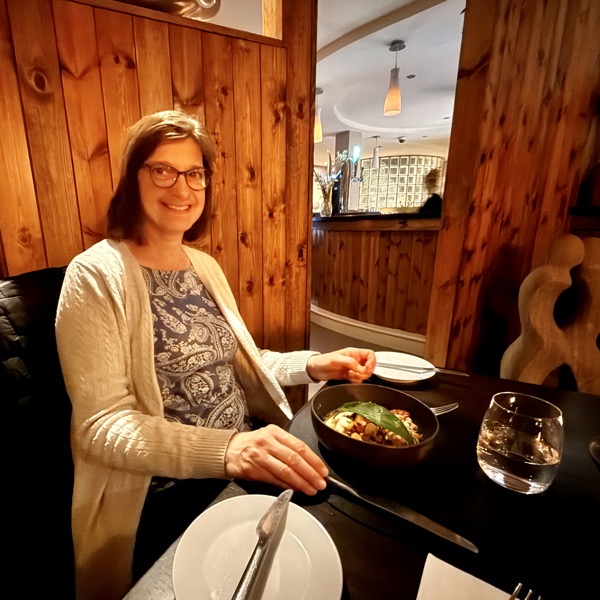
After listening for about an hour, we decided on a light dinner at nearby Mulcahy’s, where we both ordered fish pie which arrived without a pastry crust and found it quite tasty. From there, we walked the roughly mile-long route back to our apartment and promptly retired after a thoroughly pleasant day.
—— Crowley’s Bar, Kenmare —–
—— Mulcahys Restaurant, Kenmare —–
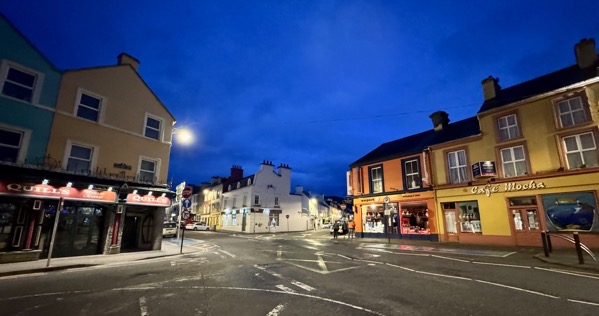
—— Kenmare in the Evening —–