Sunday, May 10, 2026
For breakfast at The Lodge this morning, we climbed the outdoor stairs to the bright and cheery upstairs dining room. Jane and I both ordered a delicious vegetarian Irish breakfast, and before long Nancy and John joined us at the table.
—— The Lodge Doolin, Breakfast Room ——
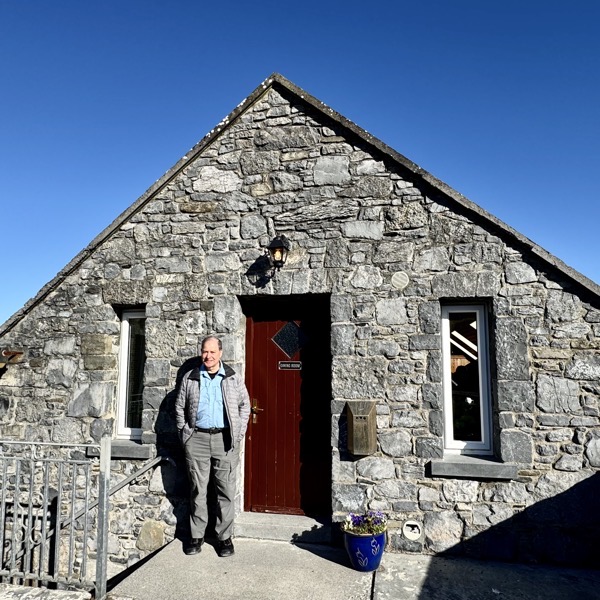
After our satisfying meal, we hit the road with Jane at the wheel. Today’s adventure took us along the famous Burren Loop, a scenic drive through one of Ireland’s most unique landscapes. The Burren, located in County Clare along Ireland’s rugged west coast, is a vast limestone region known for its rocky terrain, ancient stone walls, rare wildflowers, and prehistoric sites.
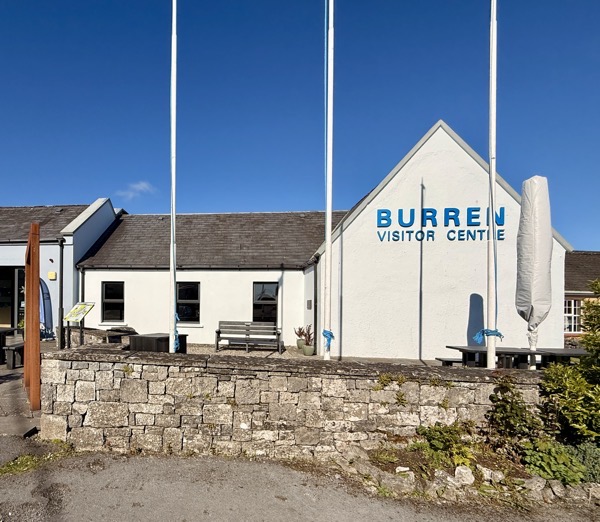
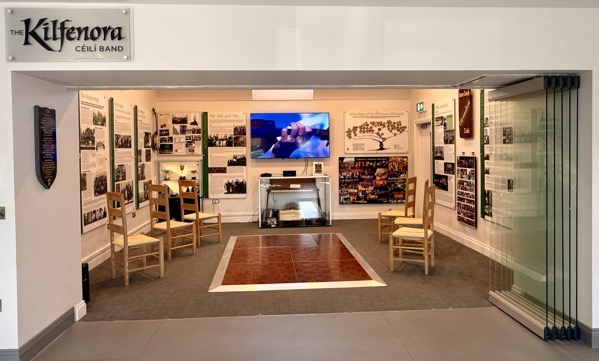
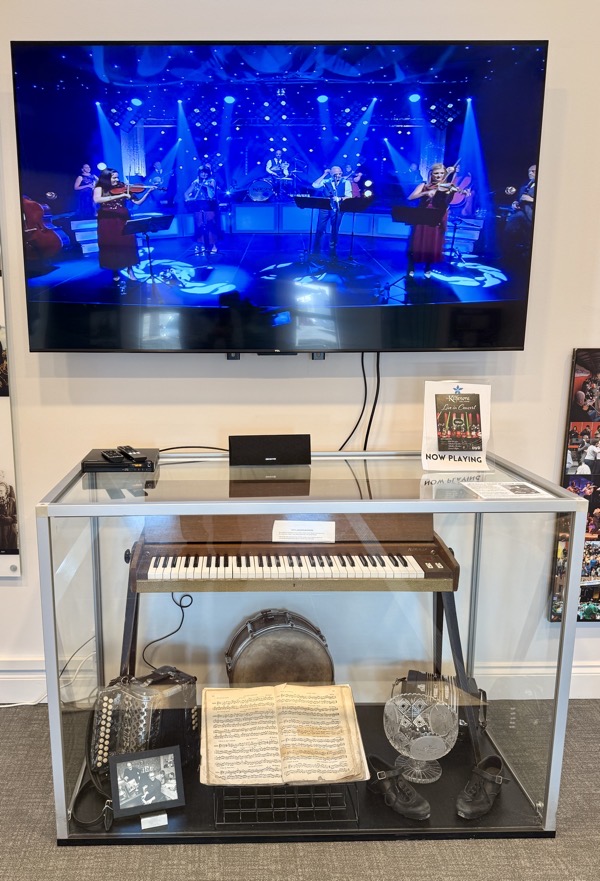
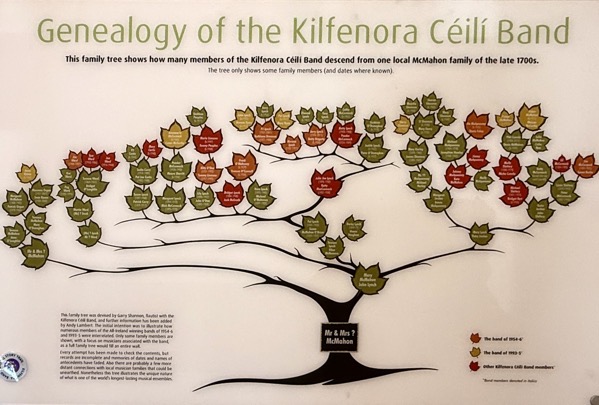
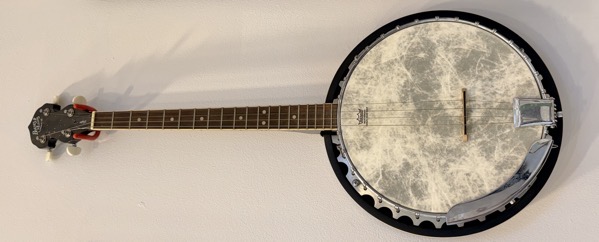
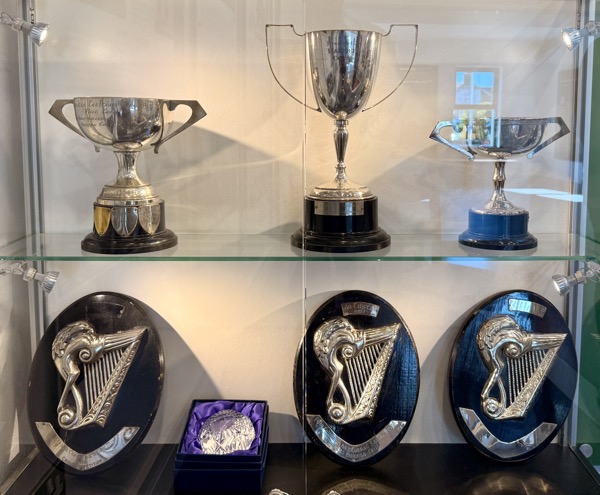
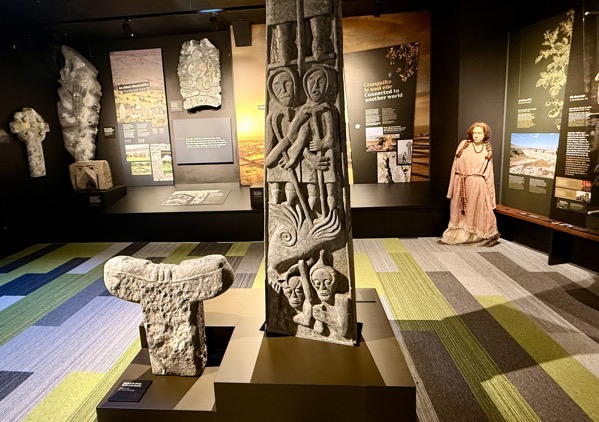
Our first stop was the Burren Visitor Centre in the town of Kilfenora. As we entered, I was immediately drawn into the Kilfenora Céilí Band room. A monitor played video footage of the renowned traditional Irish group. Lively reels and jigs filled the room with music and energy while I perused the room’s exhibits.
The Kilfenora Céilí Band, founded more than a century ago in this small village, is one of Ireland’s most celebrated traditional music ensembles. Known for preserving the rich musical heritage of County Clare, the band has performed around the world and has won numerous All-Ireland Céilí Band Championships, earning legendary status in Irish traditional music circles. Their spirited performances, featuring fiddles, flutes, accordions, and piano, have helped keep the céilí tradition alive for generations of dancers and music lovers alike.
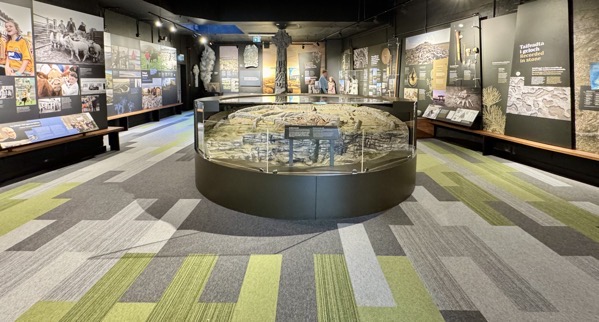
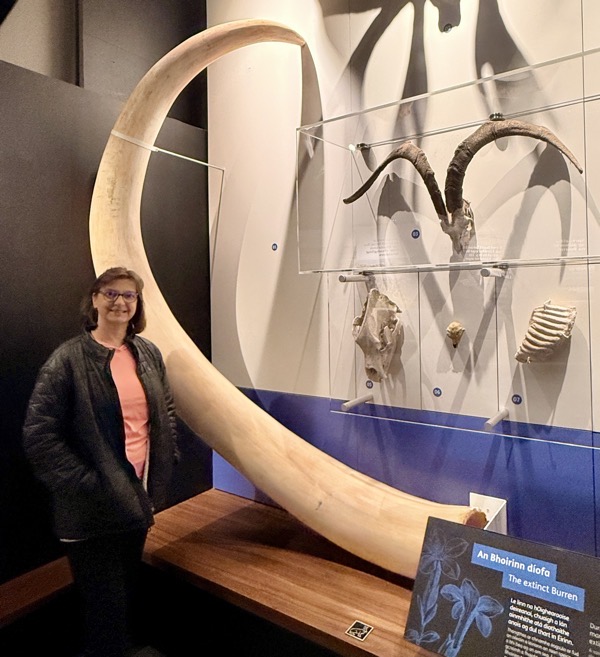
I lingered for a while, soaking in the music and reading the displays, but eventually moved on to catch up with the group and explore the museum’s other exhibits highlighting the geology, flora and fauna, history, and culture of the Burren region. Displays explained how this stark limestone landscape was formed over millions of years and how it became home to an unusual mix of Arctic, Alpine, and Mediterranean plants. We also viewed a brief video that captured the rugged beauty of the Burren, its ancient archaeological treasures, and the enduring traditions of the people who have called this remarkable region home for centuries.
—— The Burren Visitor Centre —–
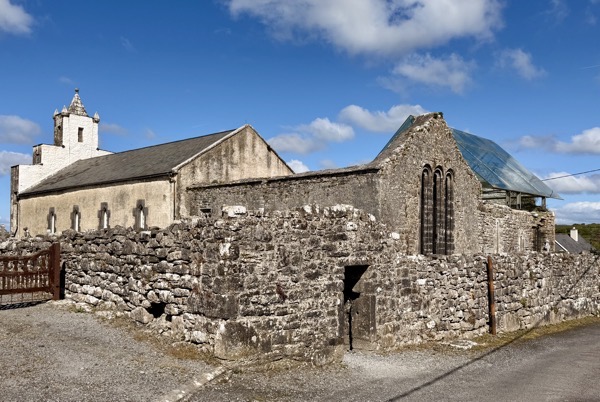
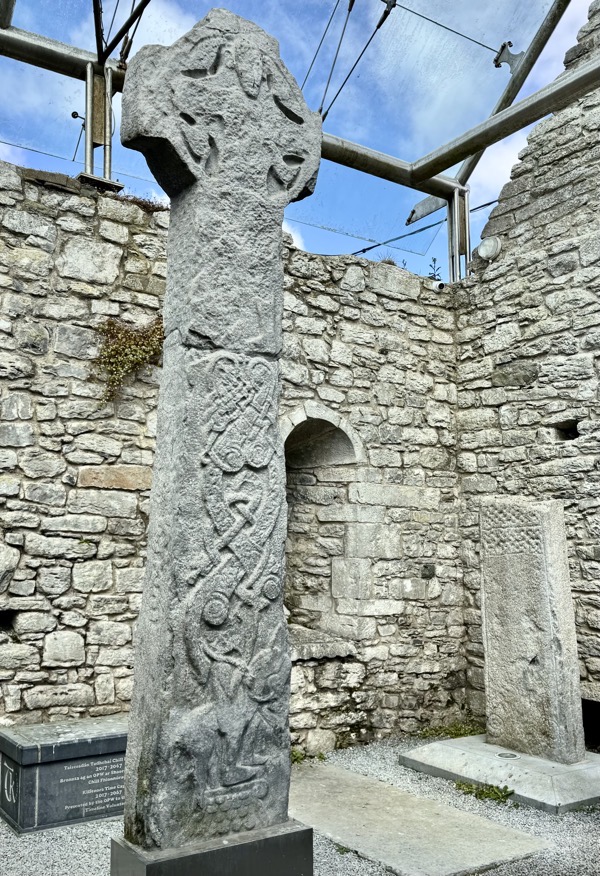
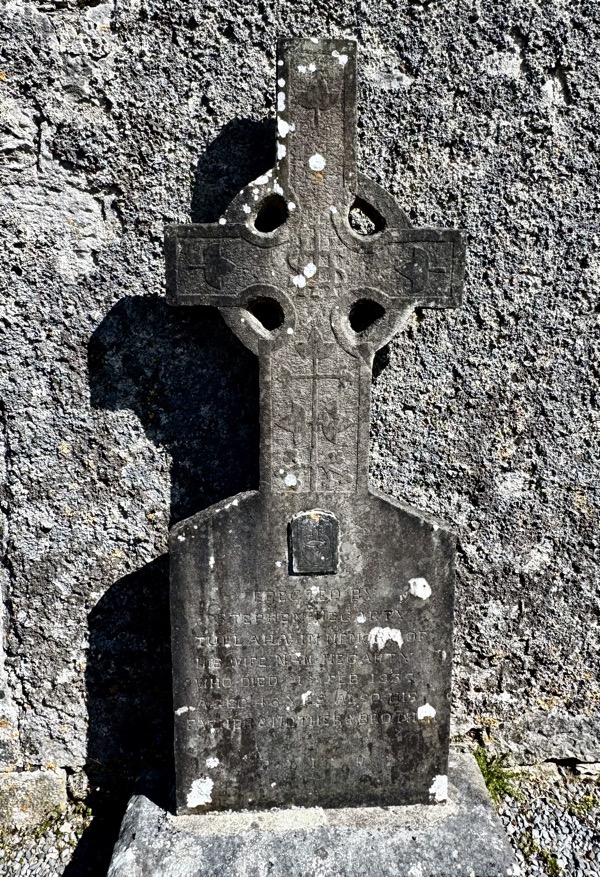
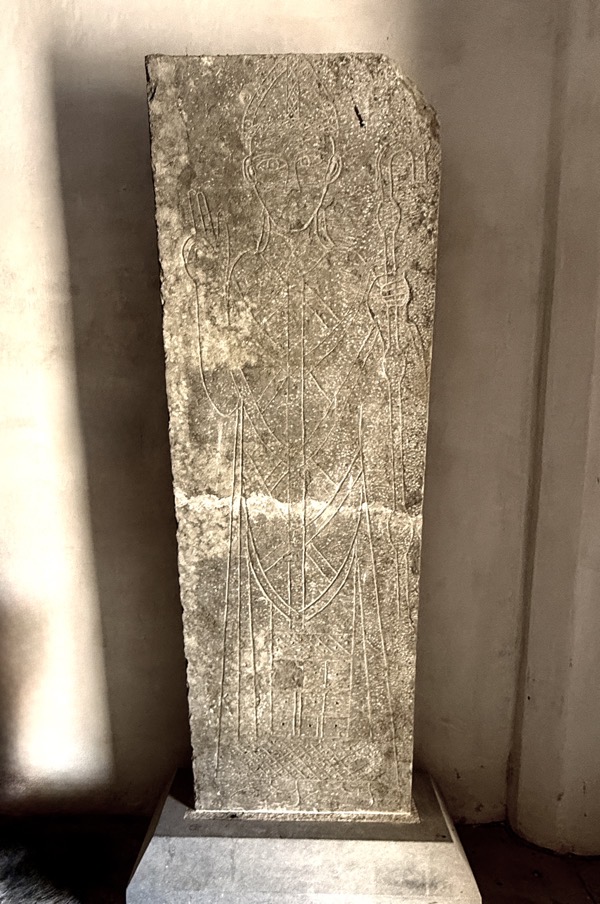
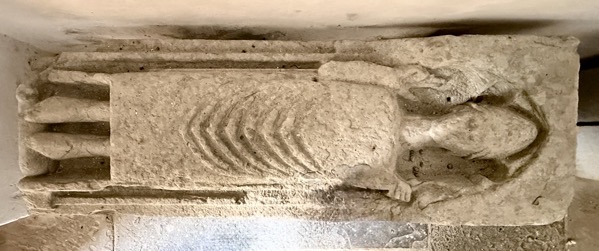
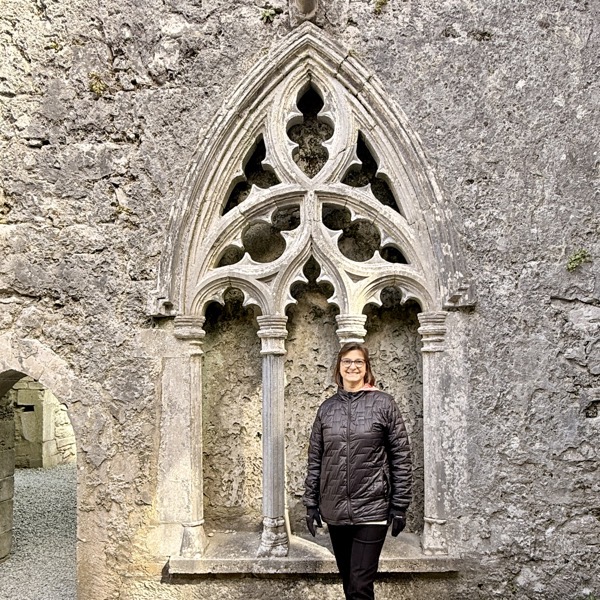
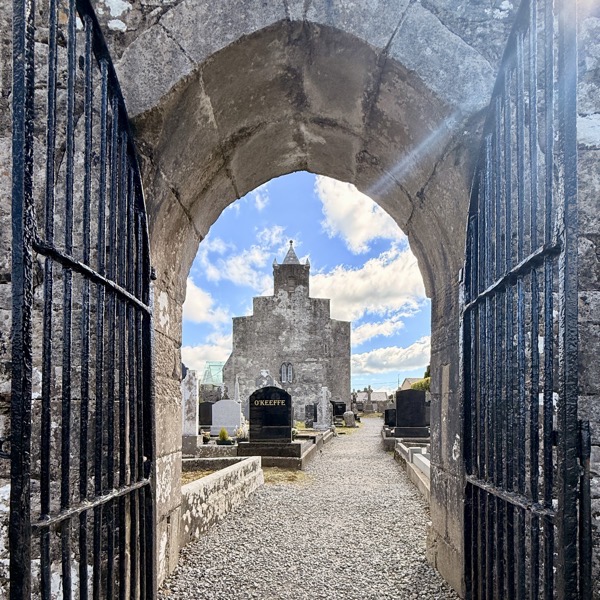
We exited the museum and, right next door, entered the Kilfenora Cathedral, a church dating back to the 12th century. Wandering through the roofless ruins, we admired two weathered effigies of unknown clerics, six or seven beautifully carved High Crosses from the 12th century, and countless gravestones spanning many generations. With its impressive stonework, intricate carvings, and rich sense of history, this was one of the more elaborate and memorable church ruins we have encountered so far in our travels.
—— Kilfenora Cathedral —–
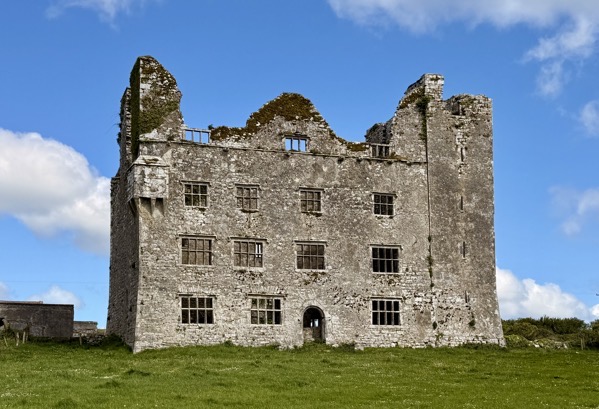
Continuing along the loop, we made a brief stop for photos at Leamaneh Castle, a striking and partially ruined 15th-century tower house dramatically set against the rugged Burren landscape. Once the stronghold of the powerful O’Brien clan, the castle later became associated with the legendary “Red Mary” O’Brien, a figure remembered in local folklore for her fierce personality and turbulent life.
—— Leamaneh Castle —–
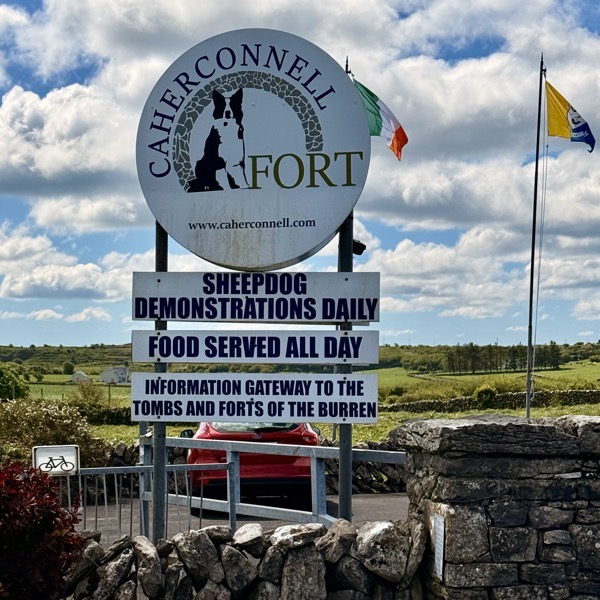
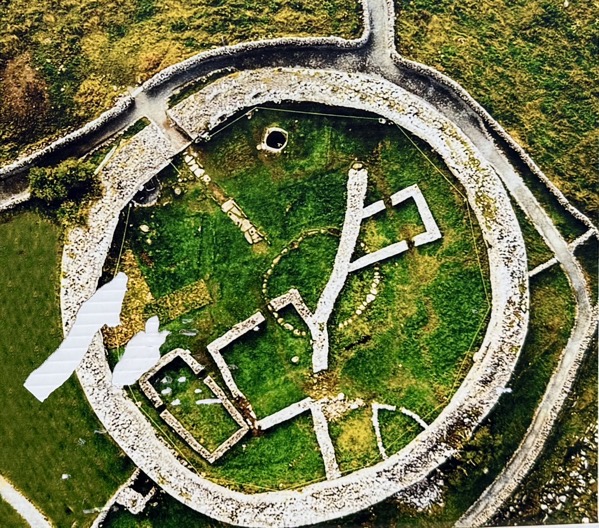
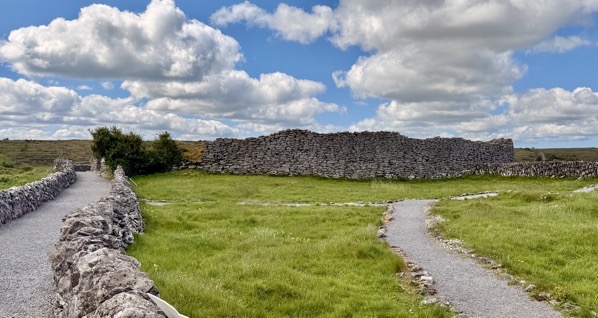
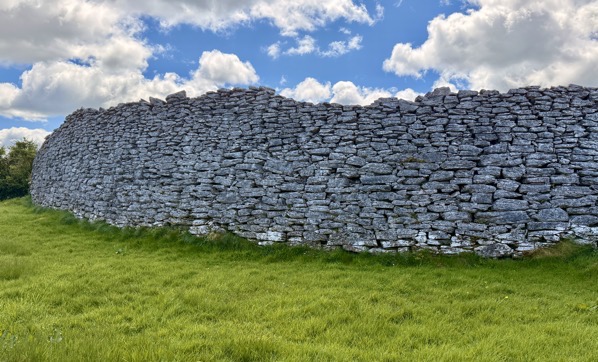
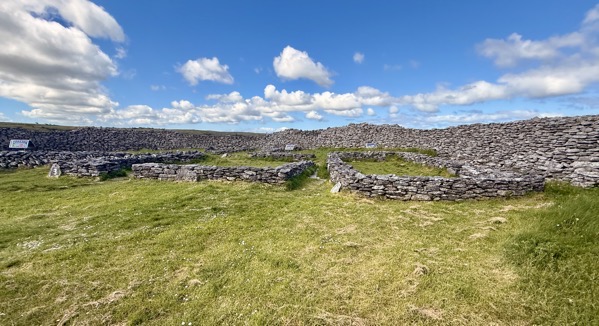
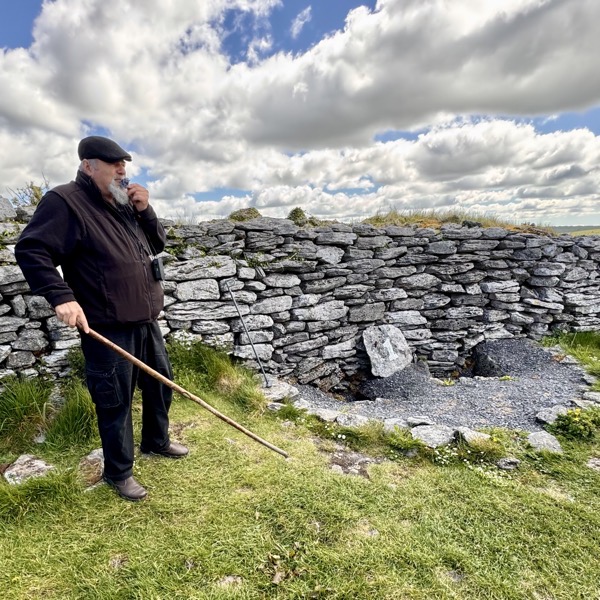
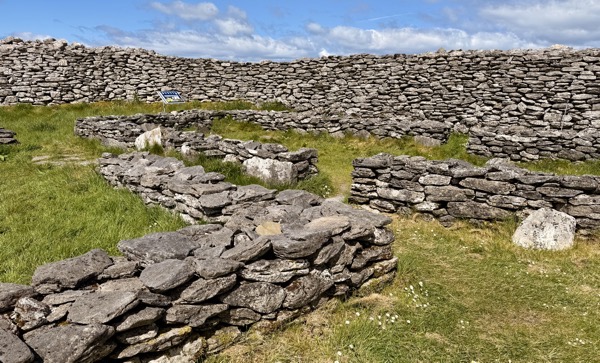
Next on our route was Caherconnell Stone Fort, an ancient ring fort where we joined a guided tour that proved both fascinating and deeply informative. The guide brought to life the families who lived here more than a thousand years ago, explaining how the fort evolved over centuries from an early medieval settlement into a prosperous Gaelic stronghold. Archaeologists uncovered the remains of a woman, believed to have been about 45 years old, along with two infants dating from around 600 AD, and their burial site was respectfully left undisturbed during later construction within the fort.
We learned about the different phases of house building inside the circular stone walls and the remarkable artifacts discovered during ongoing excavations. Among the finds were intricately carved combs, jewelry, amber and glass beads, gaming pieces, iron tools, rings, and even a bronze tuning peg from a harp, offering a glimpse into the cultured lives of the fort’s inhabitants. Coins and imported objects from places as far away as England, Germany, Venice, and the Baltic region revealed that this remote Burren settlement once had surprising international connections and considerable wealth.
After the tour, we relaxed in the café with coffee and pastries before heading off to the next stop along the route.
—— Caherconnell Fort —–
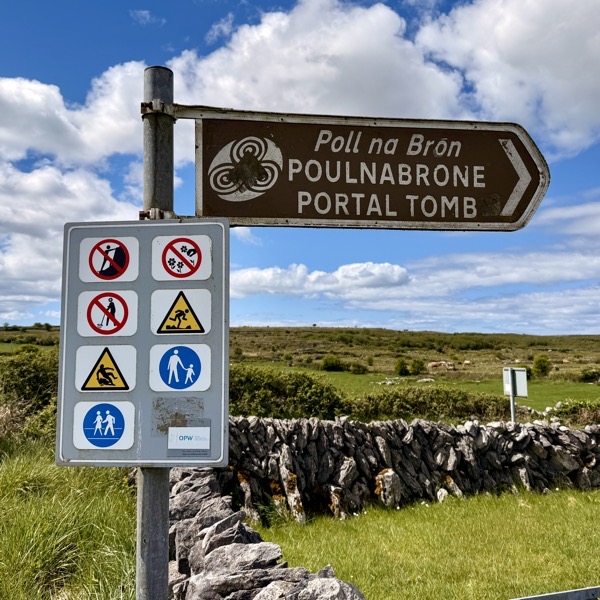
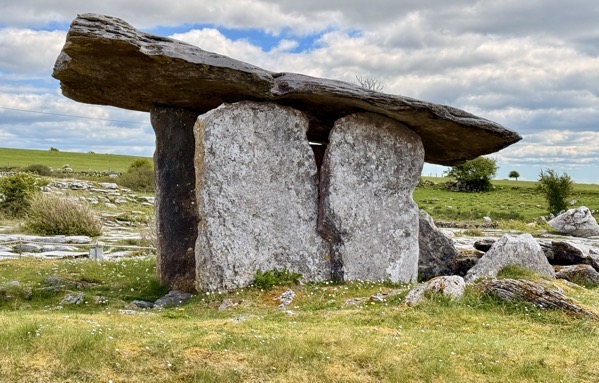
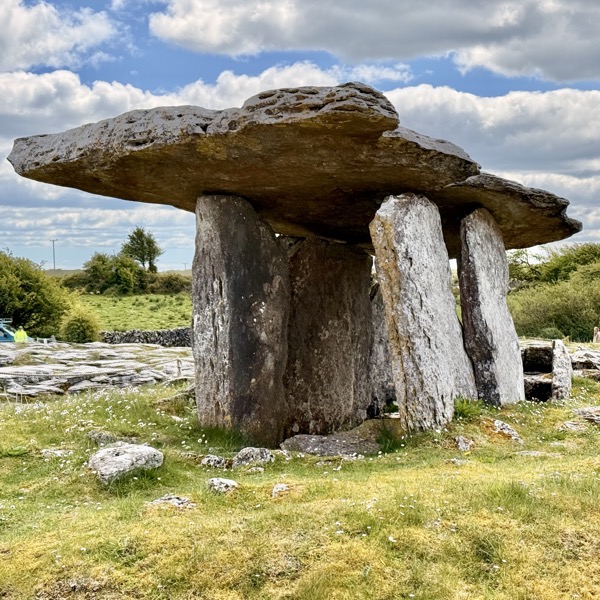
We continued along the Burren Loop to Poulnabrone Dolmen, one of Ireland’s most iconic prehistoric monuments. At first glance, the structure looks like a massive stone table balanced precariously on slender upright pillars, but this dramatic portal tomb actually dates back nearly 5,000 years to the Neolithic period — not 200 years ago as local folklore once suggested. For centuries, local people referred to it as a “Druid’s Altar,” though archaeologists now know it originally served as a communal burial chamber covered by a cairn of loose stones.
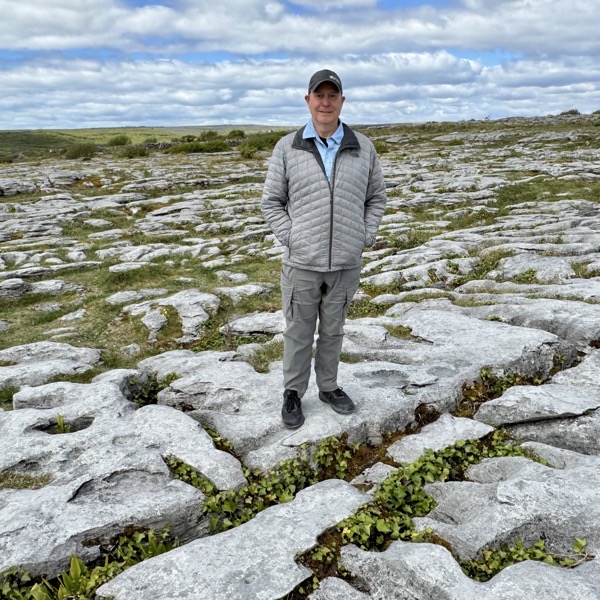
To reach the dolmen, we crossed the Burren’s extraordinary limestone pavement, a vast rocky landscape that was once a seabed formed about 320 million years ago when this part of Ireland lay beneath tropical seas south of the equator. The flat slabs of exposed limestone are known as clints, while the deep cracks and fissures between them are called grikes. Wildflowers and hardy plants grow within these sheltered grikes, softening the stark gray stone and creating one of the most unique and otherworldly landscapes in Ireland.
—— Poulnabrone Portal Tomb —–
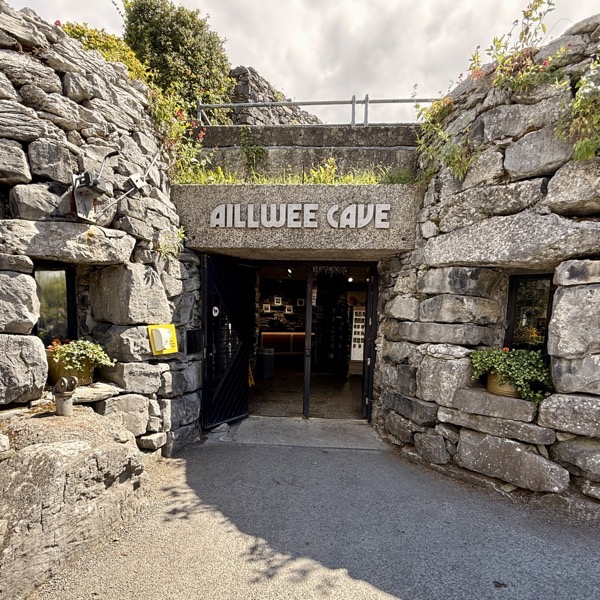
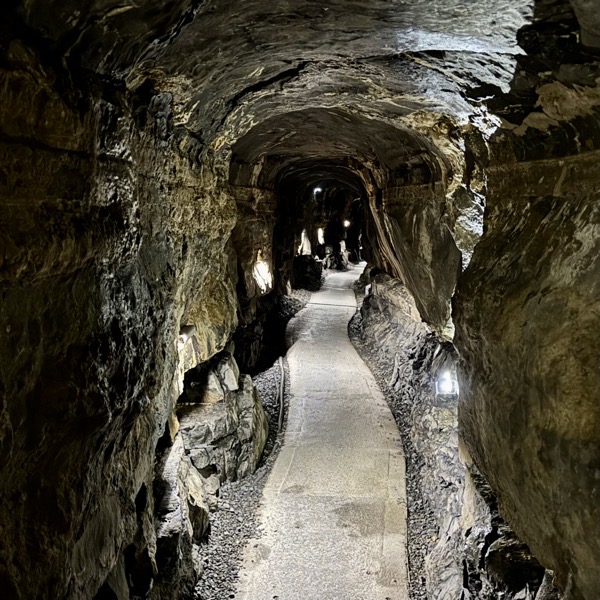
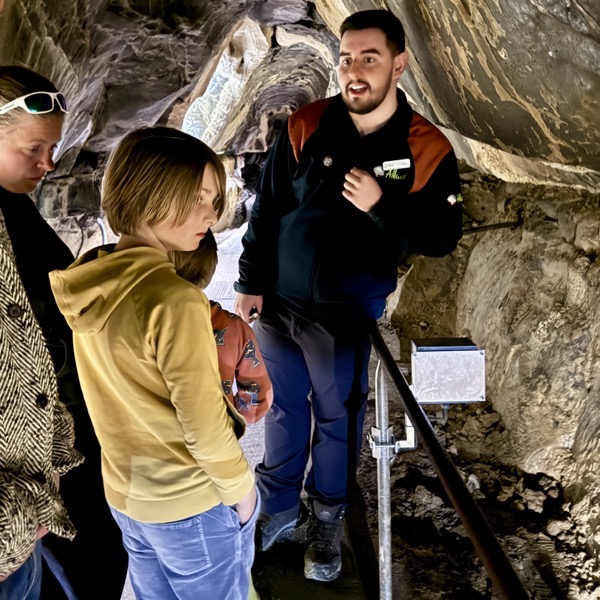
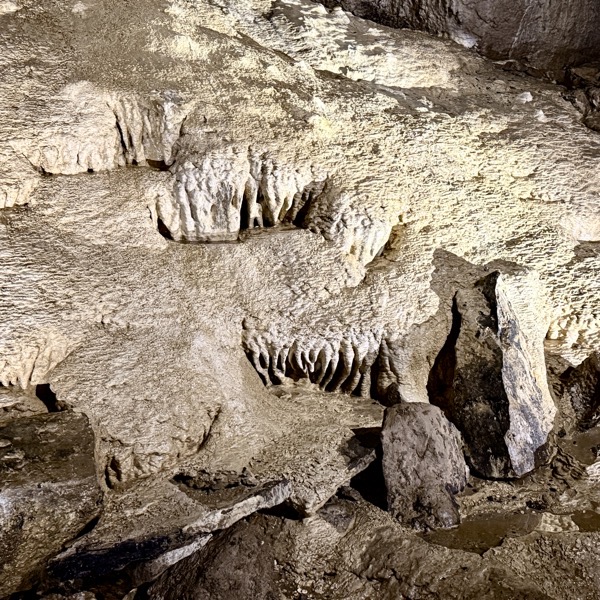
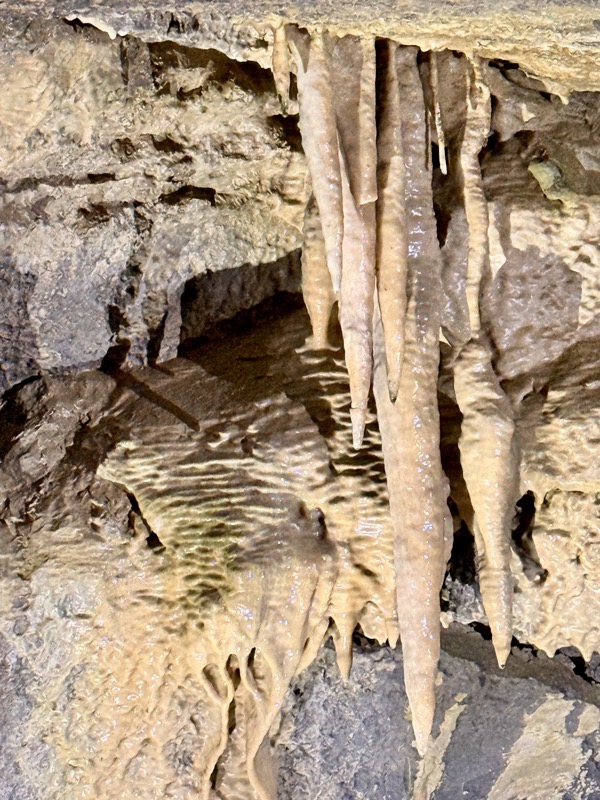
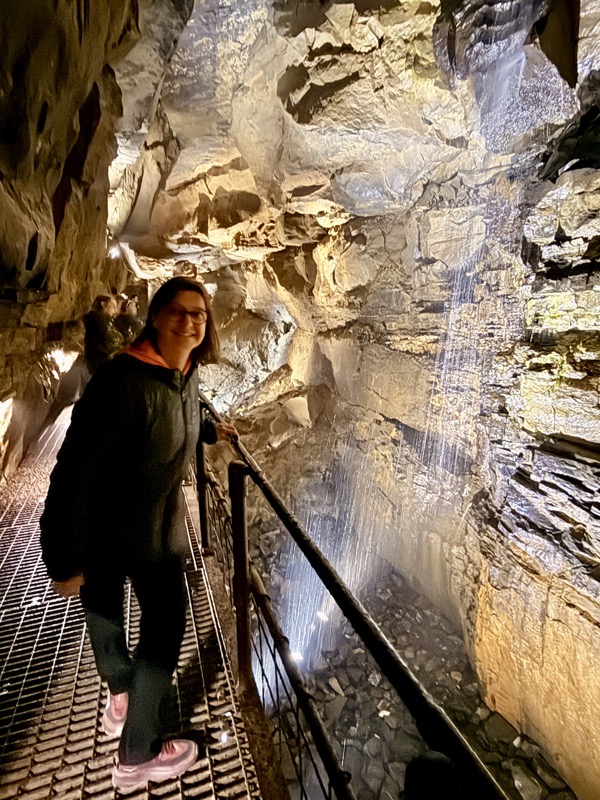
Four miles down the road, we stopped at the Aillwee Burren Experience. We first drove to the upper level of the complex, where the cave tour began shortly after we arrived. Our guide, George, led us into roughly one kilometer of underground passages carved through limestone over thousands of years by flowing meltwater and subterranean rivers. During the Ice Age, these cave systems were occasionally inhabited by wildlife, and remains of ancient brown bears (now extinct in Ireland) have been discovered deep within, including bones estimated to be over 10,000 years old.
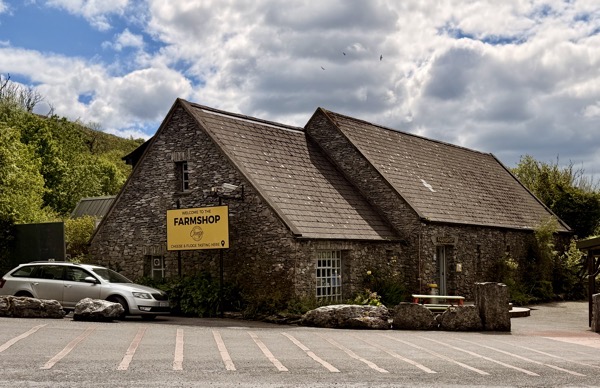
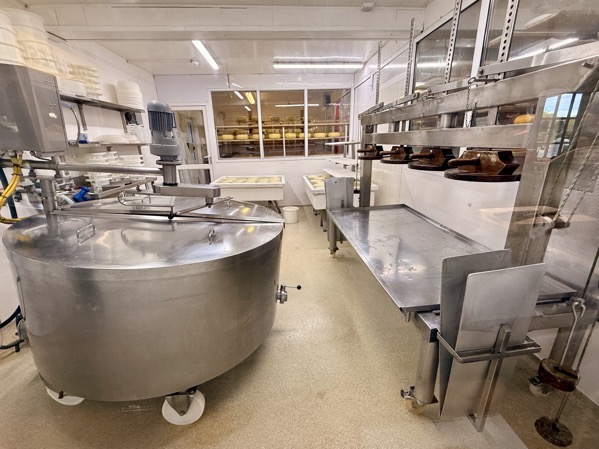
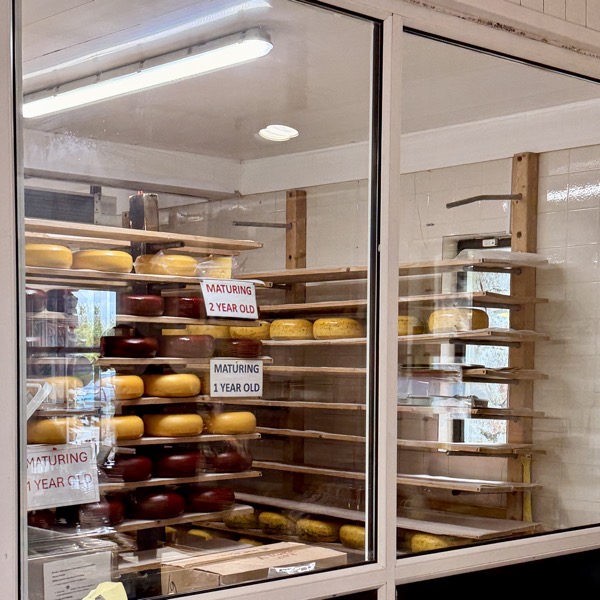
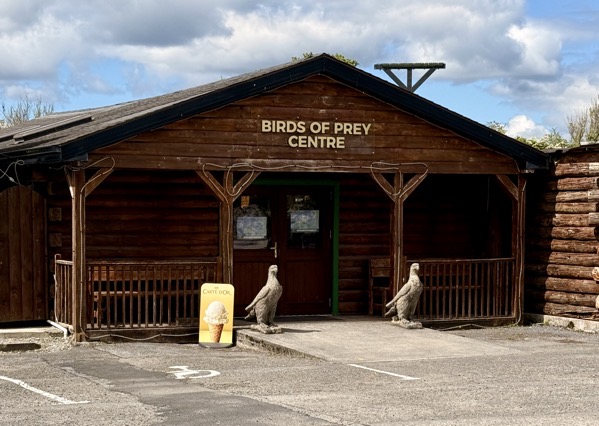
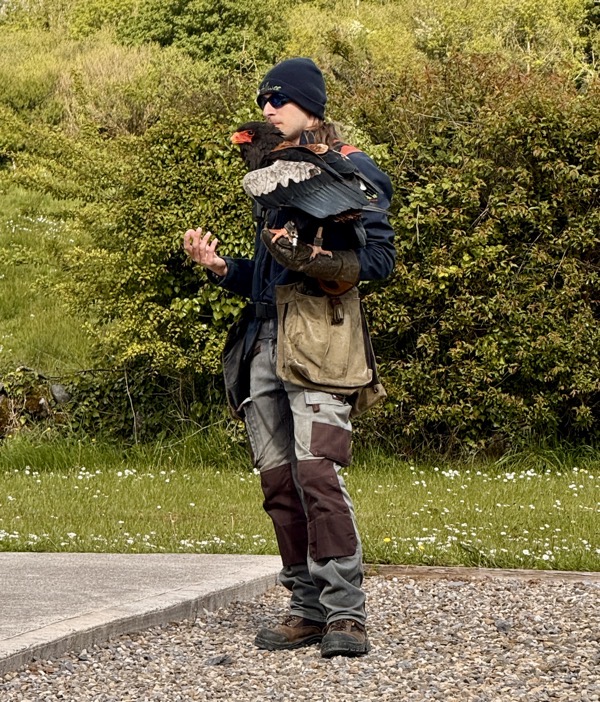
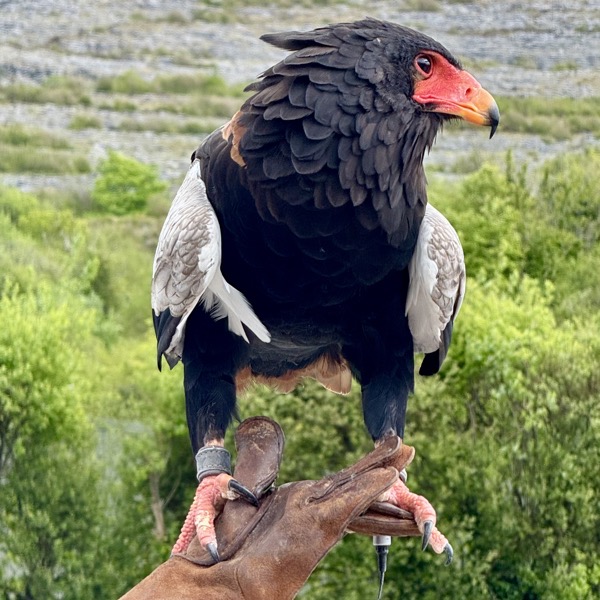
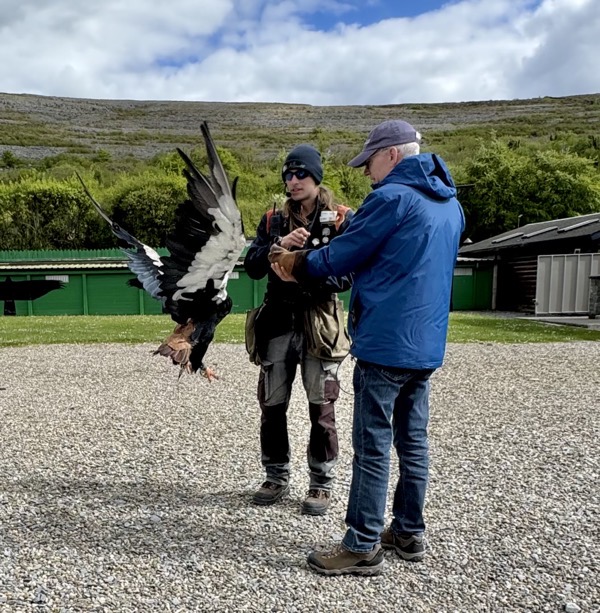
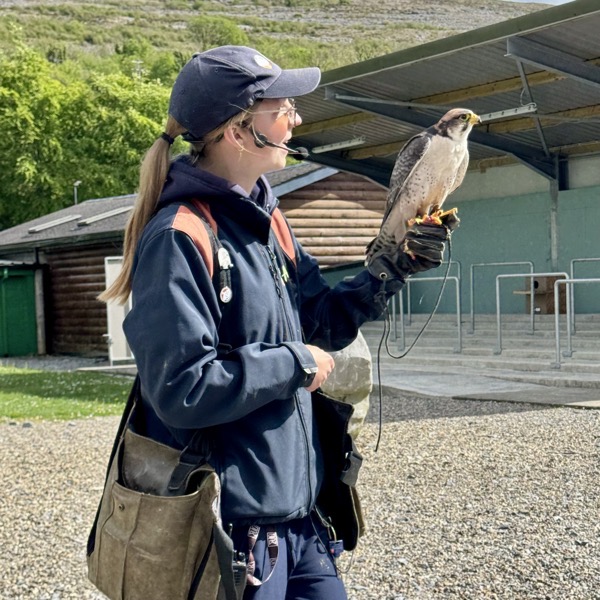
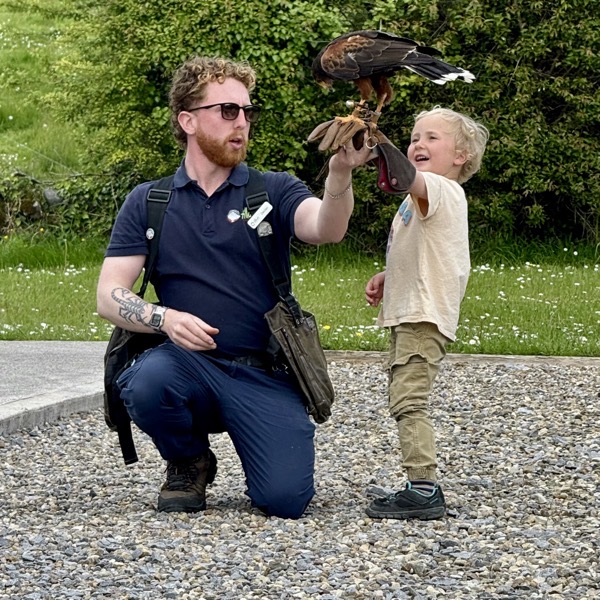
After the tour, we drove down to the lower levels of the site, stopping at the Farmshop first to sample locally made cheese and fudge. We then continued on to the Birds of Prey Centre, where owls, eagles, hawks, and falcons are housed and cared for. We wandered through the aviaries until it was time for the flying demonstration, where three staff members showcased the birds’ speed, precision, and training in an impressive display of falconry skills. The experience was truly captivating, and John even had the opportunity to hold a falcon as it briefly landed on his heavily gloved hand.
—— The Aillwee Burren Experience —–
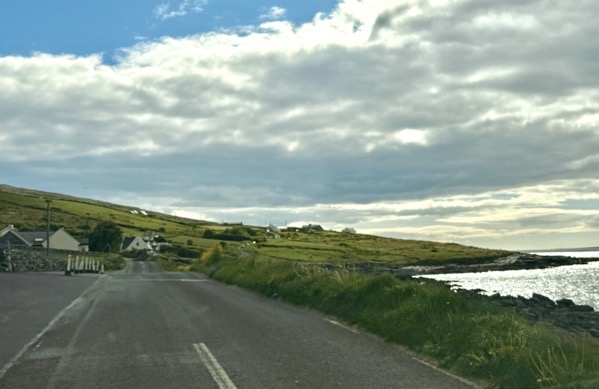
By then it had been a long day, so Jane drove us back along the coastal route to Doolin. We met quite a few buses on the very narrow road and often had to stop and pull over as far left as possible to let them pass. Along the way, the scenery opened up to sweeping views of the Atlantic, with rugged cliffs, rolling green fields, and waves breaking against the rocky shoreline.
—— Doolin Bound —–
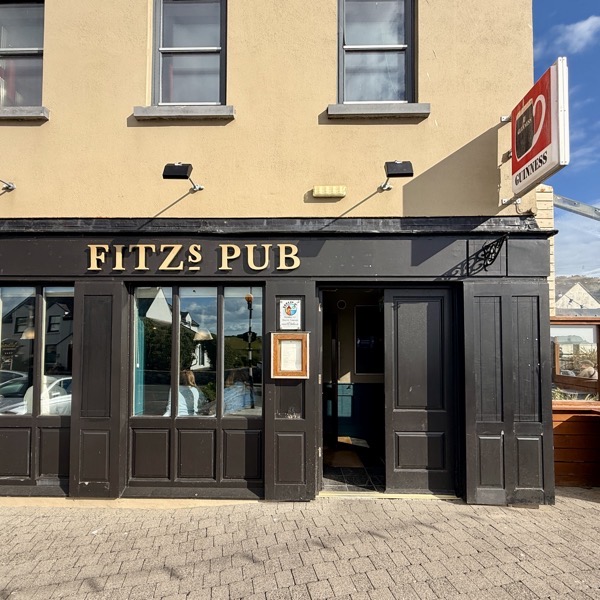
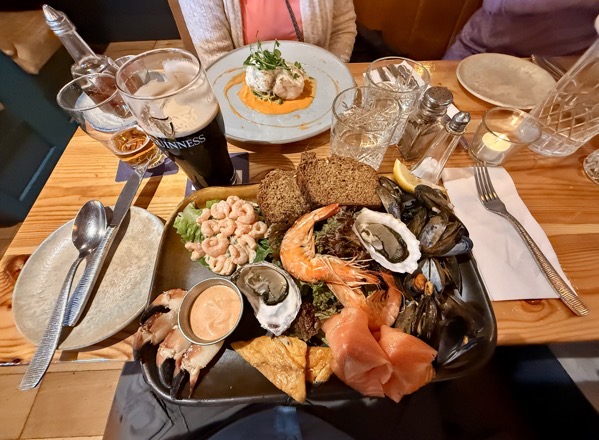
Wearily, we made it back to the Lodge unscathed. After a brief freshen-up in our rooms, we walked to Fitz’s Pub and Restaurant for dinner. We all enjoyed excellent meals—Jane had monkfish, while I opted for a generous seafood platter. Jane sampled a Micil Irish cream for dessert, while Nancy and I chose a pavlova with fresh strawberries for dessert, which was especially delicious.
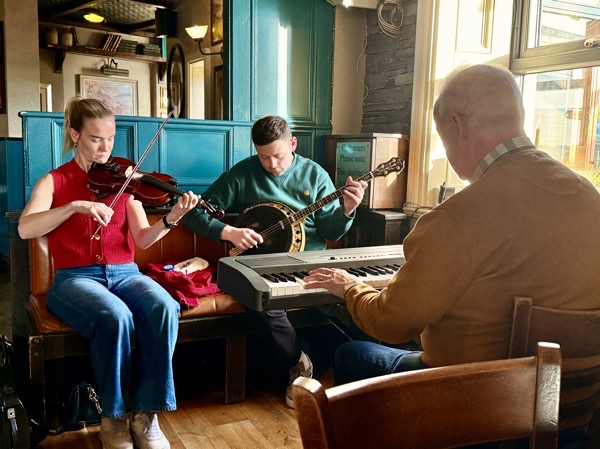
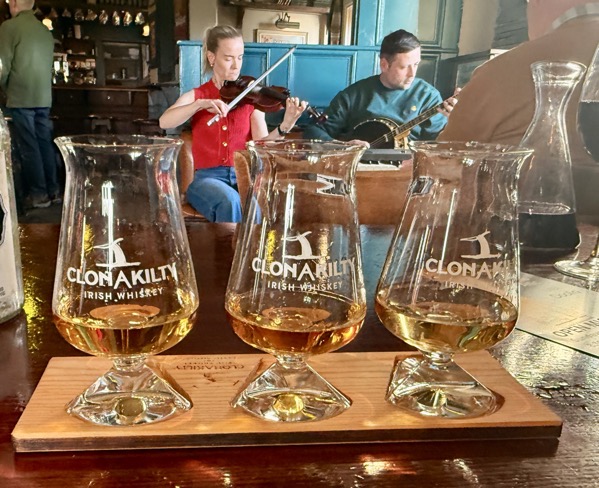
After settling the bill and starting to head out, we were drawn back by music coming from a nearby room and discovered a lively three-piece traditional Irish group performing. Tara played the fiddle, her father accompanied her on keyboard, and a third musician played banjo, creating an energetic and intimate session. We ordered a few more drinks and settled in at a table right across from the musicians, enjoying the performance up close.
I decided it was the right moment to try Irish whiskey and ordered a flight featuring three samples: The Irishman, Green Spot, and Kilbeggan Original. During a break in the music, I struck up a conversation with the banjo player, who was performing on an Irish-made Clareen tenor banjo. He kindly suggested we stop by the Clareen factory on our way to Galway the next day, adding an unexpected and fitting musical connection to the evening.
—— Dinner and Music in Doolin —–
Eventually, the other three in our group walked back to the lodge, but I wandered upstairs and ended up sitting in on an open mic session. When I stepped into the dimly lit room, a Chinese magician who had recently arrived in Ireland was in the middle of a performance. The rest of the lineup featured local performers—vocalists accompanied by guitar or tenor banjo, along with the occasional spoken-word recitation. The setlist was an eclectic mix of original songs, traditional Irish tunes, and American folk pieces, creating a relaxed and communal atmosphere. Most of the musicians opted to perform from their table rather than the stage. It was clear that everyone in the room knew one another (except for the visiting magician and me), and I thoroughly enjoyed quietly observing this warm, local gathering.
Eventually, I made my way back to the lodge where Jane was still awake. After exchanging a few final thoughts about the day, we turned in promptly for the night.
What was your opinion of the Irish Whiskey. Did you have a favorite?
Well, I don’t drink whiskey often but I liked the Irish ones that I sampled. If I remember right, it think it was the Kilbeggan Original that I liked best. But, any of them would work fine when I’m in a whiskey drinking mood.