Friday, May 8, 2026
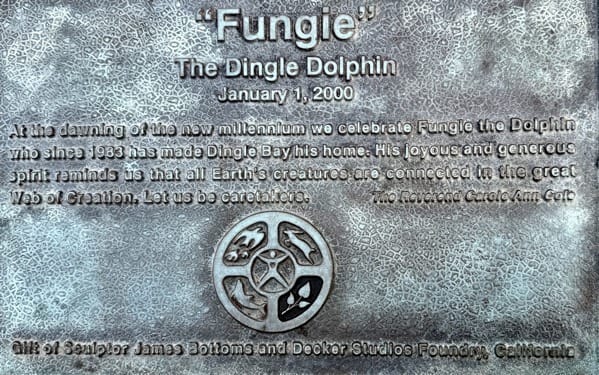
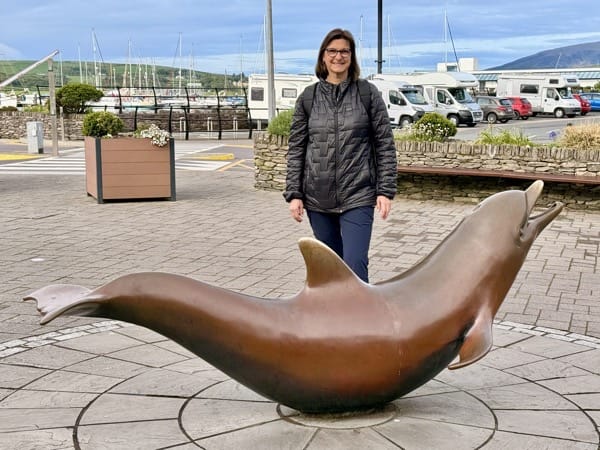
This morning Jane and I enjoyed a quick continental breakfast at the B&B—muesli, fruit, toast, coffee, and juice—before walking down to Dingle Harbour at 8:30 to catch our Great Blasket Island Wildlife Tour with Island Landing at 9:00. We arrived a little early, giving us time to wander along the docks, visit the memorial to Fungie, Dingle’s famous dolphin, and chat with a few of our future crewmates.
——— Waiting for the Boat —–
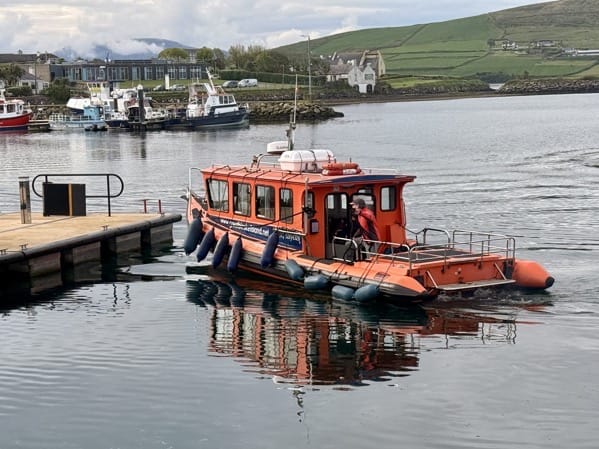
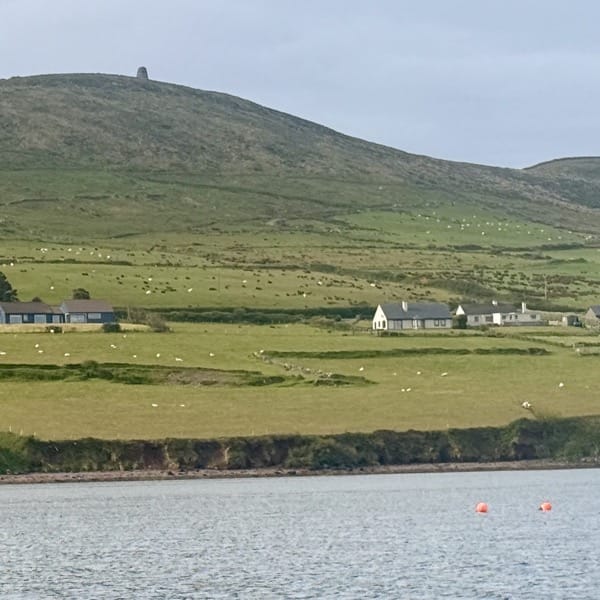
Soon our boat pulled alongside the pier, and Skipper Sean and his mate Richard helped the 13 of us aboard and settle into the small covered rigid inflatable boat (RIB). As we motored out of the harbour, we had an excellent view of Eask Tower, the stone navigation tower perched high on Carhoo Hill overlooking Dingle Harbour and the surrounding coastline. Built in 1847 during the Great Famine, the tower originally served as a navigational aid guiding ships safely into the harbour.
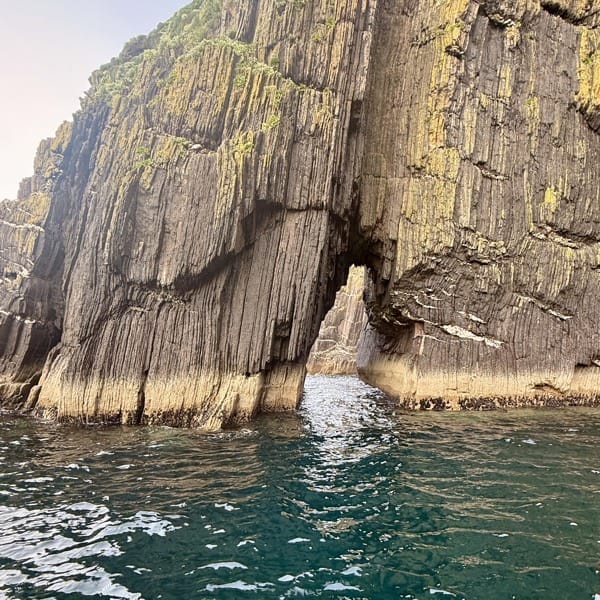
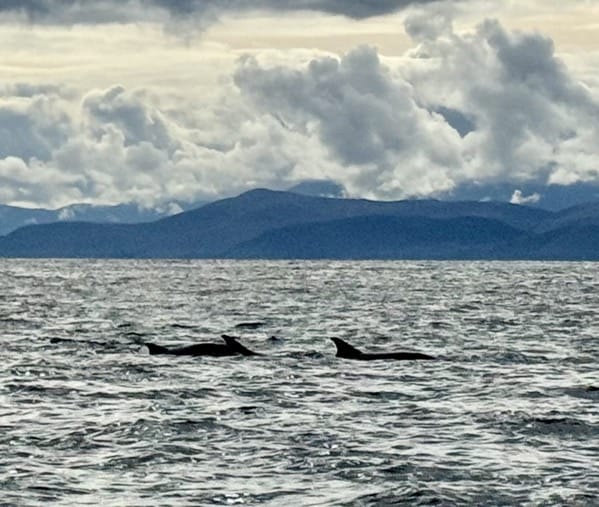
From there we followed the rugged coastline of the Dingle Peninsula we had driven the previous day, spotting some of the ancient ruins and ring forts we had explored on foot yesterday. At one point, Sean steered the boat into a narrow cove with a sea tunnel so we could get a closer look at the dramatic vertical bands of red sandstone lining the cliffs. Farther along, he throttled back so we could watch several dolphins skimming gracefully through the waves alongside us.
—— Enroute to Great Blasket Island —–
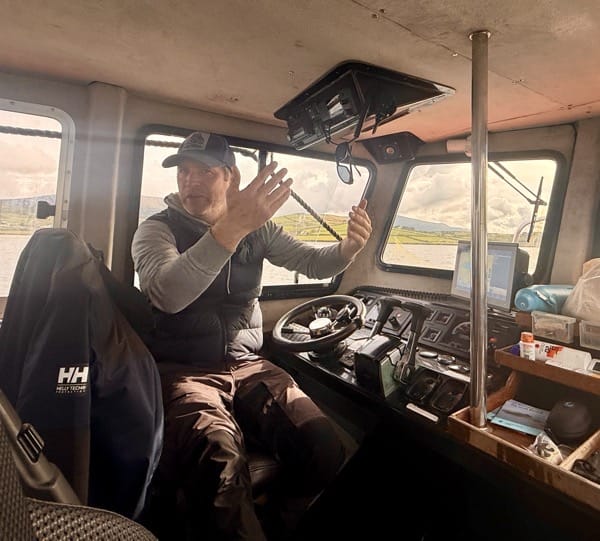
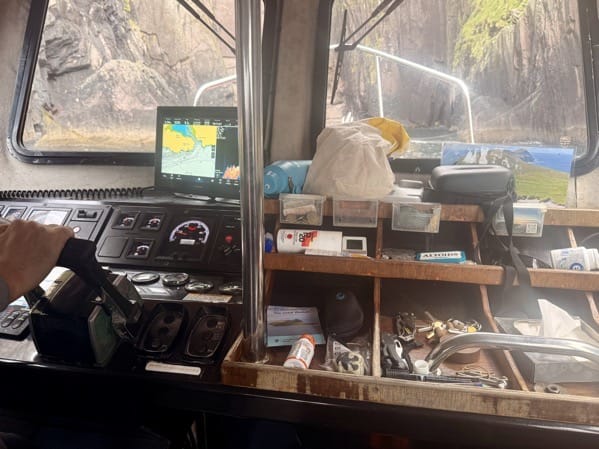
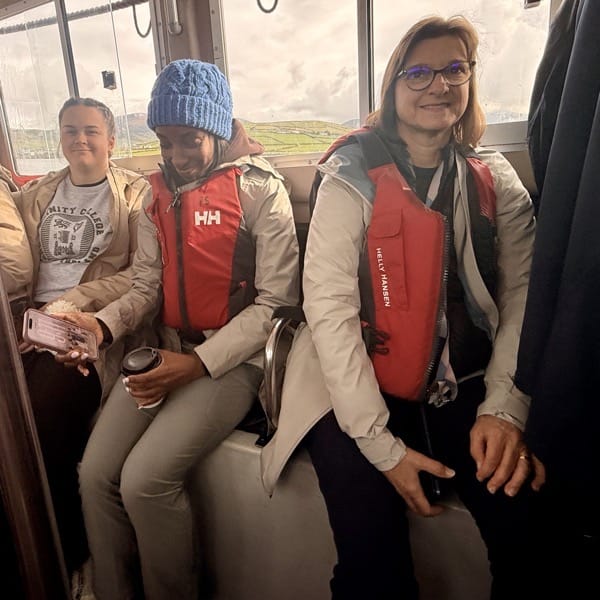
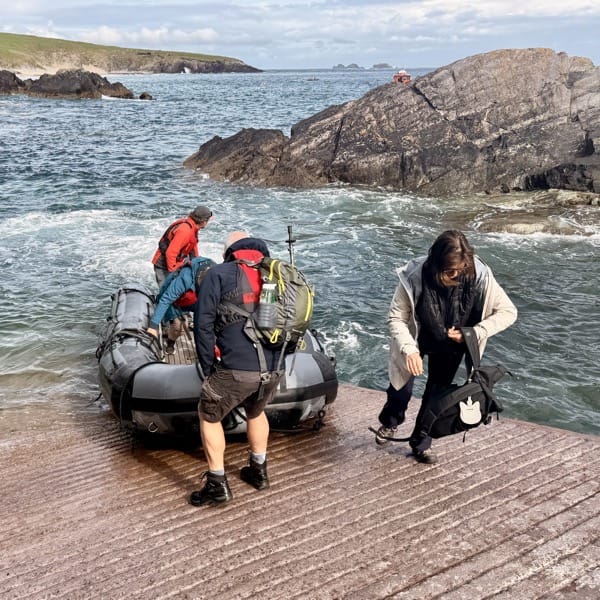
After about an hour on the water, we arrived at the island landing point—a sloping concrete ramp where the dinghy driver expertly powered toward shore so we could “dock” and disembark. Because the landing craft could only take part of the group at a time, the dinghy made two trips between shore and the boat to get all of us safely ashore.
—— Arrival at Great Blasket Island —–
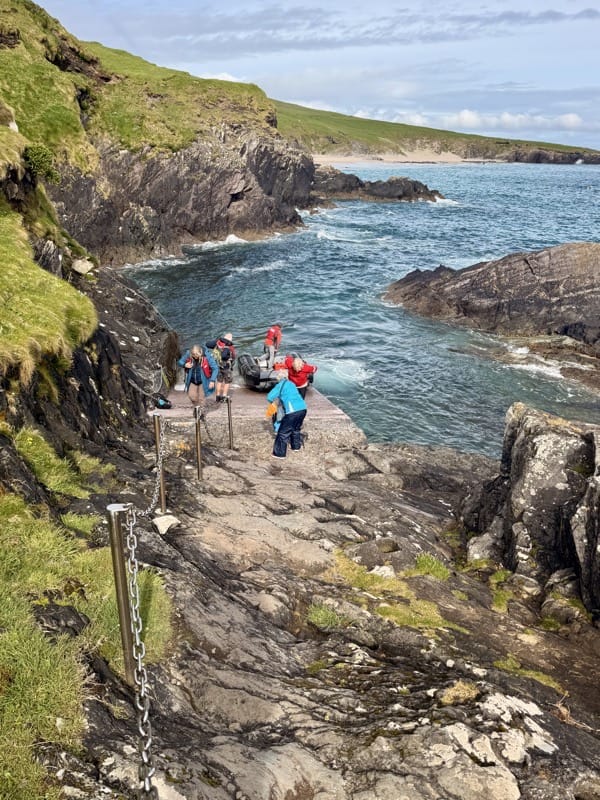
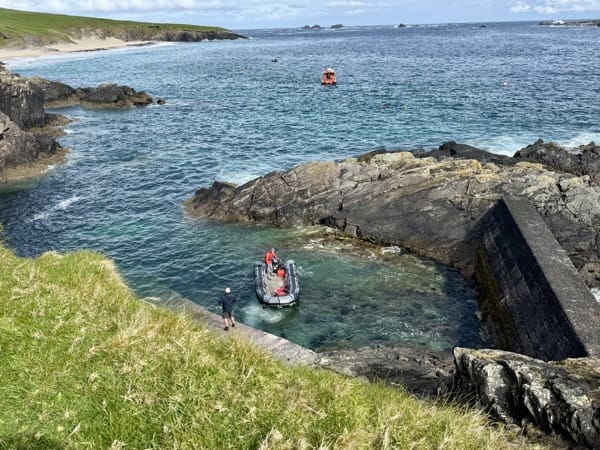
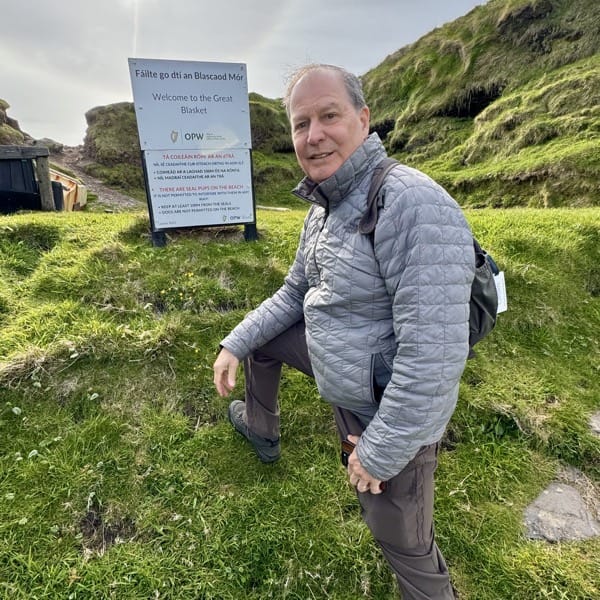
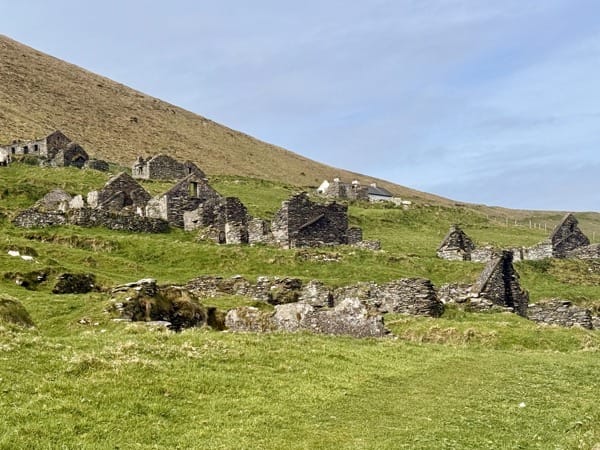
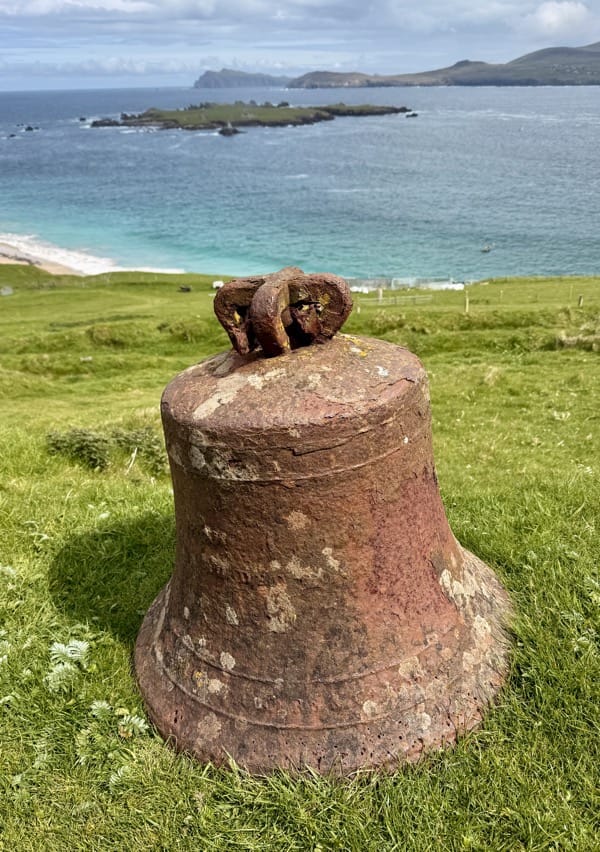
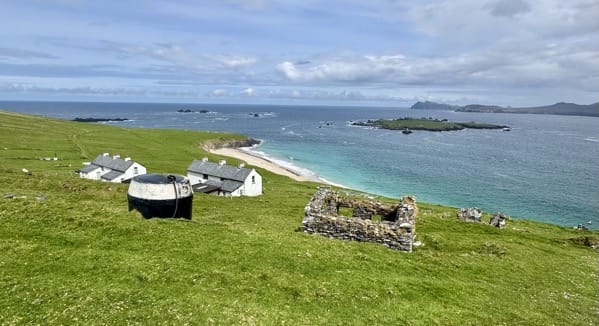
From the landing, the path climbed steadily uphill toward the abandoned village. Unlike most of our group, Jane and I wandered away from the main trail to meander among the ruins of the old homes and farm buildings left behind by the island’s former residents. The population of Great Blasket Island had once peaked at around 175 people in the 1920s, but years of isolation and harsh living conditions led to a gradual decline until 1953, when the remaining elderly residents were evacuated to the mainland.
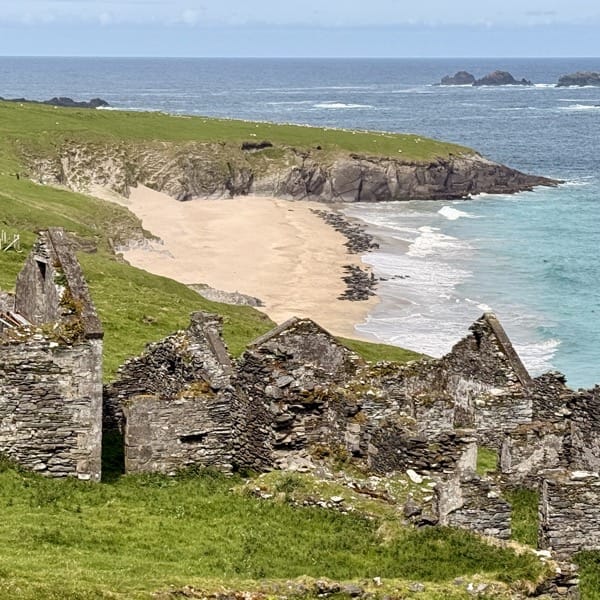
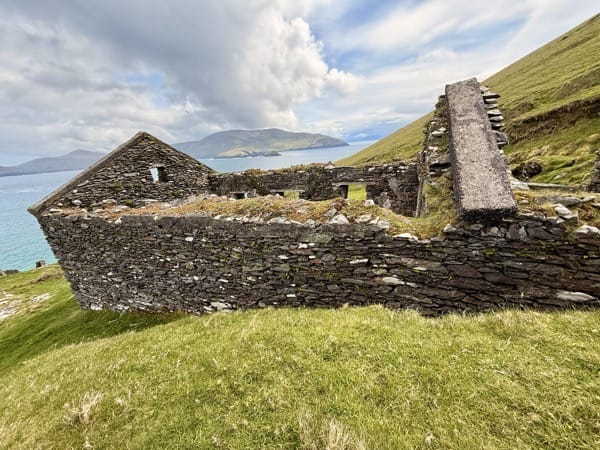
Scattered across the hillside were the roofless stone cottages of fishermen and farmers, many still standing despite decades of Atlantic wind and rain. We passed the remains of family homes, crumbling byres and cow sheds, old potato gardens edged with stone walls, and the ruins of the island schoolhouse where generations of children once learned their lessons. Near the center of the village stood the former post office and community house, once the social heart of island life. Some cottages have been partially restored, their whitewashed walls and corrugated roofs hinting at what village life must have looked like in its final years.
The “ghost town” is a fascinating blend of centuries-old ruins and a handful of more modernized buildings that now support seasonal visitors. One restored building houses a small café, where the young seasonal operators live upstairs during the summer months. There are also simple overnight accommodations for travelers willing to rough it a bit and experience the island after the day-trippers leave. The island has running water, but electricity is extremely limited—mostly supplied by generators used to power the café, charge phones, and support a few basic modern conveniences.
—— Great Blasket Island Village —–
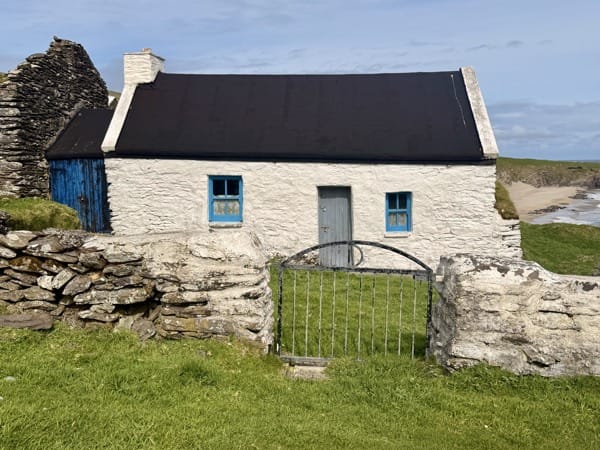
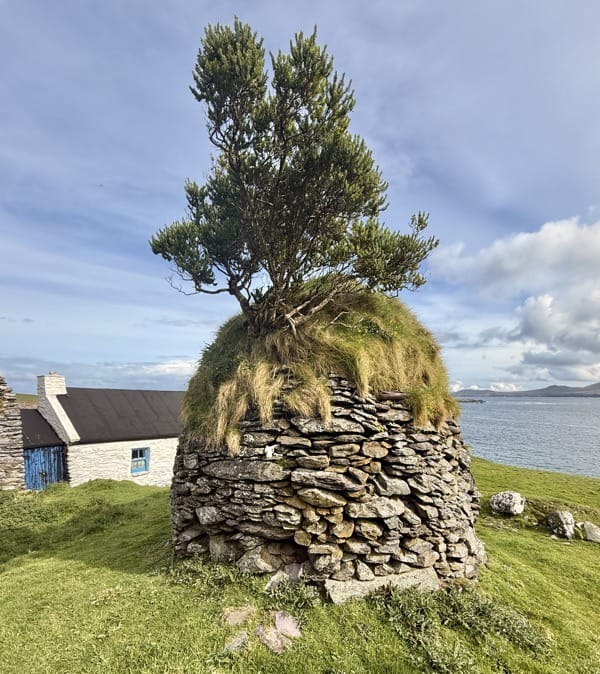
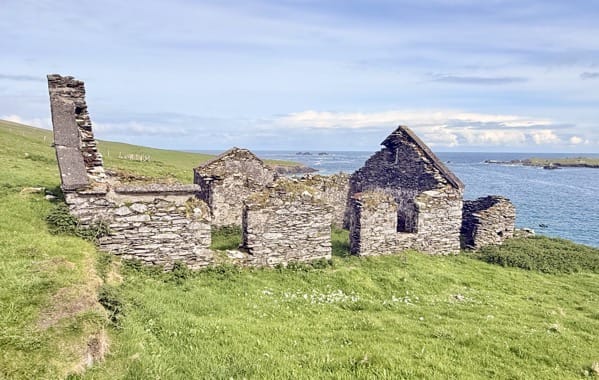
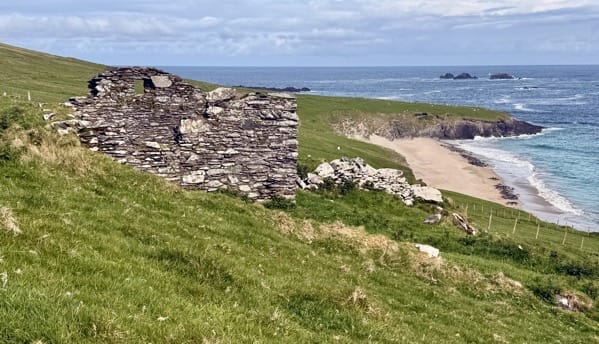
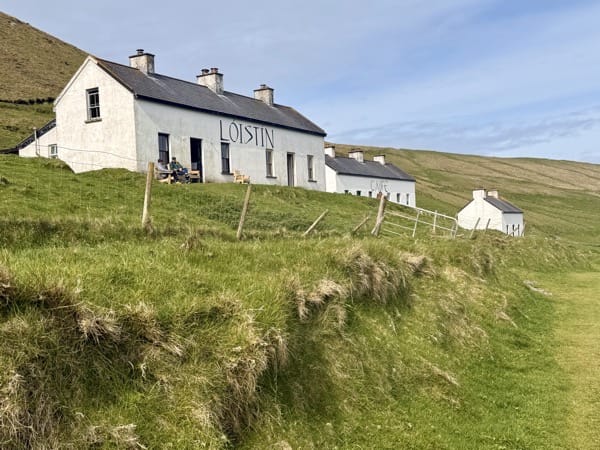
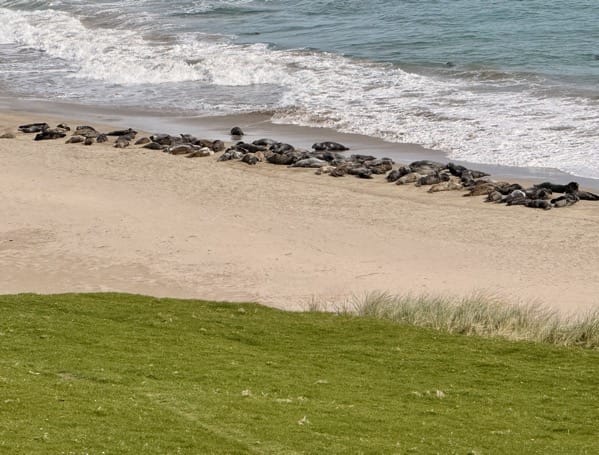
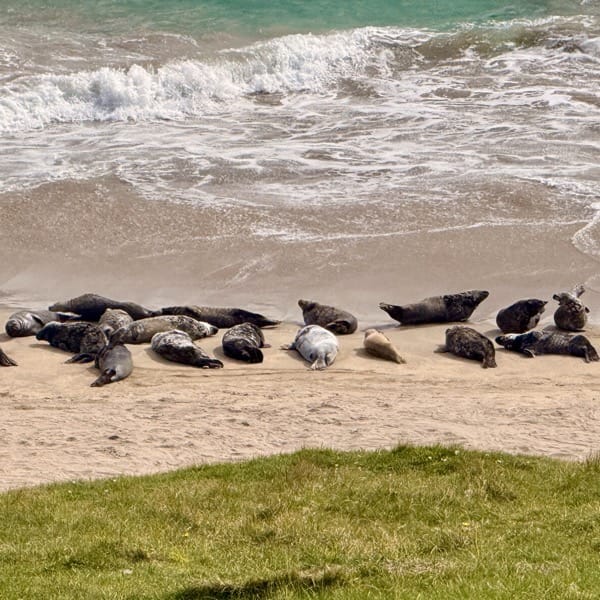
After stopping to use the surprisingly nice restroom facilities near the top of the village, Jane and I found ourselves drawn back downhill toward a broad sandy beach where a sizable colony of gray seals was sprawled out basking in the sun. We had been cautioned not to approach them too closely, both for our safety and to avoid disturbing the animals, but an overlooking ledge provided an excellent vantage point. From there we could watch the seals lounging on the sand, occasionally shifting position or slipping lazily into the surf as Atlantic waves rolled onto the beach below.
—— Gray Seal Colony —–
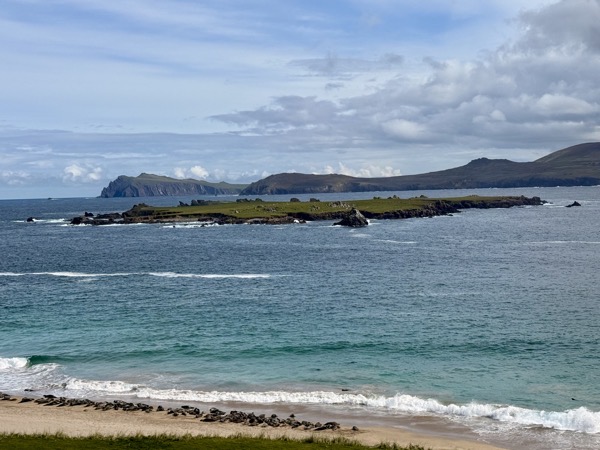
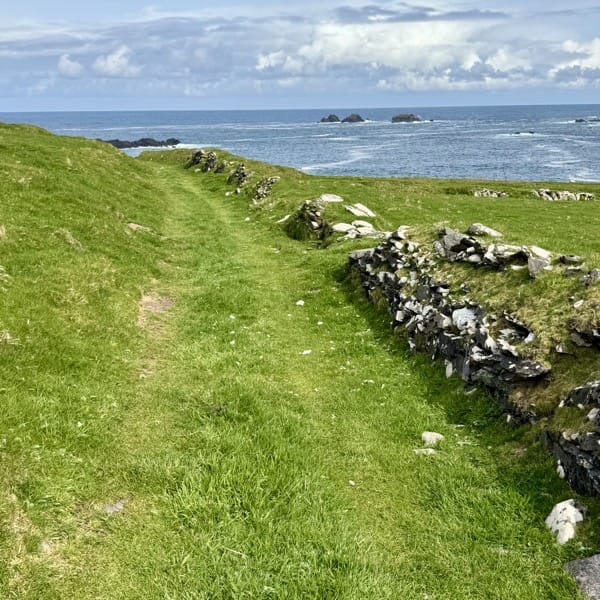
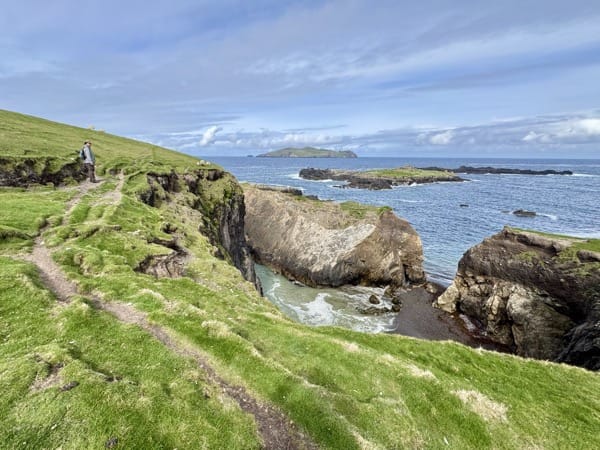
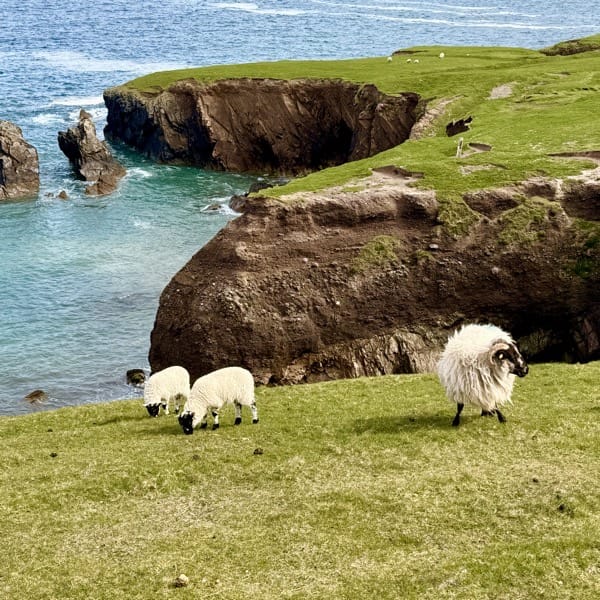
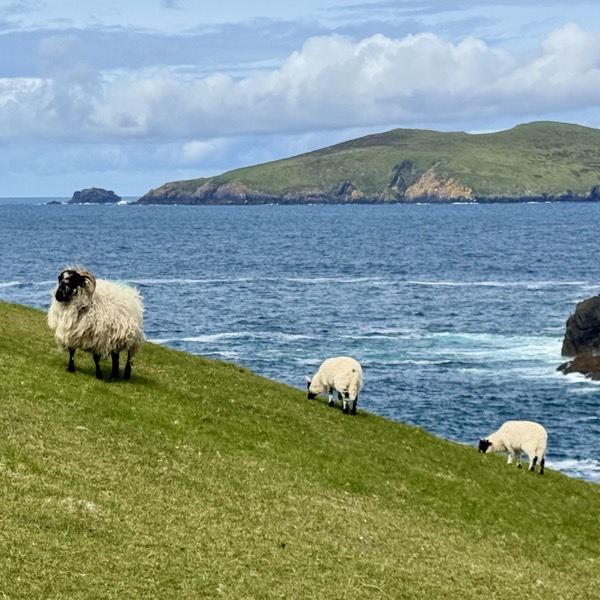
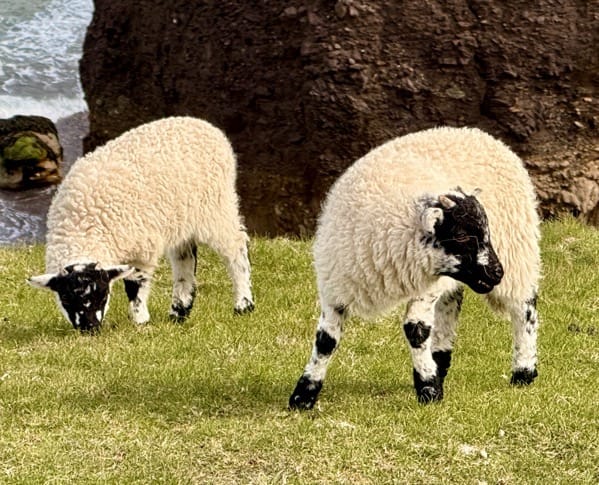
From the beach overlook, we attempted to follow one of the island’s faint walking trails, but soon found ourselves wandering instead through grassy pastures bordered by old stone walls softened by decades of moss and windblown grass. Sheep grazed calmly across the hillsides, seemingly unfazed by the occasional wandering visitor. Later we learned that farmers from the mainland still lease grazing rights on the island and make periodic trips across the water to tend their herds.
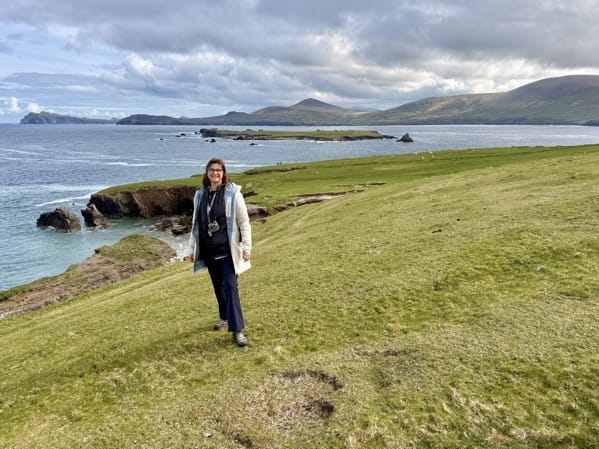
Every direction seemed postcard-worthy: brilliant blue water reflecting the sky, dark rocky ledges where white Atlantic waves crashed in bursts of foam, and rolling green pastures dotted with white sheep beneath drifting clouds. The scenery had an almost unreal beauty to it—wild, peaceful, and timeless all at once.
—— Wandering about Great Blasket Island —–
 .
.
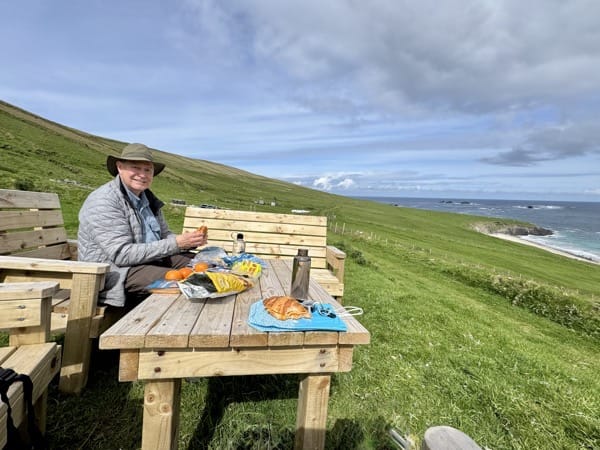
After about an hour-long loop across the hillside, we made our way back toward the café area, where we found a pair of Adirondack chairs and a picnic table perfectly positioned for the view. There we spread out our lunch: croissants with cheese, smoked salmon, potato chips, mandarins, and chocolate-covered hazelnuts. The weather shifted constantly between sun and clouds, cool enough for layers and jackets but otherwise wonderfully comfortable. Sitting there overlooking the Atlantic while we ate was one of those simple travel moments that felt truly unforgettable.
—— Picnicing with a View —–
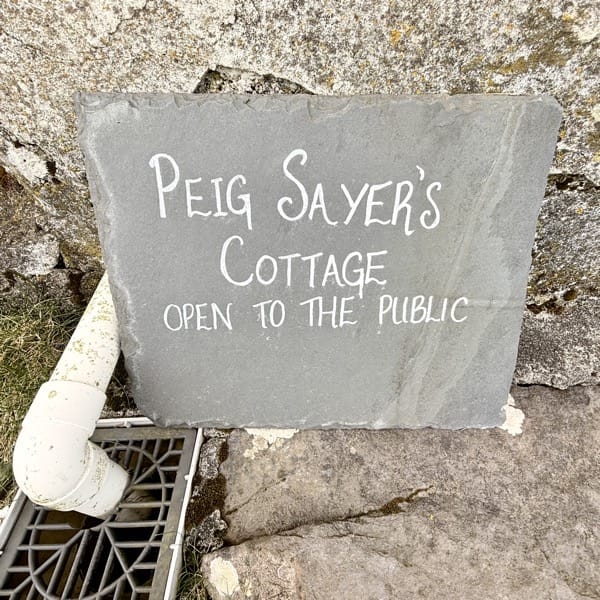
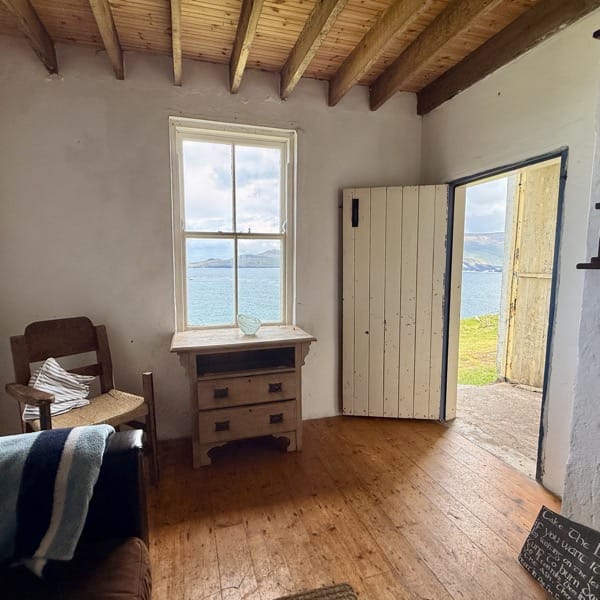
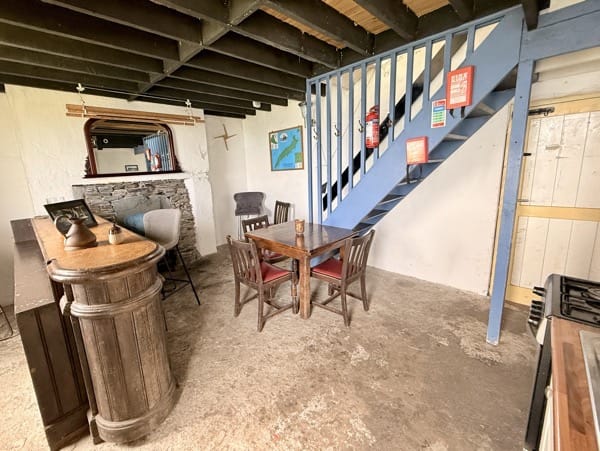
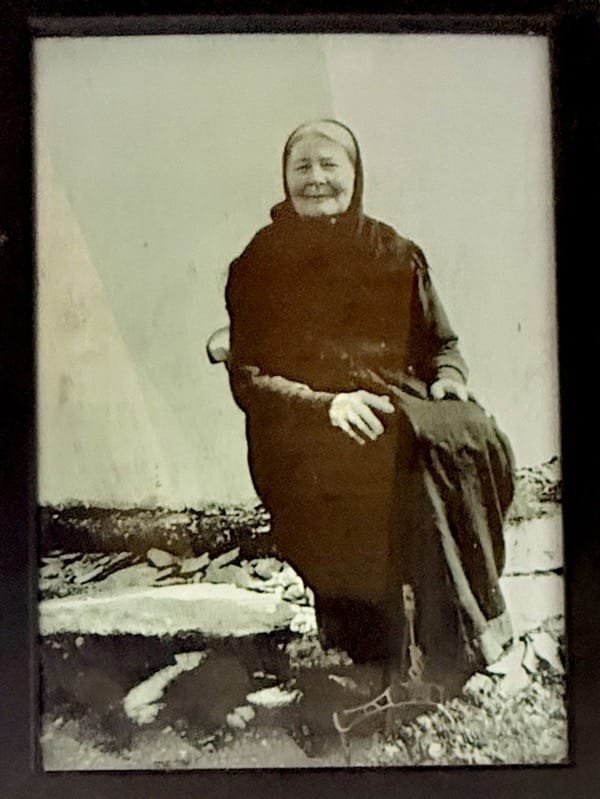
After a while, we got up to explore the far side of the settlement beyond the landing area. Along the way we stopped at the former cottage of Peig Sayers, one of Ireland’s best-known storytellers and authors. Born on the Dingle Peninsula in 1873, Sayers moved to Great Blasket Island after her marriage and became renowned for preserving the island’s rich tradition of Irish-language storytelling and folklore. Her autobiography, Peig, published in 1936, became a classic of Irish literature and for generations was required reading in Irish schools, giving many students their first vivid glimpse into the hardships and rhythms of traditional island life. (Sean later mentioned that, for many years, the Irish government school edition had certain passages, considered the most vivid or challenging, edited out for students.)
Standing inside the cottage and looking out through its small windows toward the sea, it was easy to romanticize the lives of the islanders—the dramatic scenery, close-knit community, and deep connection to nature. It was harder to imagine how difficult life here must have been, especially during violent Atlantic storms and the long, harsh winters when isolation from the mainland could last for days or weeks.
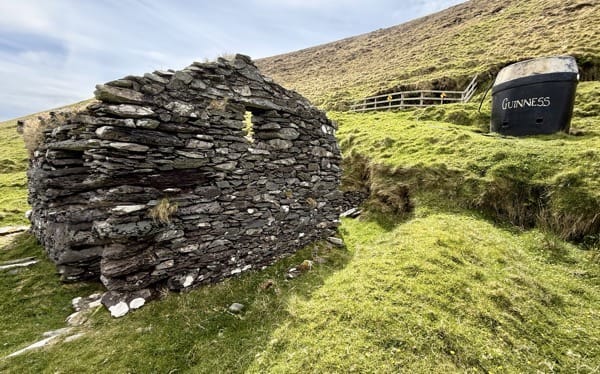
We also climbed uphill to inspect the village well, whose small concrete water tank amusingly resembled half a glass of Guinness perched on the hillside. Soon afterward we made our way back toward the landing area, arriving just in time for the 1:30 p.m. dinghy pickup. By then rain had begun to fall, and the ride back out to the main boat was noticeably choppier, with the little dinghy bouncing sharply over the waves as we headed back across the harbor.
—— More Village Meandering —–
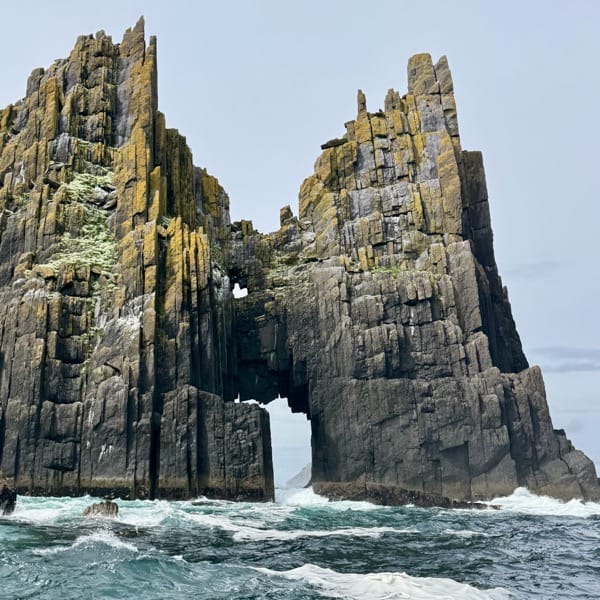
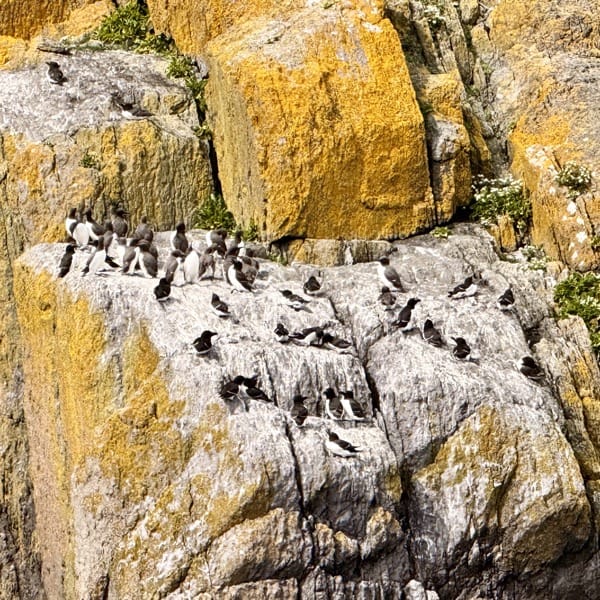
Once everyone was back aboard, our skipper Sean continued the tour deeper into the Blasket archipelago, passing close to Inis Harbour and Inishvickillane, where we spotted puffins and other seabirds darting above the cliffs and swells. Inishvickillane is perhaps best known as the private island retreat once owned by former Irish Taoiseach (prime minister) Charles Haughey, who purchased the island in the 1970s for about £20,000 and built a summer home there.
By then the rain became intermittent as we turned back toward Dingle. Near the same stretch of water where we had seen dolphins earlier, many more appeared around the boat. Sean slowed the RIB so they could swim and weave alongside us for several minutes, surfacing effortlessly through the waves as everyone leaned into the windows and over the rails to watch.
Cold, damp, and exhilarated, we finally arrived back at the Dingle dock around 3:00 p.m., ending a memorable day among the Blasket Islands.
—— Returning to Dingle —–
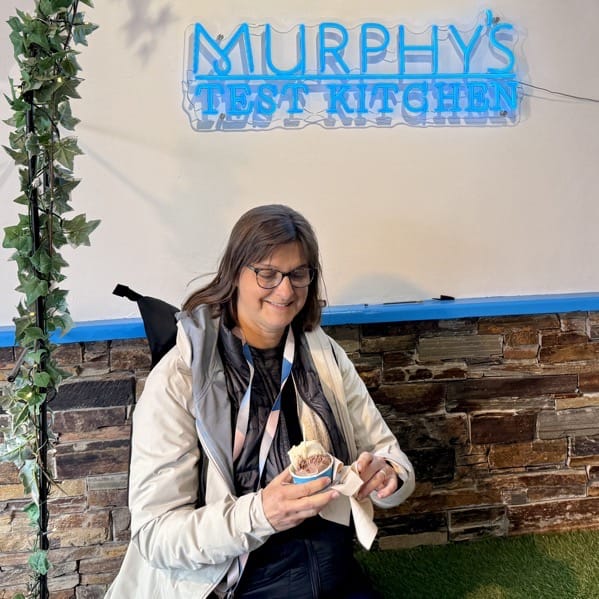
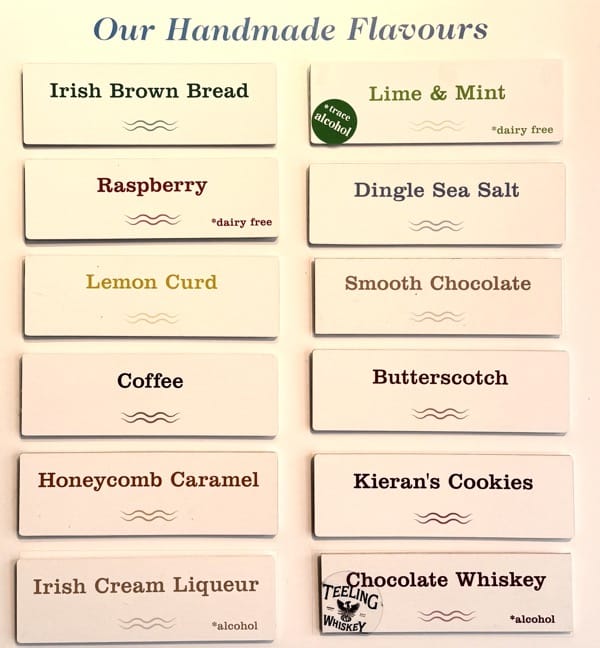
Despite being cold, damp, and more than a little tired, Jane couldn’t resist taking advantage of one final opportunity to sample ice cream at Murphy’s Test Kitchen. She tried their famous brown bread ice cream, but in the end we both opted for two scoops instead: chocolate whiskey and Irish cream. It was a sweet but chilly reward after an amazing day on the Atlantic.
—— A Sweet Treat —–
Afterward we climbed the steep hill back to our room and relaxed for a while. About half an hour later, Nancy and John returned from their road trip to Tralee and enthusiastically recounted their adventures driving the Connor Pass and around Castlegregory. Connor Pass is one of Ireland’s highest and most dramatic mountain roads, a narrow winding route threading between steep cliffs and glacial lakes high in the mountains above Dingle. Castlegregory, on the north side of the peninsula, is known for its beaches and rugged Atlantic scenery, making the drive both spectacular and a little nerve-racking in places.
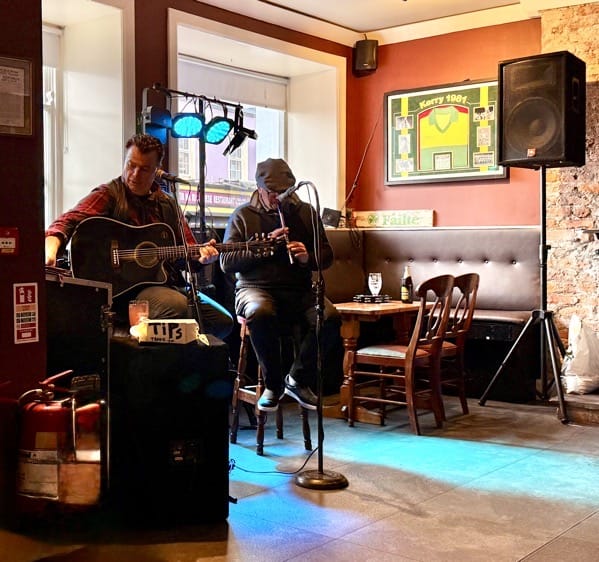
Later that evening, Jane, John, and I headed back into town in search of beer and music. We found a pub, Dingle Bridge House, that wasn’t overly crowded and managed to grab a table with a good view of the musicians. A guitarist and vocalist performed alongside an accordion (sometimes, whistle) player. The singer was very chatty and catered to his mostly American audience playing some Irish tunes mixed with familiar crowd favorites. After lingering over our beers and enjoying the music for a while, we stopped at a Centra market on the walk back to our rooms.
Before turning in for the night, Jane and I reflected on the remarkable day we had just experienced. Between the Blasket Islands, dolphins, seals, dramatic Atlantic scenery, and the warmth of Dingle itself, we both agreed it had been the best day of our Ireland trip so far.
—— A Pint with Music —–