Sunday & Monday, April 26-27
Last night, much-needed rain finally arrived in drought-stricken central North Carolina. As we finished packing and preparing the house for our departure, a gentle, intermittent drizzle set in—accompanied by overcast skies and refreshingly cool temperatures. By 5:45 p.m., we were ready and hailed an Uber ride to take us to Raleigh-Durham International Airport. Check-in and security were smooth, giving us time to relax before boarding. We grabbed veggie burgers and fries while waiting for our 9 p.m. flight
Our non-stop flight with Aer Lingus, which had only recently launched from RDU, had a few minor pre-departure hiccups, including a full re-scan of all passengers’ boarding passes after we had already boarded. Still, the plane was only about a third full, so everyone had plenty of space to spread out. The vegetarian dinner, paired with a glass of wine, was enjoyable, though served a bit late, around 10 p.m. Jane settled in with a movie, while I managed to get a couple of hours of sleep before we were awakened for morning coffee. Somewhere over the Atlantic, Sunday quietly turned into Monday.
—— Almost There! —–
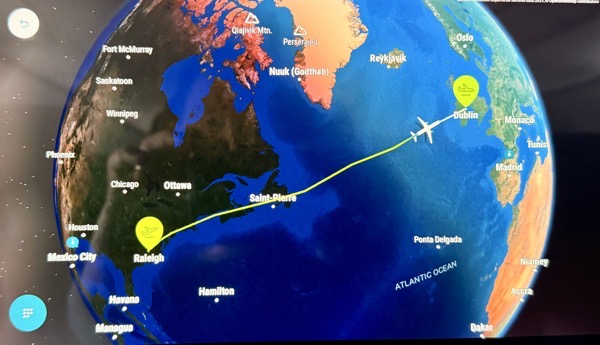
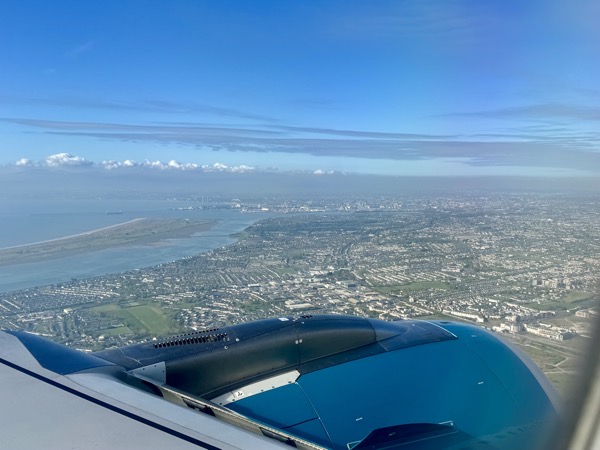
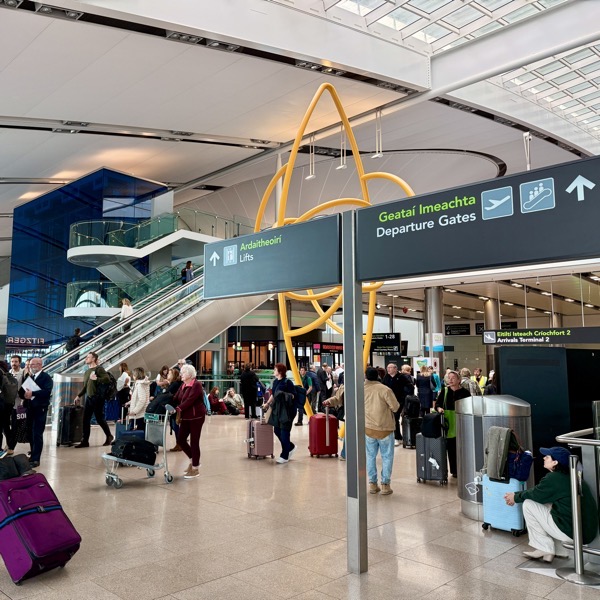
We landed in Dublin around 9 a.m. Passport control was quick (complete with a satisfying Irish green entry stamp), and our bags were already waiting by the time we reached the carousel. After navigating the arrivals hall, we stepped outside into a cool but sunny Dublin morning.
—— Arriving in Dublin —–

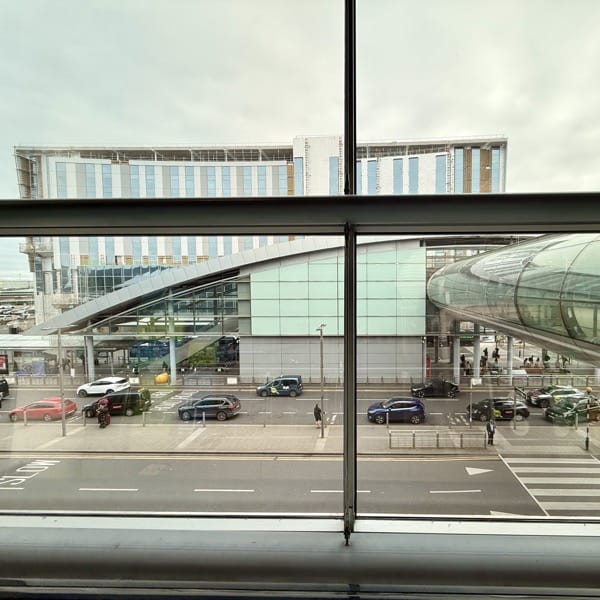
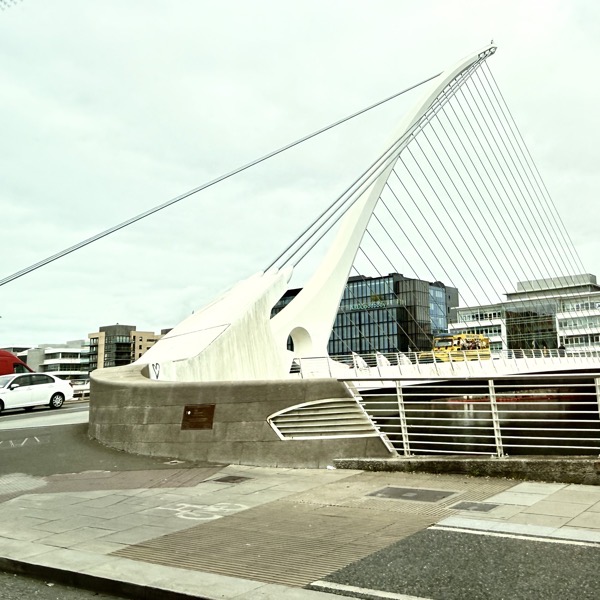
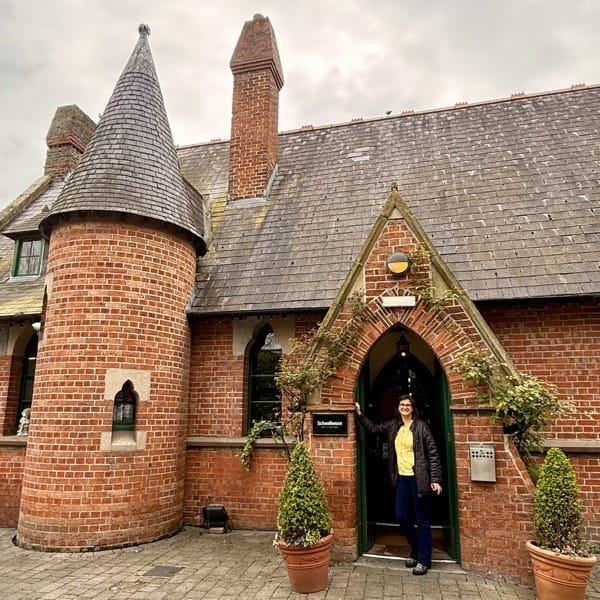
We slipped into the fast-moving taxi queue and were soon gliding through the city, our friendly local driver sharing bits of history and color along the way. One highlight of the ride was crossing the River Liffey on the Samuel Beckett Bridge, its sweeping, harp-like design echoing Ireland’s national symbol. The journey passed quickly, and before long we arrived at our home for the next three nights, the Schoolhouse Hotel and Gastropub.
Our room wasn’t ready yet, so we freshened up in the lobby restroom, picked up a map, and got our bearings with a few helpful tips from the receptionist. Before heading out, we left our luggage in the lobby for safekeeping. We also discoved that our travel companions, Nancy and John, who had departed from Philadelphia a few hours ahead of us and were already hopping on and off a tour bus, had already left their bags there as well.
—–Harp-shaped Samuel Beckett Suspension Bridge over the River Liffey ——
—— The Schoolhouse Hotel —–
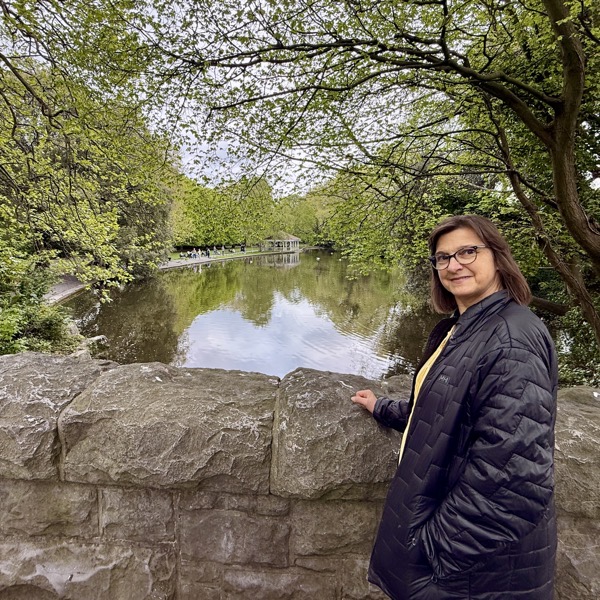
Many of Dublin’s most notable sights were within an easy mile of the Schoolhouse Hotel, making it ideal for exploring on foot. The first one we came upon was Merrion Square, a graceful Georgian park framed by rows of red-brick townhouses and colorful doors. We cut across its tidy paths before continuing on to St. Stephen’s Green, a beloved Victorian park filled with winding walkways, flowerbeds, and quiet corners where locals were lingering on benches or stretching out on the grass.
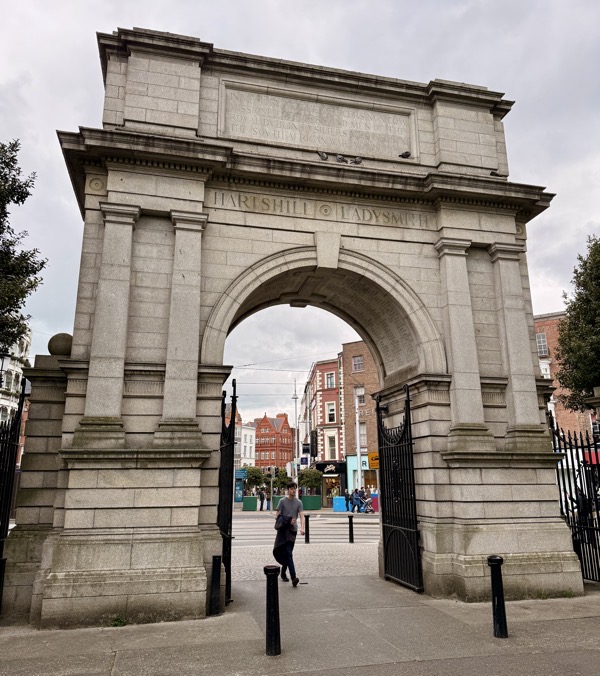
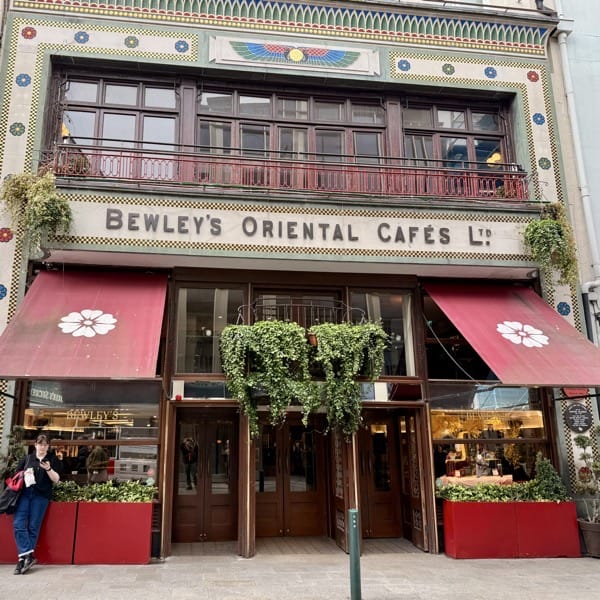
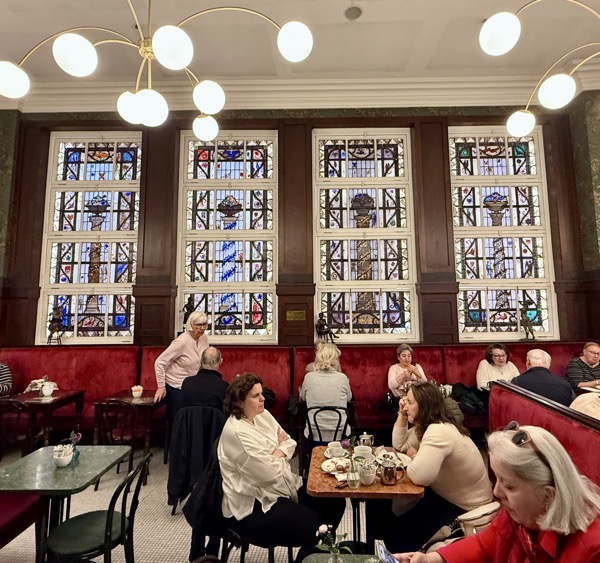
From there, we drifted onto Grafton Street, one of Dublin’s liveliest pedestrian thoroughfares. The street hummed with energy, buskers performing, shopfronts buzzing with activity, and a steady flow of locals and visitors weaving through it all. It felt like the vibrant heartbeat of the city. We ducked into Bewley’s Café, drawn by Jane’s wish to see its famous stained-glass windows. Inside, the warm, slightly old-world atmosphere wrapped around us, and the richly colored glass panels cast a soft, jewel-toned light across the room. We were tempted to eat lunch there but breakfast was still being served, so we continued exploring.
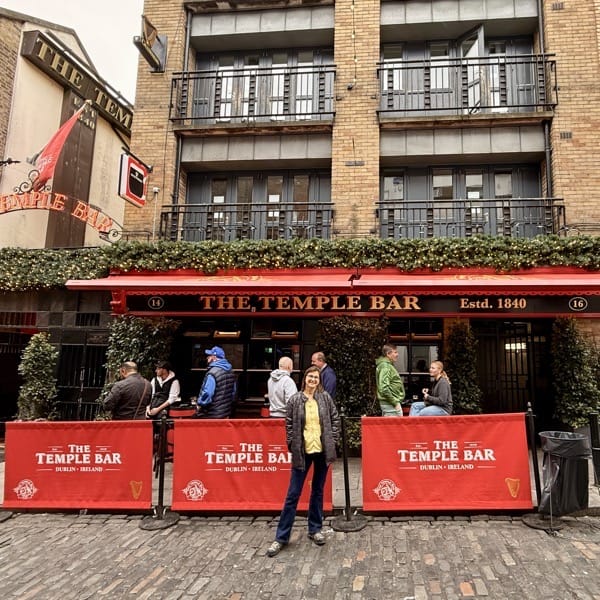
Of course, we couldn’t resist seeking out the Temple Bar district. Its cobbled streets and pubs, painted in bright colors and draped with flower boxes, gave it a postcard charm. Still, it was easy to imagine how quickly that charm would tip into a full-on party scene after dark, and we suspected we’d admire it more during the calmness of daylight than during its nighttime rowdiness.
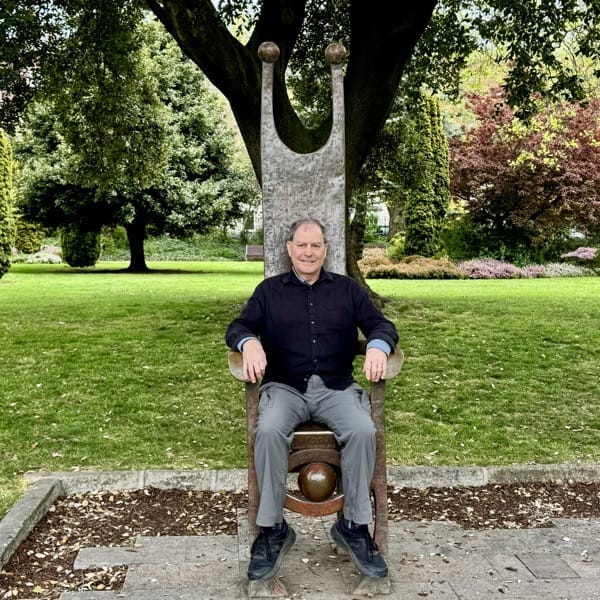
—— Royally Relaxing in Merrion Square —–
—— St. Stephen’s Green —–
—— Bewley’s Café —–
—— Temple Bar —–
After more rambling through the city streets, we found a place to eat, a café just inside George’s Street Arcade called Bodega Coffee. It was busy but cozy, with a relaxed buzz of conversation and the comforting smell of fresh coffee. It suited both our tastes and appetites perfectly.
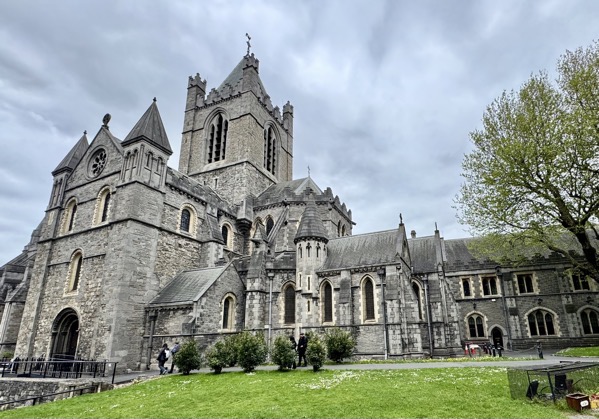
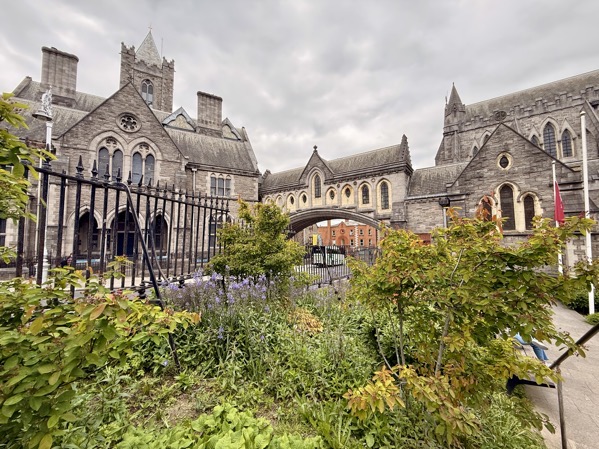
Refreshed, we set off toward our designated walking tour meeting point, but not before coming upon the magnificent Christ Church Cathedral. Its striking Gothic architecture, with soaring stonework and a massive medieval façade immediately commanded our attention. Dating back nearly a thousand years, it is one of Dublin’s oldest and most important buildings, its history layered with both religious and civic significance.
—— Christ Church Cathedral —–
From there, we continued on to the park in front of St. Patrick’s Cathedral, where we found a bench and settled in to take in the surroundings. The green space offered a quiet pause amid the city’s movement, and we waited there for Nancy and John, along with our tour guide, to arrive.
From our vantage point, we soon spotted Nancy and John enter the park from the opposite side and settle onto a nearby bench. We made our way around the green to join them and then exchanged stories and caught up on our respective travel adventures. Before long, we noticed our guide, Miriam, along with the rest of our group, gathering near the fountain at the park’s center, and we walked over to join them. After a few introductory remarks and a brief overview of the plan for the afternoon, our 3.5-hour-long tour set off—beginning, conveniently, with St. Patrick’s Cathedral.
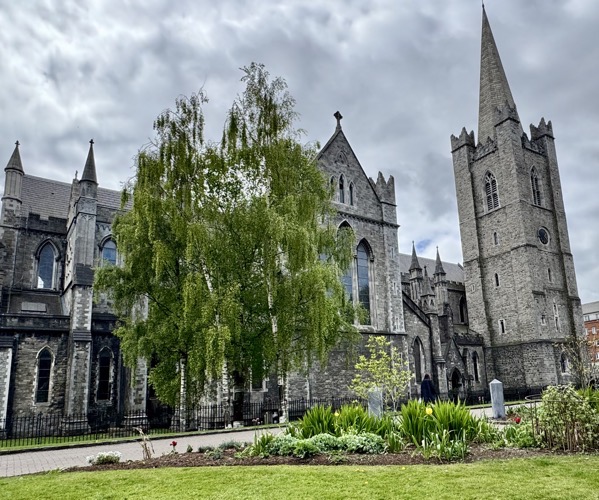
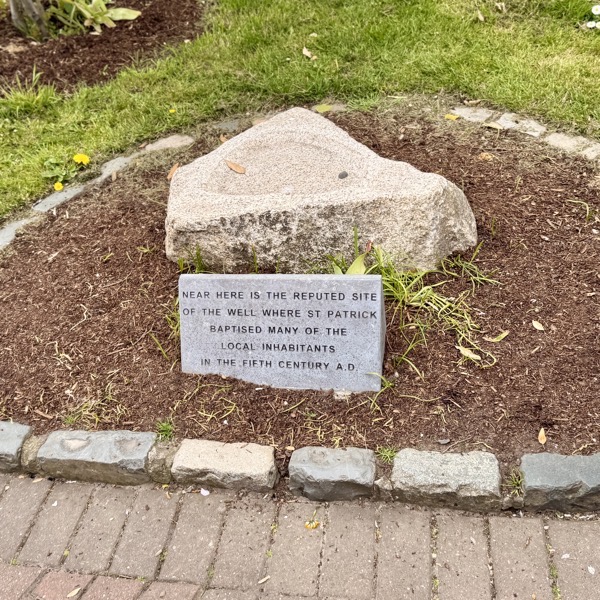
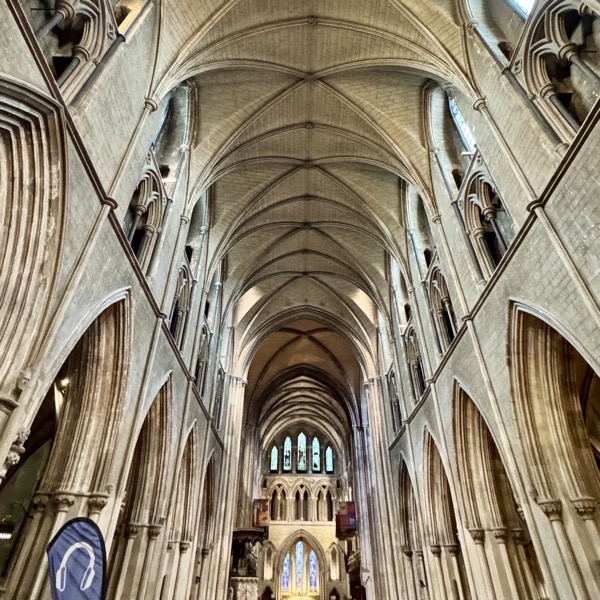
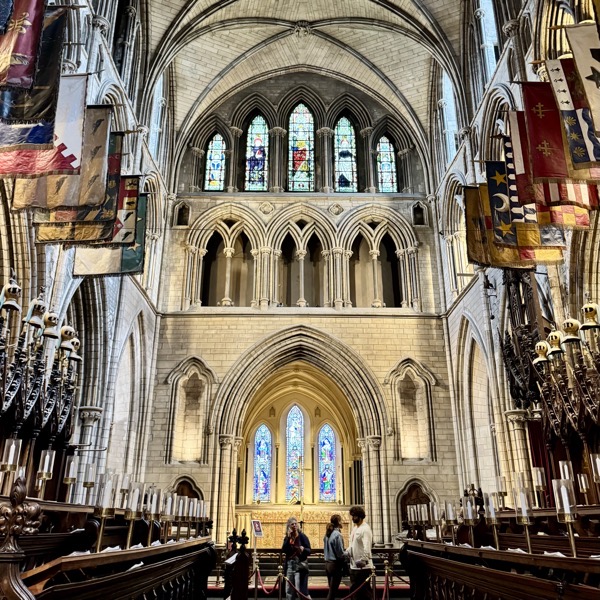
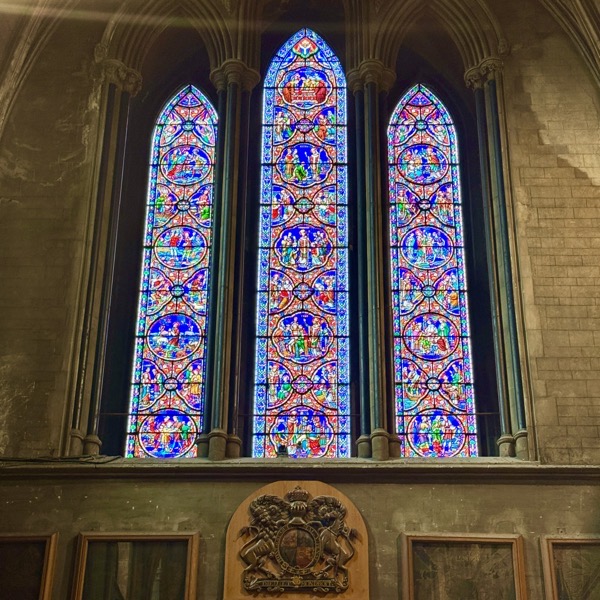
St Patrick’s Cathedral is the largest cathedral in Ireland and the National Cathedral of the Church of Ireland. Built in the 12th century, it is most famously associated with Jonathan Swift, author of Gulliver’s Travels, who served as its dean and is buried there. The cathedral has impressive Gothic architecture including soaring arches and intricate stonework and its centuries of religious and civic history is woven into the fabric of Dublin. We were equally impressed by the beautiful stained-glass windows and the striking patterns of tile floors beneath our feet, which added warmth and intricate detail to the cathedral’s stone interior.
—— St. Patrick’s Cathedral—–
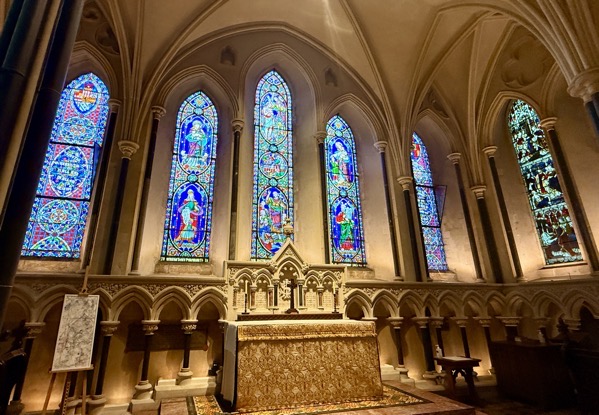
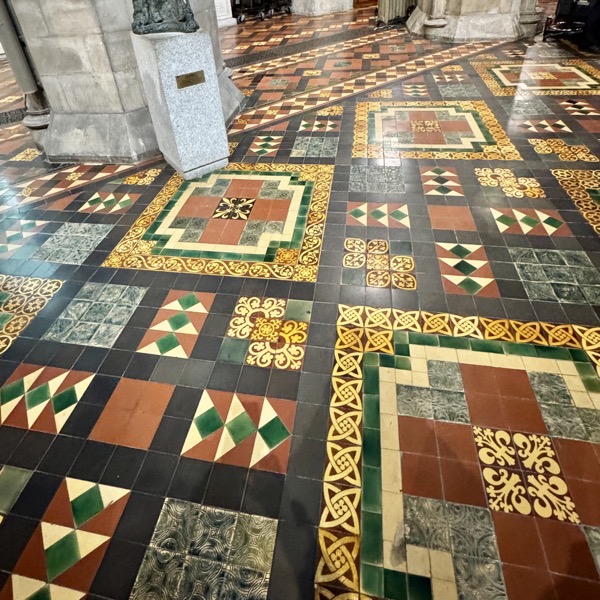
From the cathedral, we followed Miriam on foot to Dublin Castle. Unfortunately, at the moment tourists are not allowed inside the castle complex due to security preparations for an upcoming European Union meeting. So, we learned about the castle’s history from the courtyard while taking in views of its exterior.
Dublin Castle has stood at the heart of the city for over 800 years and was originally built in the early 13th century on the site of a Viking settlement. For centuries, it served as the seat of British administration in Ireland, making it a powerful symbol of colonial rule until Irish independence in the 20th century. Today, it functions as a major government complex and ceremonial site, still hosting state events and presidential inaugurations. Its architecture is a mix of medieval foundations and later Georgian and Victorian additions, reflecting its long and layered history.
—— Dublin Castle —–
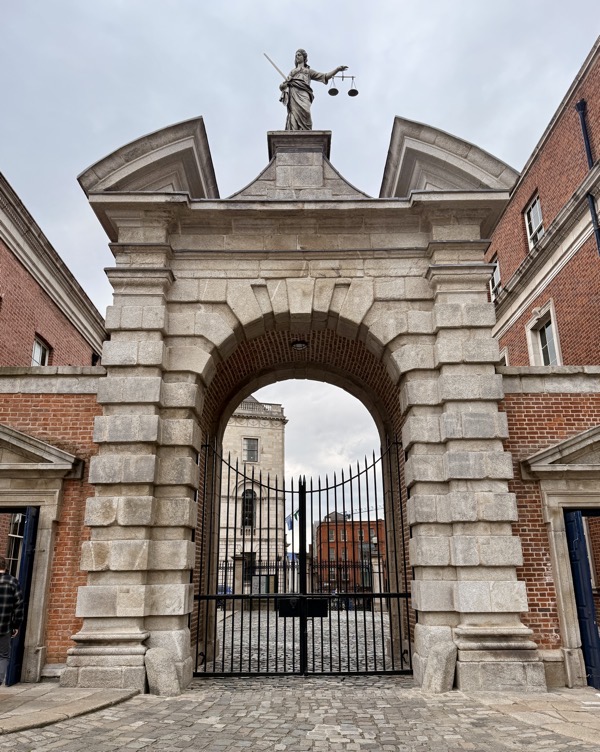
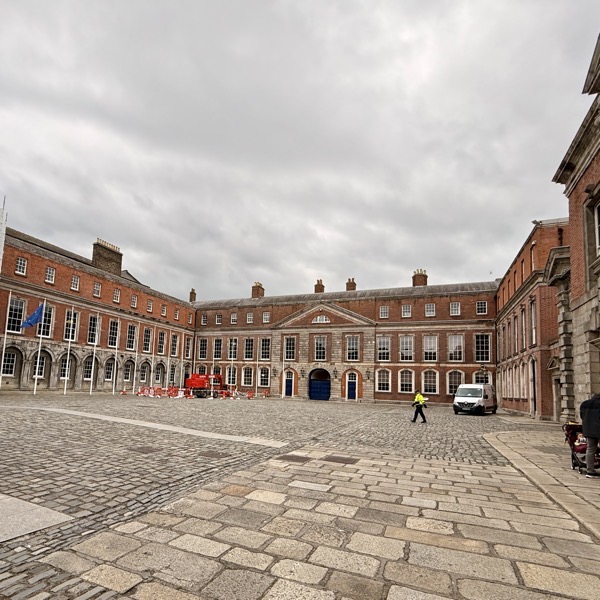
From the castle, we followed Miriam to our final stop on the campus of Trinity College Dublin, taking in the lively sights and sounds of the city as we went.
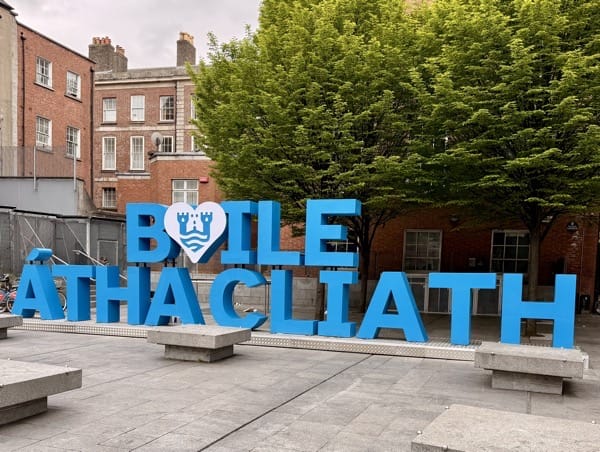
—— Dublin in the Irish Langauge ——
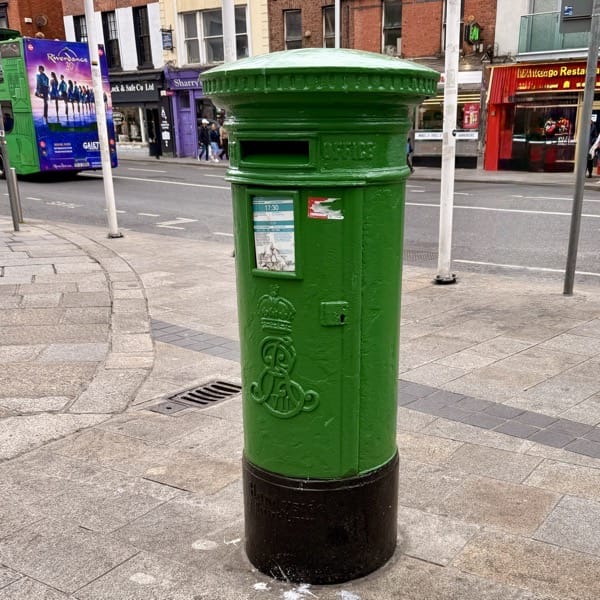
——— Iconic Green Irish Mail Box —–
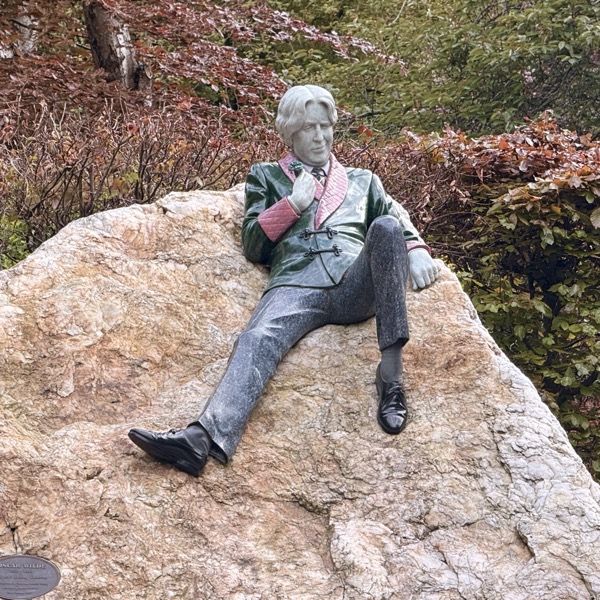
—— Oscar Wilde lazing around Merrion Square —–
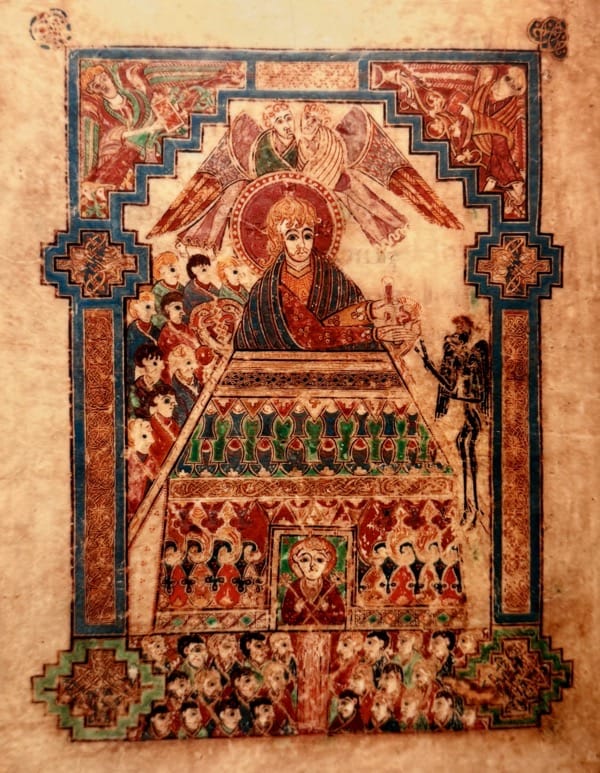
Our final stop of the tour was the Book of Kells, housed in the Old Library at Trinity College Dublin.
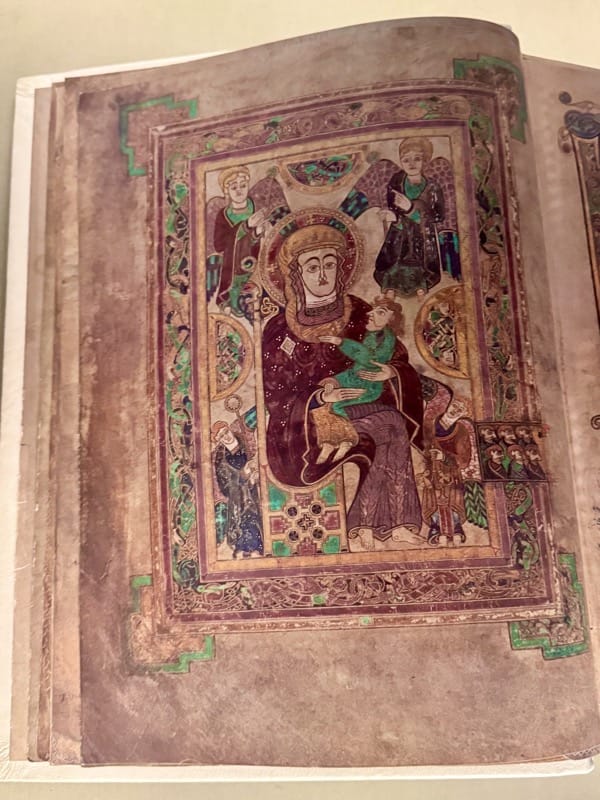
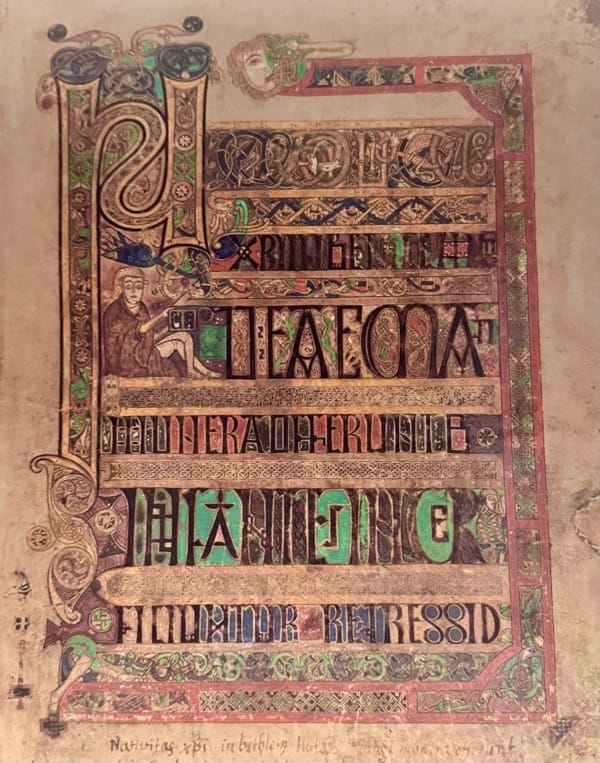
The Book of Kells is a stunningly illuminated manuscript created by Celtic monks around the 9th century. It contains the four Gospels of the New Testament,and is also a masterpiece of medieval art. Its pages are richly decorated with intricate knotwork, vivid colors, and symbolic imagery, where even individual letters are transformed into elaborate works of art. The level of detail is extraordinary, reflecting both deep devotion and remarkable craftsmanship.
We first learned about the manuscript through a series of exhibits, viewing reproductions that captured the richness and detail of its artwork. From there, we entered a dimly lit room where the actual Book of Kells was displayed, opened to two pages from the Gospel of Mark, chapter 13. The subdued lighting preserved the fragile pages while lending the moment a quiet sense of reverence. Periodically, the pages on display are changed, allowing different sections of the manuscript to be viewed by the public over time. No photography of the Book of Kells was allowed.
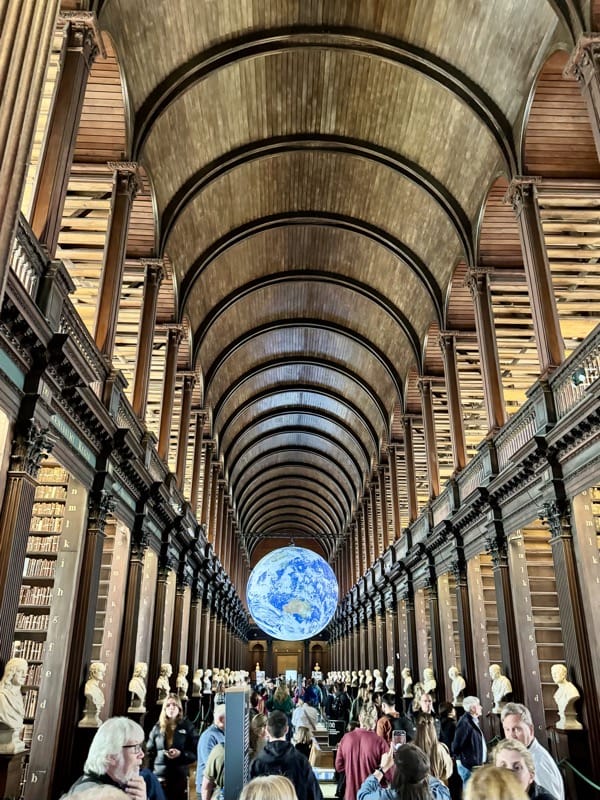
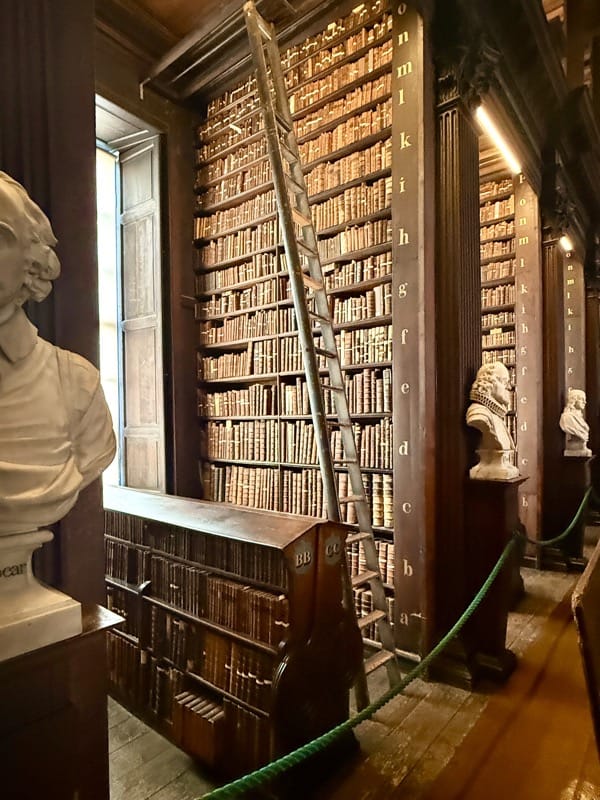
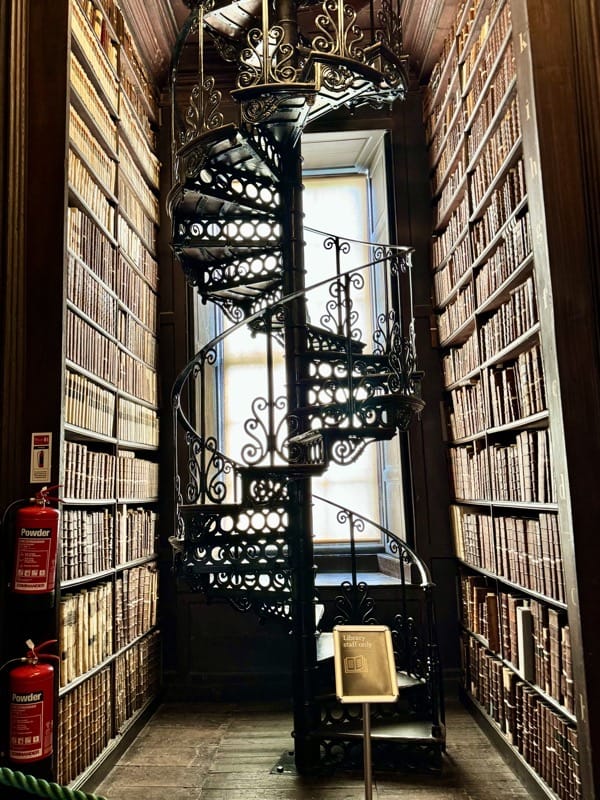
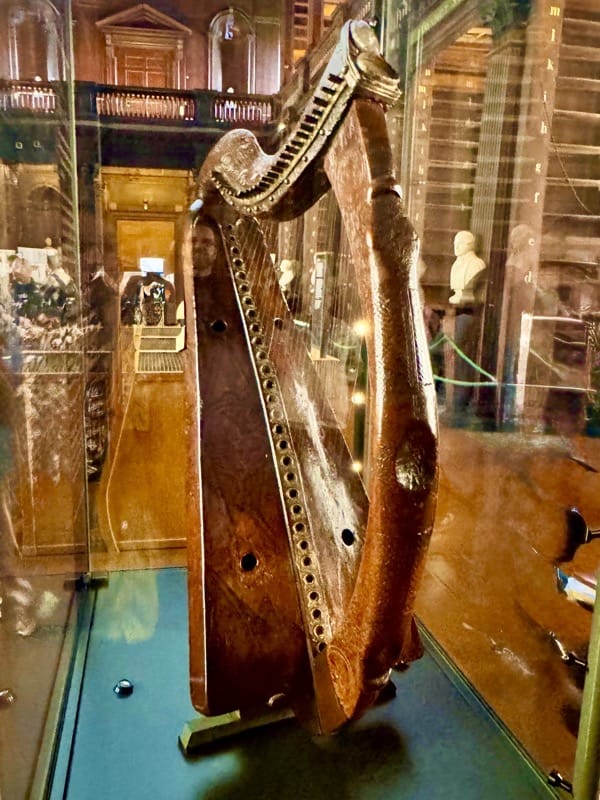
The Book of Kells is displayed within the Old Library Trinity College, whose most famous feature is the awesome Long Room. Stretching nearly 65 meters, the hall is lined with towering dark-wood bookshelves filled with hundreds of thousands of historic volumes. A barrel-vaulted ceiling arches overhead, and marble busts of great thinkers and writers stand watch along the sides, giving the space the hushed, reverent atmosphere of a literary cathedral.
During our visit, a large modern globe was on display offering a contemporary contrast to the historic surroundings. The library’s ancient collection, however, is currently undergoing an extensive conservation project. Many of the historic volumes have been carefully removed, cleaned, catalogued, and stored to allow for major renovations to the building, meaning the iconic shelves are temporarily less densely filled than in years past. Informational videos throughout Old Library illustrated this meticulous process, offering a behind-the-scenes look at how these priceless works are being preserved for future generations.
—— Trinity College, The Book of Kells and the Old Library —–
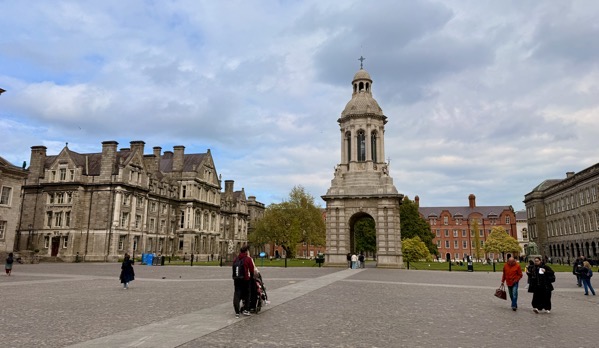
After touring the Old Library, we said our goodbyes to our guide, Miriam, and continued on our own through another building housing exhibits about Trinity College, which funneled us out through the inevitable gift shop upon exiting. By then, we were thoroughly worn out from a busy couple of days of travel and sightseeing, so we made our way back on foot to the Schoolhouse Hotel.
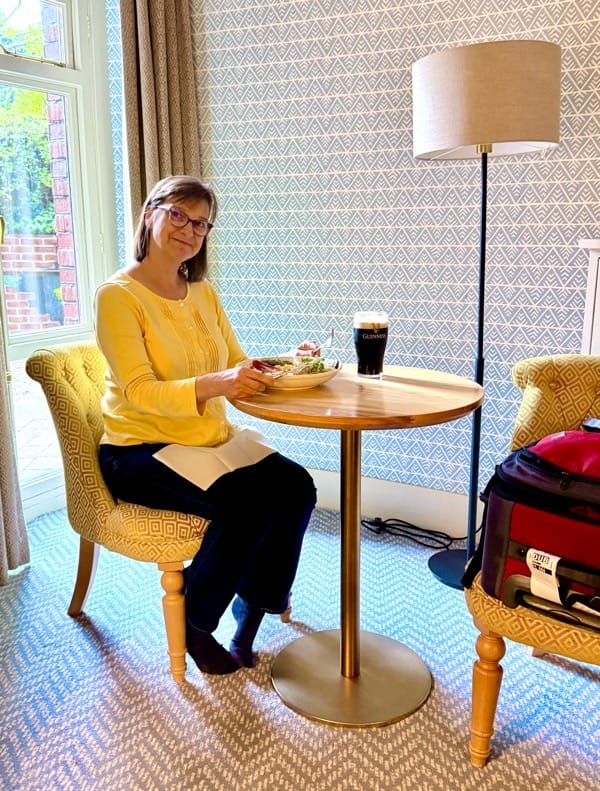
Check-in went smoothly since we had already arranged payment, so we toted our bags from the lobby downstairs to our two side-by-side rooms. After settling in and freshening up, John and I felt the pull to head back out for a bit more exploring, while Nancy and Jane opted to stay in. Jane ordered dinner via room service—a fresh, satisfying salad paired with her first pint of Guinness on Irish soil.
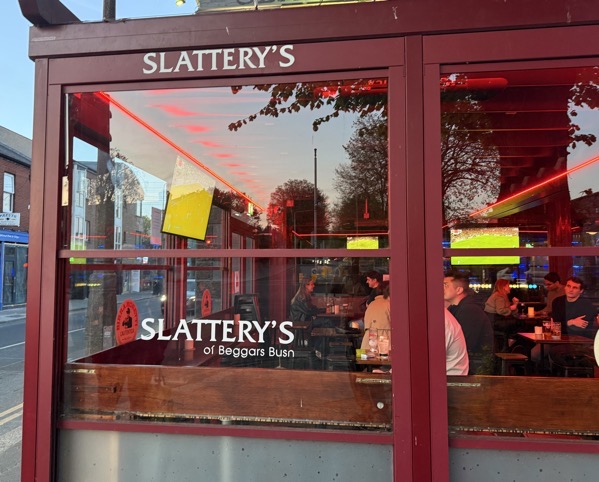
John and I walked about twenty minutes to a Tesco supermarket, where he picked up a few provisions. From there, we wandered in search of a light bite and eventually decided on Slattery’s Pub. I ordered a Murphy’s stout, John chose a cider, and we shared a simple cheese pizza that the waiter had brought over from a nearby pizzeria—an unpretentious but perfect end to the evening.
Eventually, we made our way back to our rooms at the Schoolhouse, thoroughly exhausted. In addition to crossing the Atlantic, my watch told the story; I had walked over 17,000 steps and 7.6 miles through Dublin. Rest was not just welcome—it was absolutely necessary.
—— Room Service Dinner with a freshly poured Guinness—–
—— John & John’s Dinner Venue —–