Monday, May 11, 2026
This morning we all slept a little later than usual, thanks to the previous night’s combination of music, beer, whiskey, and wine. Once everyone was moving again, we left Doolin with John at the wheel, aiming for a fairly direct drive north toward Galway via the M18.
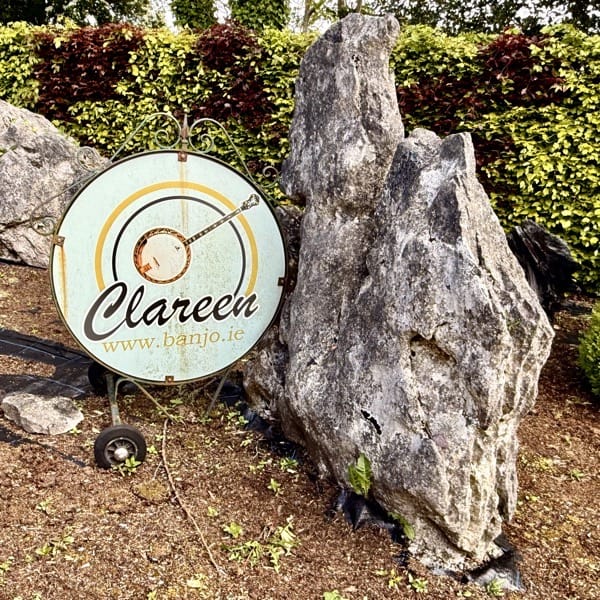
Our one planned stop along the way was near Clarinbridge at the banjo-making workshop the musician from the pub had recommended the night before, Clareen Banjos. Clareen is a family-run company that has been crafting instruments for more than forty years and is widely regarded as Europe’s leading maker of handcrafted banjos. The shop is especially known for its four-string tenor banjos favored in traditional Irish music, though they also build five-string banjos and mandolins.
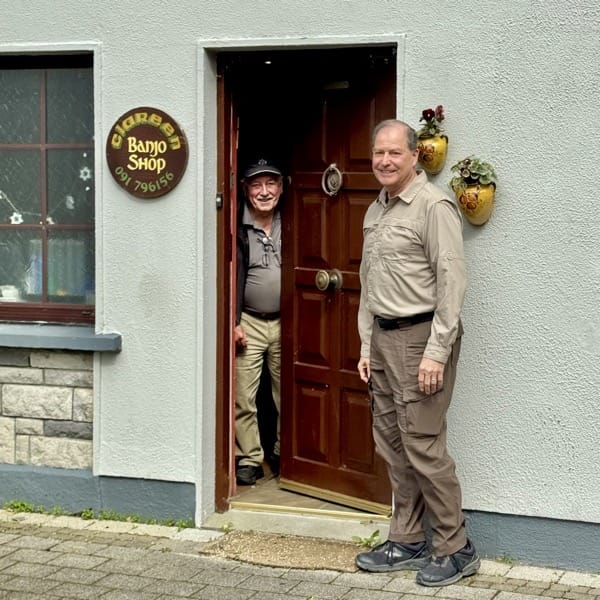
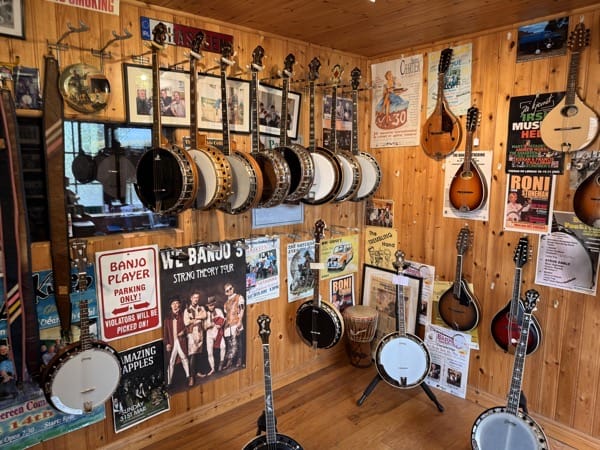
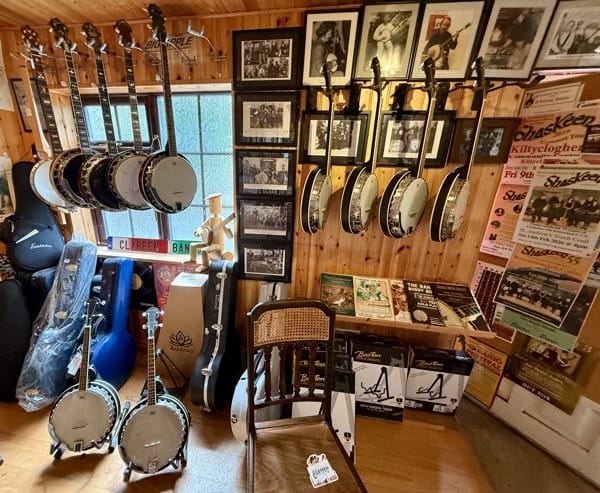
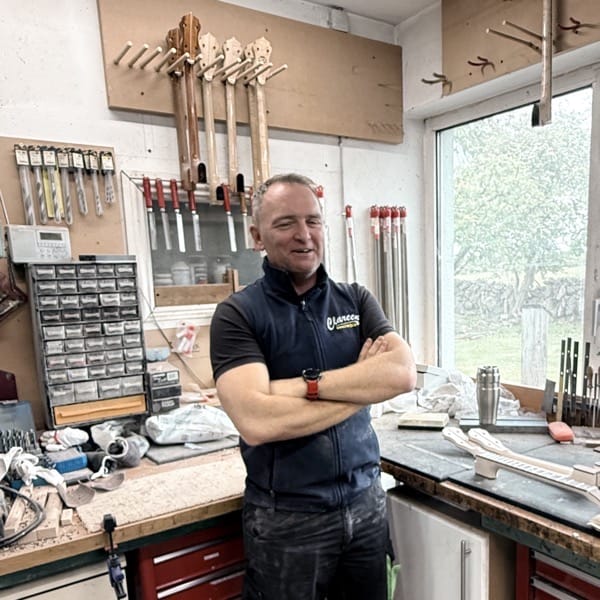
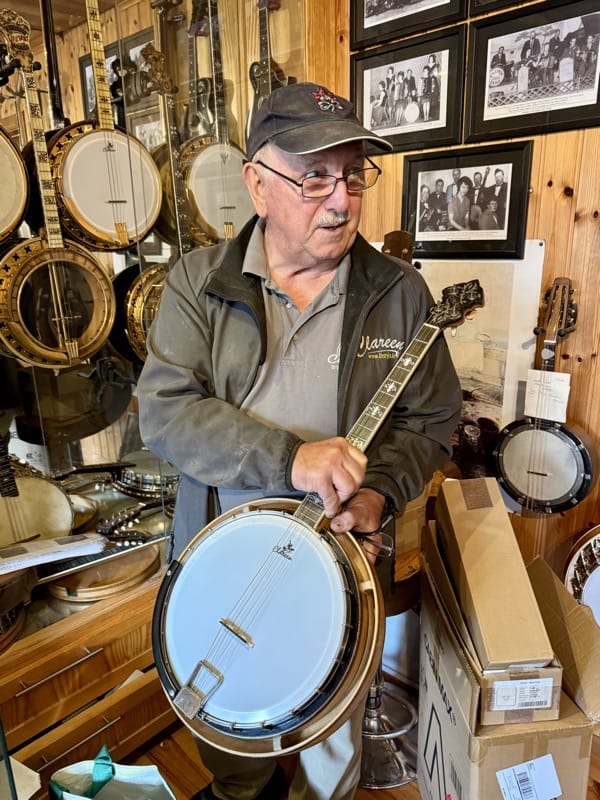
We arrived unannounced, so I was genuinely surprised when founder Tom Cussen greeted us warmly at the door and even posed for a photograph. We spent quite a while admiring the beautiful instruments displayed throughout the showroom before Tom led us farther inside. Along the way, he proudly showed us a display cabinet containing a collection of historic and notable banjos—items that may not mean much to most visitors but were fascinating to those of us who love the instrument.
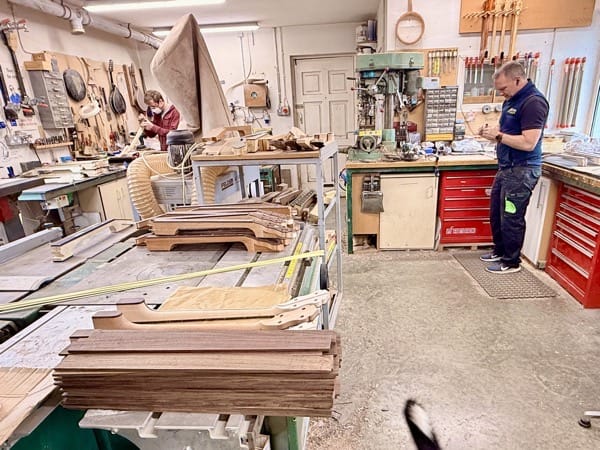
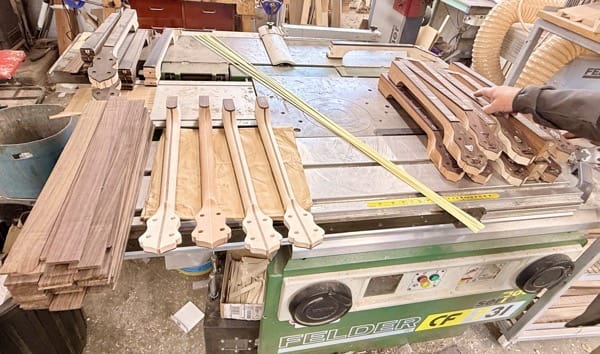
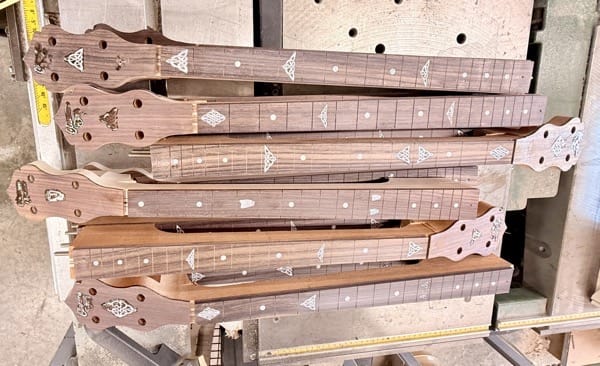
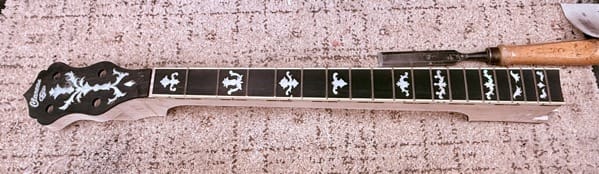
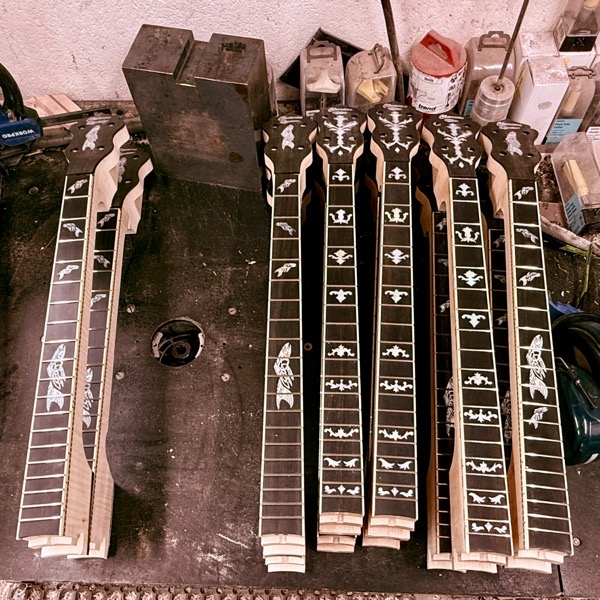
In the workshop we met Tom’s son, Fintan Cussen, who now runs the company. He had been working on several banjo necks but kindly stopped to talk with us about the business and the craft. The shop itself was small but impressively organized and efficient, with components sourced from all over the world: metal parts from Europe and Asia, including South Korea, and maple wood imported from the United States. Seeing the instruments in various stages of construction gave us an even greater appreciation for the skill, patience, and precision that go into building these beautiful banjos.
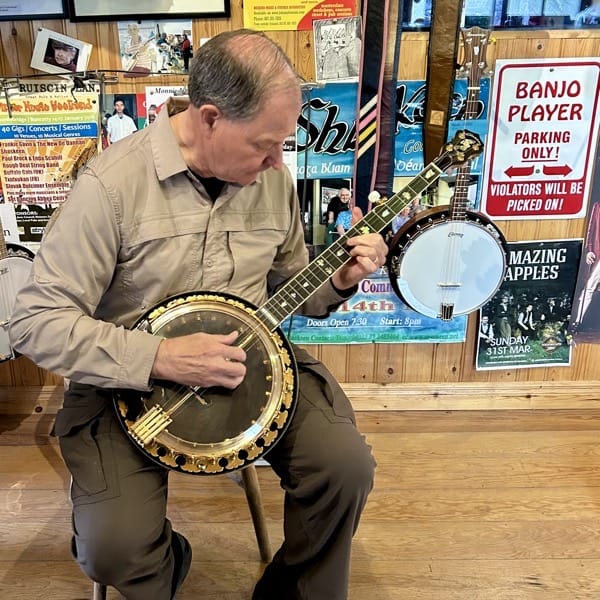
After touring the workshop, Tom escorted us back to the showroom where we enjoyed a long conversation about banjos and music. He mentioned that he had once met my banjo maker, Geoff Stelling, during a visit to the United States. Tom handed me one of his renowned four-string tenor banjos to try—though I could do very little with it—before letting me play a bit on one of his excellent five-string models. Eventually, the rest of the group had reached their limit on banjo talk and were eager to continue on to Galway, so we thanked Tom and Fintan for their hospitality, said our goodbyes, and continued on our journey.
—— Clareen Banjo Shop —
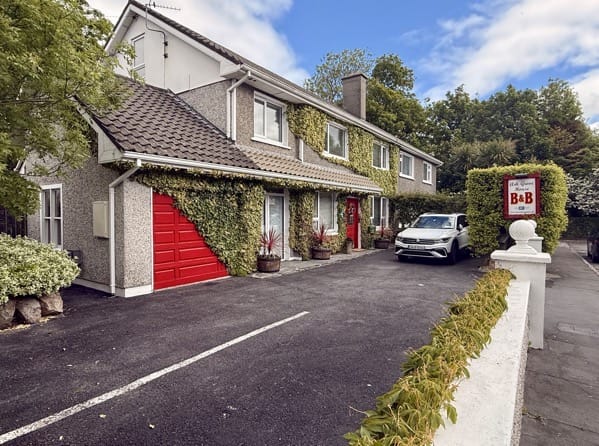
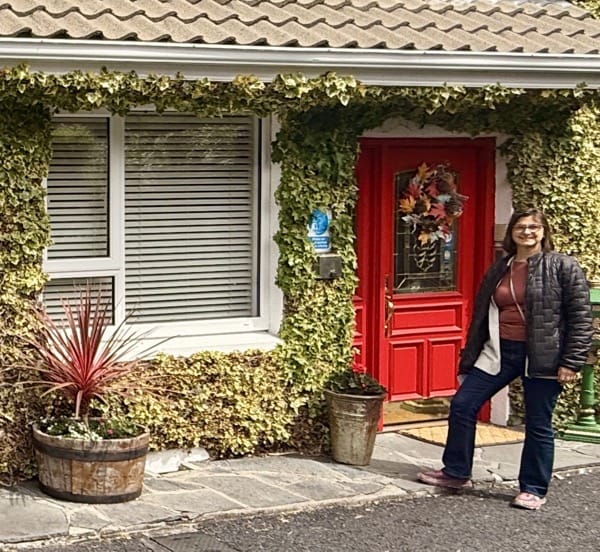
It rained off and on during the drive, but the skies had cleared by the time we arrived at the Ash Grove Guesthouse B&B in Galway around 1:00 p.m., a full two hours before check-in. To our delight, our hostess warmly welcomed us inside and told us that our rooms were ready, allowing us to check in early. We quickly unloaded our bags, settled into our rooms, and before long were back out the door, beginning the pleasant twenty-minute walk to Galway’s lively city center.
—— Ash Grove House B&B —–
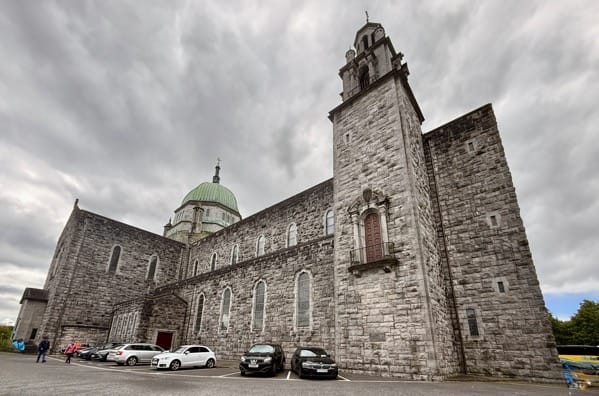
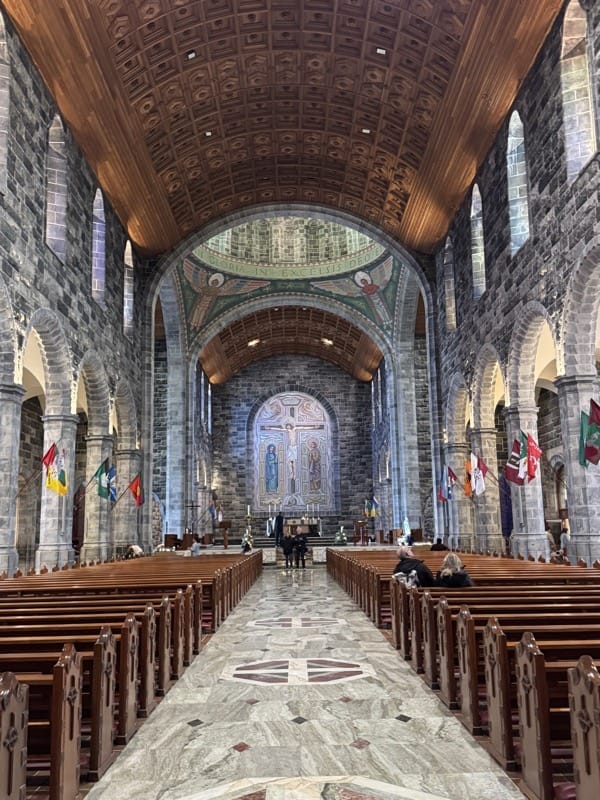
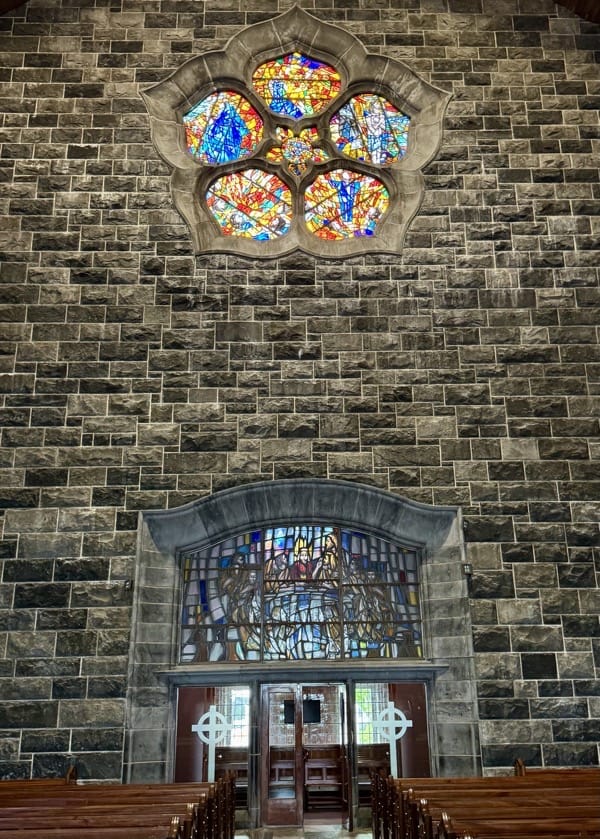
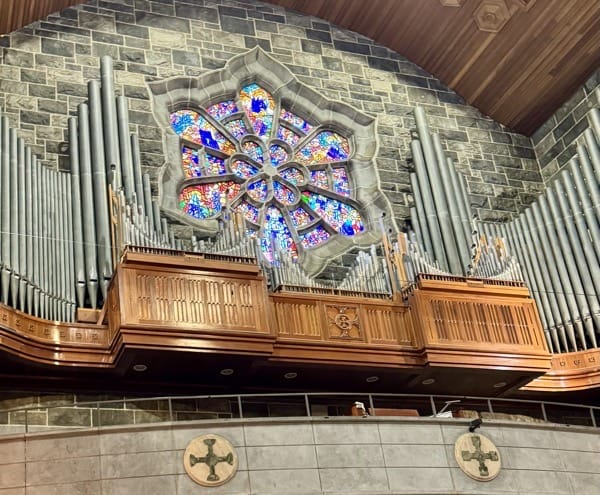
Jane had signed us up for a Viator tour, a beginner’s walking tour through Galway. On our way to the designated meeting point just off Eyre Square, we passed Galway Cathedral. Its impressive stone exterior immediately caught our attention, drawing us inside to admire the equally beautiful interior. Built in the 1960s on the site of a former prison, the cathedral is one of Europe’s youngest great stone cathedrals, featuring a striking Renaissance-style dome, colorful stained-glass windows, and richly decorated arches that blend several architectural influences.
—— Galway Cathedral —–
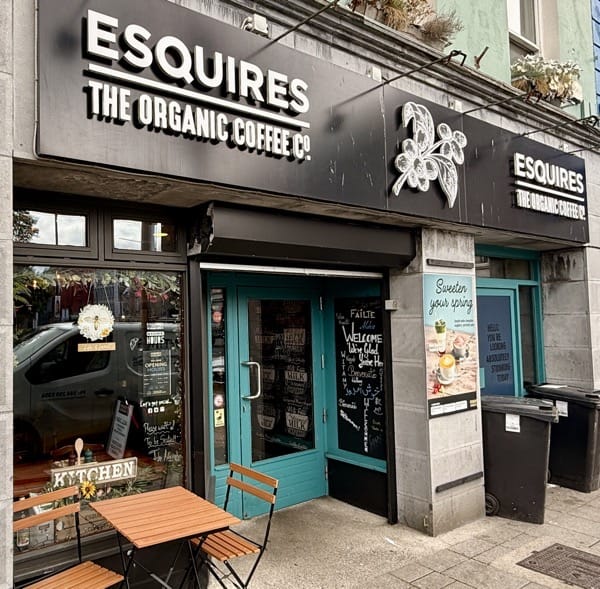
We crossed over the River Corrib and continued walking along the bustling streets until we reached Eyre Square and found our tour’s meeting point nearby. After checking in with our guide, Zoe, we stopped at a nearby café, Esquires Coffee, for a light snack before the tour began. We enjoyed coffee and smoothies along with pastries and bruschetta—just enough to hold us over for the walking tour scheduled to start at 2:30 p.m.
——— Our Pre-tour Snack Venue —–
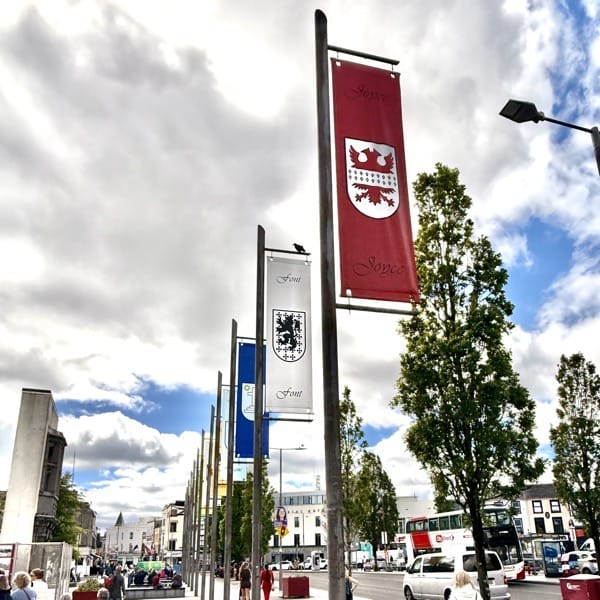
We then met up with our guide, Zoe, along with thirteen other participants, and headed into Eyre Square to begin the tour. Along the edge of the square, colorful rows of international flags fluttered in the breeze, reflecting Galway’s long maritime history and its reputation as one of Ireland’s most welcoming and cosmopolitan cities. Nearby, we paused at the historic Browne doorway and window, remnants of the grand townhouse of the influential Browne family, offering a glimpse into the wealth and power once held by Galway’s leading merchant families, including the Brownes and the Lynches.
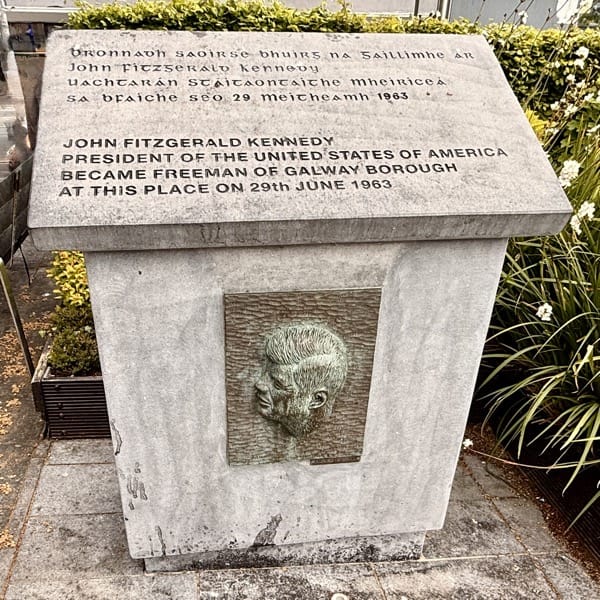
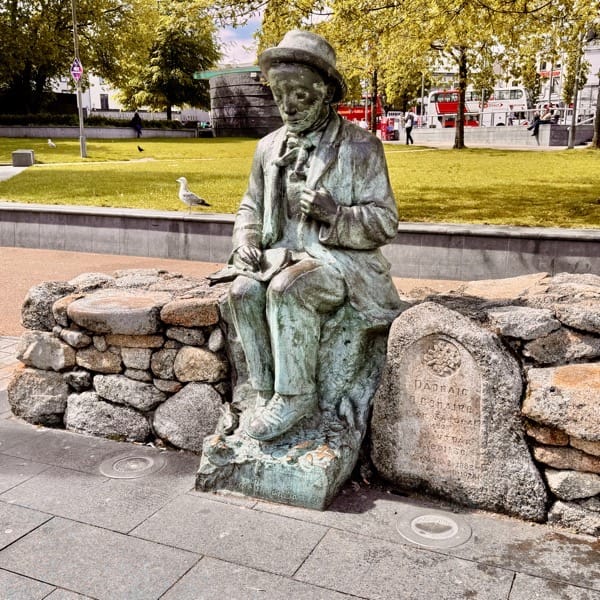
Our next stop was the memorial to John F. Kennedy, who remains greatly admired in Ireland because of his Irish ancestry and his memorable 1963 visit to the country. We then continued to the statue of Pádraic Ó Conaire (1882–1928), one of Ireland’s most important Irish-language writers and journalists. Despite his short life, he produced an extraordinary body of work—including novels, short stories, essays, and plays—that helped shape modern Irish-language literature.
—— Galway Walking Tour, Eyre Square —–
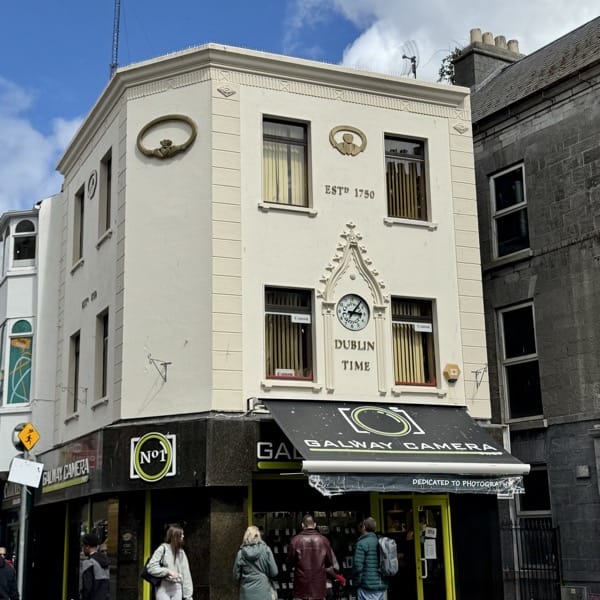
Zoe then led us along Shop Street, where she pointed out the Dublin Clock mounted on the corner of the Galway Camera Shop building. The clock is a well-known meeting point in the city and has an interesting historical association: before standardized time was introduced, different towns in Ireland—including Galway—kept their own local time, which differs from Dublin and London time. Eventually, railways and telegraphs forced the synchronization of time across Ireland and Britain.
Nearby, we stopped outside the Allied Irish Banks (AIB) building, where Zoe shared the local story behind one of its carved figures. A small gargoyle-like carving is said to depict a monkey rescuing a baby from a burning house.
We then paused at the Lynch Memorial Window, where Zoe recounted the story of James Lynch Fitzstephen, a 15th-century mayor of Galway who, according to tradition, hanged his own son after the young man murdered a friend in a crime of passion.
Zoe paused in front of St Nicholas’ Collegiate Church, briefly highlighting its long history as Ireland’s largest medieval parish church still in continuous use and its connection to Galway’s civic and maritime past.
Continuing down bustling Shop Street, the tour concluded at the Spanish Arch by the River Corrib. The remaining two stone arches are part of a structure built to protect the city’s quays, while the other two were damaged during the 1755 Lisbon earthquake, which generated a tsunami that reached Galway’s coast and caused significant flooding and destruction along the waterfront.
—— Galway Walking Tour, Shop Street —–
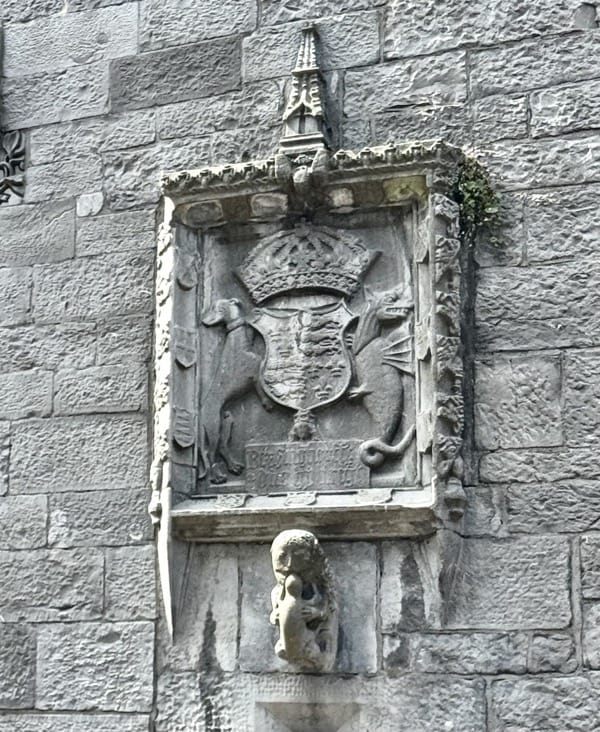
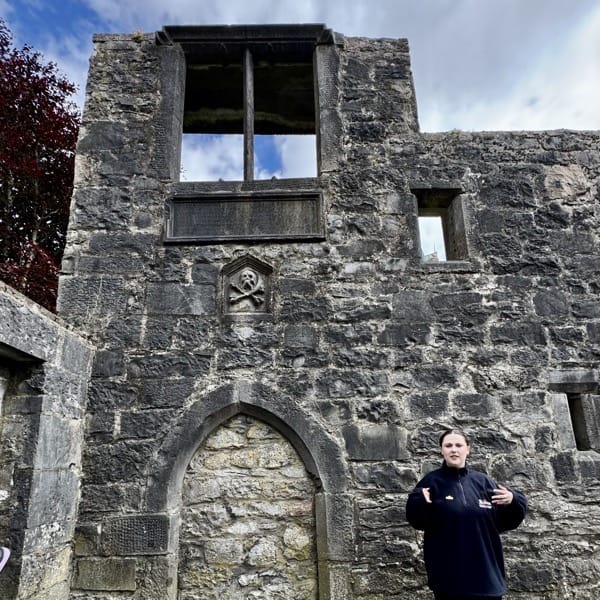
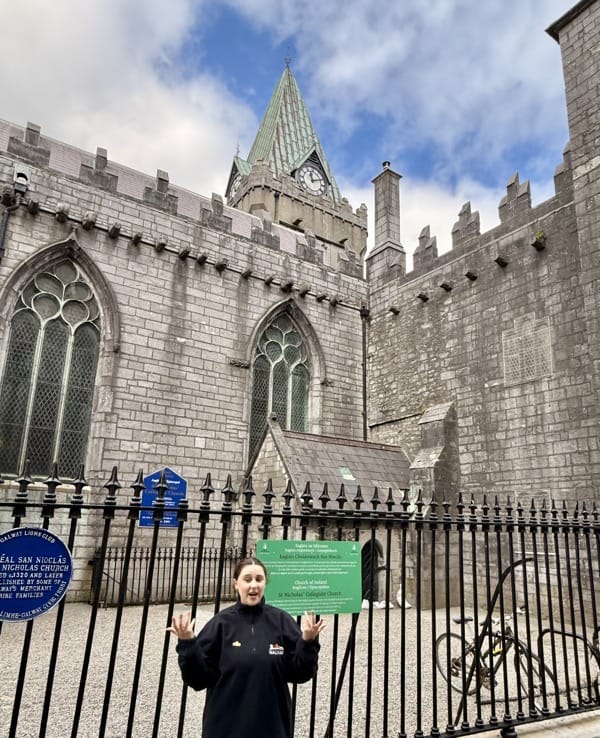
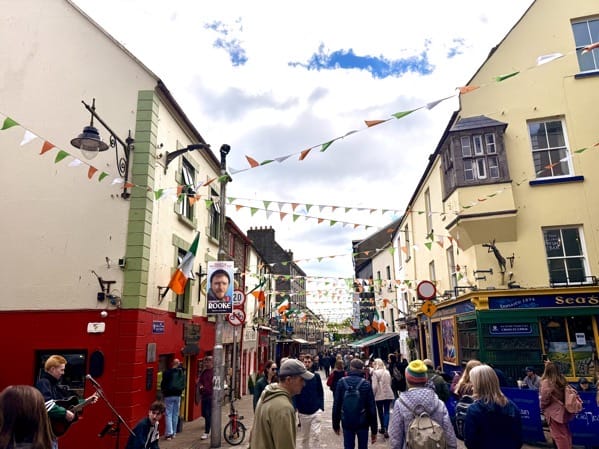
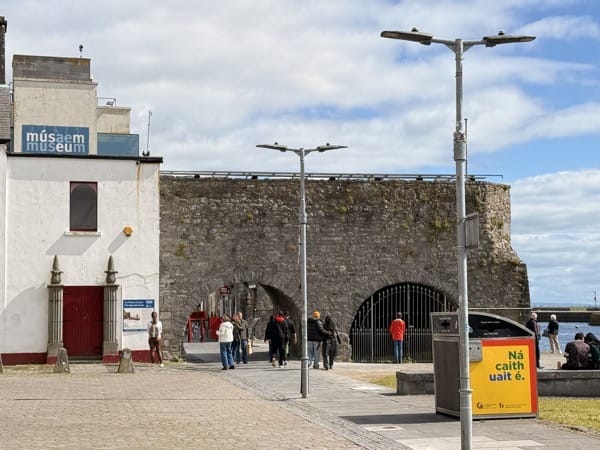
After the tour, the four of us were free to wander the pedestrian streets, browsing souvenir shops, bars, and restaurants, though we only stepped inside a few. We located some of Galway’s well-known pubs—Taffes Bar and Tigh Coili. Unfortunately, the music shop I had hoped to visit was closed on Mondays, so we moved on at an easy pace through the busy streets.
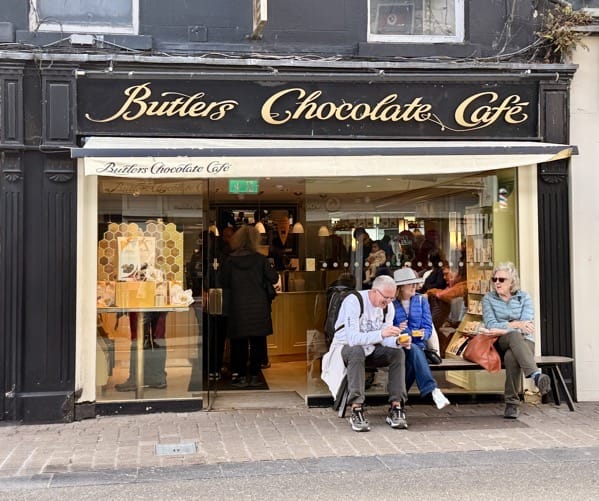
We soon came across a Butlers Chocolate Café and, without hesitation, stepped inside. Jane treated both of us to a rich Butler’s signature hot chocolate, which was indulgent to the point of being dessert-like. I enjoyed it, but by the end I was thoroughly “chocolated out” and gladly recruited Nancy to help finish the last sips.
—— Chocolatey Richness —–
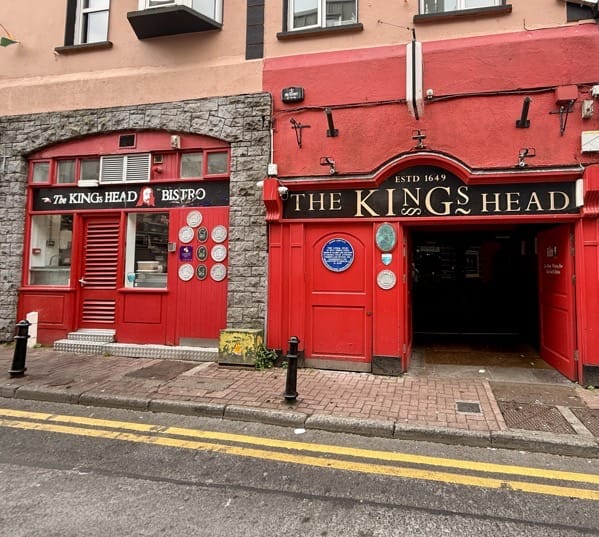
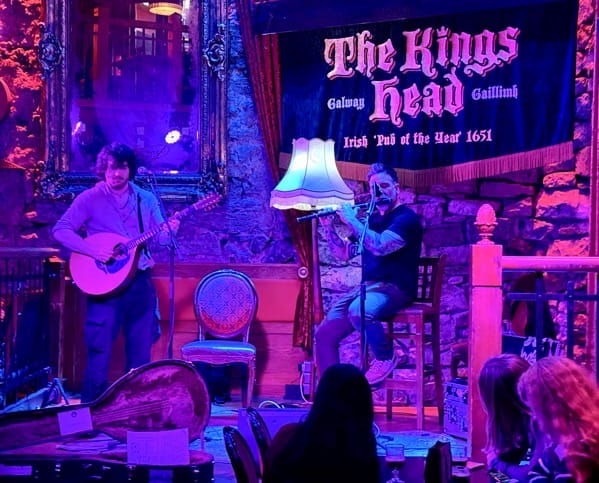
We eventually found The King’s Head tucked down a narrow side alley, where we settled in for beers and a casual early dinner. None of us were especially hungry, so Jane opted for a comforting seafood chowder while I went with a simple salad.
The atmosphere inside was quite enclosed and a bit chaotic, with recorded music playing through the speakers while live music from another room competed for attention, creating an overlapping confusing mix.
—— The King’s Head —–
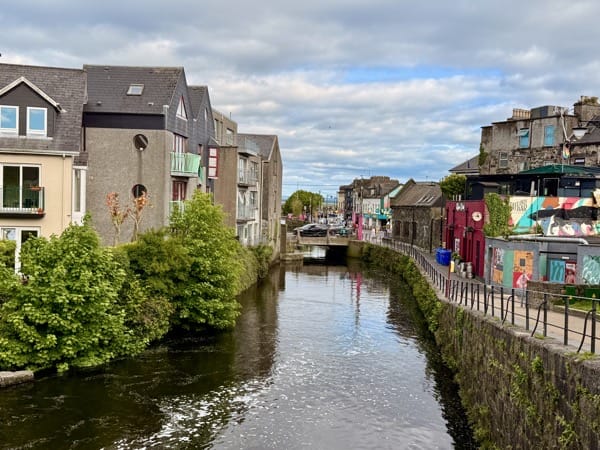
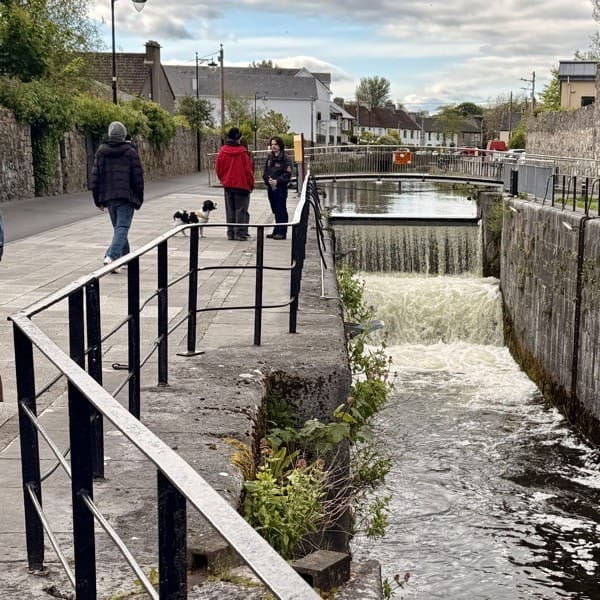
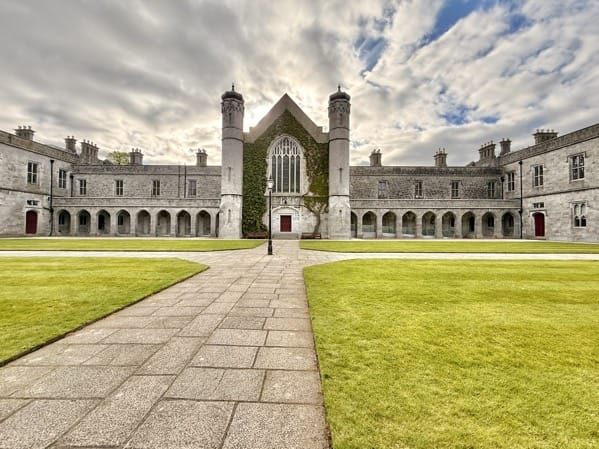
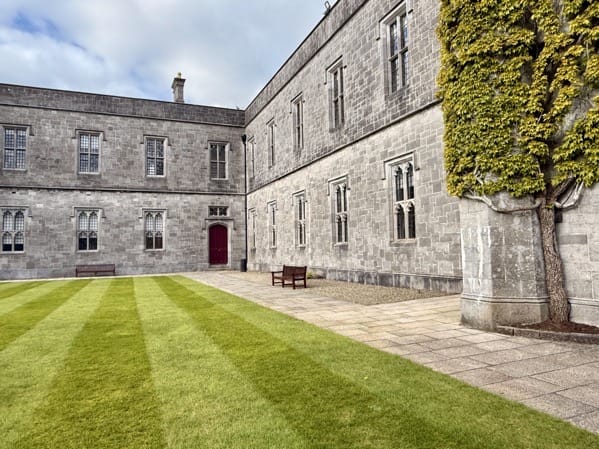
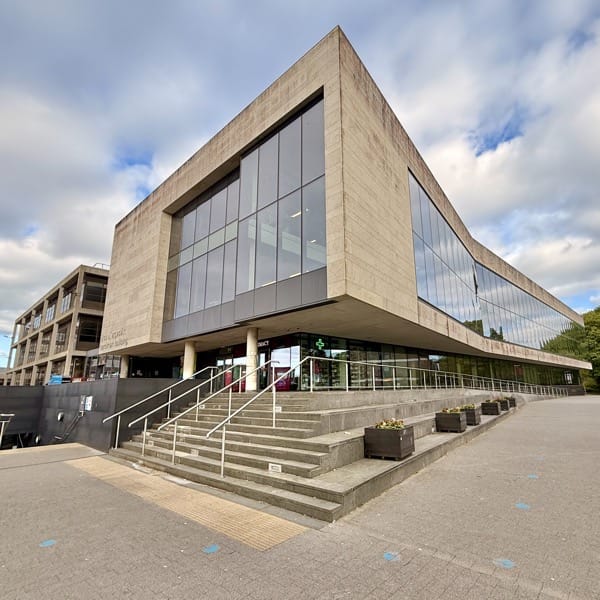
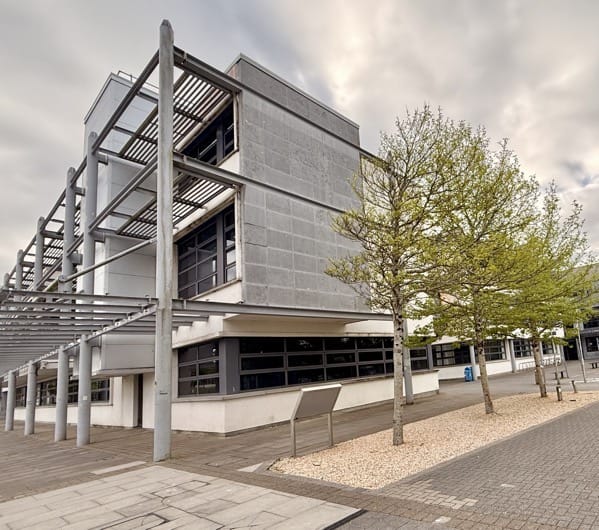
We walked back toward our B&B along the Eglinton Canal, which links the River Corrib to the city and runs toward the edge of the University area. We took a short detour through the grounds of the University of Galway, pausing to take in the elegant quadrangle—an open, green courtyard framed by a mix of historic stone buildings and modern academic blocks, where students could cross between lectures beneath broad walkways and arched colonnades. After a brief look around, Nancy and John headed back to Ash Grove House B&B.
Jane and I continued strolling a little longer through the campus. Much of it features striking contemporary architecture, and we were especially impressed by the large, modern library building with its expansive glass and clean lines. After a relaxed loop through the grounds, we eventually made our way back as well and settled into our room for the evening.
—– Eglinton Canal & the University of Galway —–
Although we had only scheduled one day in Galway, we came away with a surprisingly full sense of the city. Fortunately, the weather had been kind—pleasant, sunny, and comfortable throughout the day. It was still jacket weather, with temperatures hovering in the upper 50s°F, but ideal for walking and exploring on foot.
Tuckered out, we returned to our room around 6:45 p.m. and spent a quiet, relaxing evening at the B&B, unwinding after a full day before turning in for the night.